
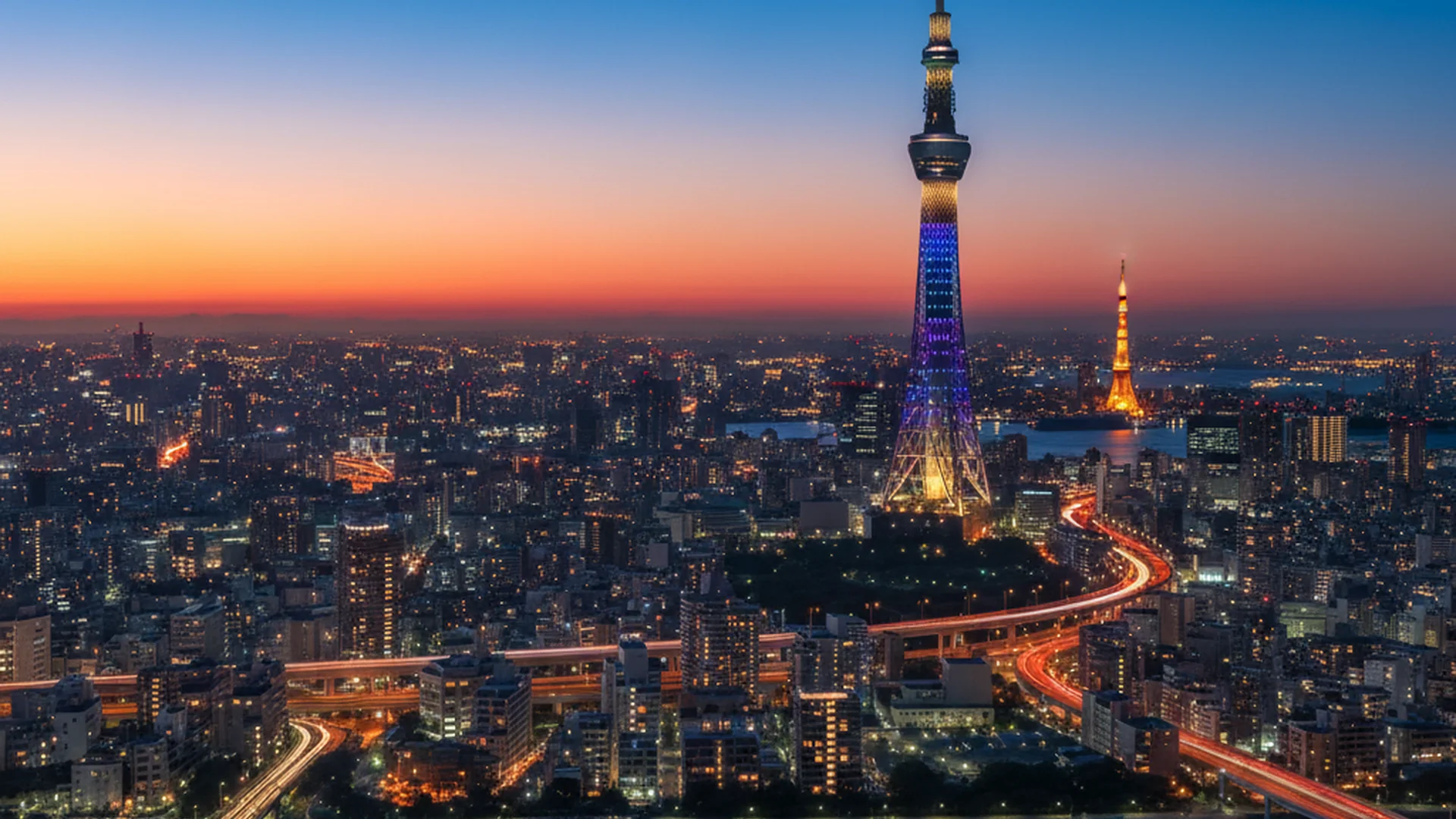
Your Ultimate Guide to Visiting Tokyo Skytree: Views, Dining, and More
Standing at a staggering 634 meters, the Tokyo Skytree isn't just a tower; it is a massive modern landmark that redefined the Tokyo skyline. When I first visited, I expected a quick elevator ride and a nice view, but I found an entire ecosystem of entertainment, dining, and culture that can easily fill half a day or more.
Before the Skytree opened in 2012, the primary broadcasting and observation icon was the red-and-white Tokyo Tower. While that classic remains beloved, the Skytree pushed boundaries, becoming the tallest tower in the world at its completion. It transformed the quiet, older neighborhood of Oshiage into one of the city’s most vibrant tourist hubs. If you are planning a trip to Japan's capital, this modern marvel should be on your list. Here is my practical guide on things to do, see, and experience at the Tokyo Skytree and its surrounding complex.
The Climb: Experiencing the Observation Decks
The main draw is, undeniably, the altitude. The experience of ascending the tower is split into two main stages, and I highly recommend committing to doing both if your budget and time allow.
Tembo Deck (350 meters)
Your journey begins in a super-fast elevator designed to be incredibly smooth; you barely feel the ascent until your ears pop. You arrive at the Tembo Deck, located 350 meters above ground. This three-level structure is where most visitors spend the bulk of their time.
The panoramic views here are truly breathtaking. On a clear day, the Kanto Plain stretches out endlessly, and you can see just how colossal Tokyo really is. The sprawling urban density feels almost overwhelming.
One of the most thrilling features on this level is the glass floor section. Standing over 350 meters of nothing but reinforced glass is a heart-pounding experience that offers a unique perspective straight down to the streets below. It’s a fantastic photo opportunity, though perhaps a bit daunting for those with a fear of heights!
There is also the Skytree Cafe on this level. It’s a great spot to grab a coffee or a themed soft-serve ice cream and just soak in the vista.
Tembo Galleria (450 meters)
For an additional fee, you can ascend another 100 meters to the Tembo Galleria. This is often called the "world's highest skywalk."
The architecture here is distinct. Instead of a wide open floor, you walk along a sloping, spiral ramp that wraps around the tower's exterior structure. The feeling is more futuristic, like walking through a glass tube in the sky. It leads you to "Sorakara Point," the highest accessible point at 451.2 meters.
While the view isn't drastically different from the 350m deck, the feeling of being that much higher, coupled with the unique spiral walkway, makes it a worthwhile upgrade for the complete experience. The crowds can sometimes be slightly thinner up here, offering a bit more breathing room.
Ticket Prices
Tokyo Skytree moved to dynamic pricing in April 2026, so exact prices shift with demand and date. As a baseline: the Tembo Deck alone starts around ¥1,800 for adults booked online in advance (¥900 for ages 6-14), rising to roughly ¥2,100-2,600 on busier dates. The combo ticket adding the Tembo Galleria starts around ¥3,000 for adults (¥1,500 for ages 6-14), climbing as high as ¥3,800 for same-day holiday purchases. Buying in person at the 4th-floor counter adds a ¥500 service fee per ticket, so booking online is the cheaper option. Children under 5 enter free.
When is the Best Time to Visit for Views?
Timing is everything. If your main goal is to see the iconic silhouette of Mount Fuji, your best bet is a crisp, clear morning during the colder months (winter is ideal). In the hazy humid summer afternoons, visibility is often reduced.
However, my personal favorite time to visit is about an hour before sunset. You get to watch the city transition from day to dusk, watching the sunset burn orange across the horizon, and then see the metropolis light up into a sea of neon below you. It is magical.
Beyond the Views: Exploring Tokyo Solamachi
The experience doesn't end when you come down from the tower. The base of the Skytree is home to Tokyo Solamachi, a massive shopping and entertainment complex with over 300 stores and restaurants. You could easily spend as much time here as you do up in the tower.
Shopping and Unique Souvenirs
Solamachi is a fantastic place to find high-quality Japanese souvenirs that go beyond typical tourist trinkets. You will find excellent shops specializing in traditional Japanese crafts like chopsticks, ceramics, and high-quality towels.
For pop culture fans, there are dedicated character shops, including a massive Pokémon Center, a Studio Ghibli store (Donguri Republic), and Hello Kitty shops. It's a paradise for finding gifts for folks back home or treating yourself.
Sumida Aquarium and Planetarium Tenku
If you encounter a rainy day, Solamachi offers great indoor alternatives. The Sumida Aquarium, located on the 5th and 6th floors, is beautifully designed. It’s known for its stunning jellyfish displays and open-top penguin tanks that allow you to get quite close to the animals.
Nearby is the Konica Minolta Planetarium Tenku, which offers immersive, high-resolution star shows—a relaxing way to escape the hustle of the city for an hour.
Dining with a View and Nearby Eats
Finding food around Skytree is easy; deciding where to eat is the hard part. The options range from casual bites to high-end dining.
Restaurants with Altitude
If you are celebrating a special occasion, consider booking a table at Sky Restaurant 634 (Musashi). Located on the Tembo Deck, it offers Japanese-French fusion cuisine with the best view in town. Reservations are essential well in advance.
Tip: The number 634 can be read as "Mu-sa-shi" in old Japanese, referring to the historic Musashi Province where Tokyo is located.
Casual Bites and Desserts in Solamachi
For more casual dining, Solamachi floors 6 and 7 are packed with restaurants representing diverse Japanese regional cuisines, from hearty ramen and tonkatsu to delicate tempura.
When you are ready for a sweet treat, head to the lower floors. You will find countless dessert shops offering beautiful cakes, traditional Japanese wagashi sweets, and incredible matcha-flavored ice creams. It is a great place to sample different Japanese confectionery styles in one location.
Practical Information and Insider Tips
To make the most of your visit, a little planning goes a long way.
Getting There and Opening Hours
The Tokyo Skytree is immediately accessible from Tokyo Skytree Station (Tobu Skytree Line) or Oshiage Station (Hanzomon, Asakusa, Keisei, and Toei Asakusa lines). It is very easy to reach from major hubs like Asakusa or Ueno.
You can find the exact location here: 📍 View Location
General Opening Hours: The observation decks are typically open from 10:00 AM to 9:00 PM (last entry is usually an hour before closing). However, these hours can change based on the season or special events, so always verify on the official website before traveling.
Important Do’s and Don’ts
- DO buy your tickets online in advance if possible. This lets you skip the often-long ticket lines on the day of your visit, giving you a specific time slot for entry.
- DO check the weather forecast. If it's a heavily overcast or rainy day, the views will be severely compromised. It might be worth rescheduling for a clearer day.
- DON'T hog the prime window spots for too long, especially during sunset. Everyone wants that perfect photo, so take your shots and allow others to enjoy the view.
- DO explore the surrounding neighborhood of Oshiage after you're done with the tower complex. While Solamachi is modern, walking a few blocks away reveals smaller, older izakayas (Japanese pubs) and local life that still retains a bit of the old "shitamachi" (downtown) atmosphere.
The "Then and Now" Perspective
It is fascinating to consider the transformation of this area. Before 2012, Oshiage was a relatively sleepy residential and light industrial area, often overlooked by tourists. The construction of the Skytree acted as a massive catalyst for development.
Today, it’s a gleaming modern hub. While you enjoy the futuristic architecture of the tower and the upscale shopping in Solamachi, keep in mind that this is a very recent layer of Tokyo's history. The contrast between the ultra-modern Skytree and the older, low-rise residential streets visible just a few blocks away from the observation deck is a striking example of Tokyo's constant evolution.
Frequently Asked Questions
How much does it cost to visit Tokyo Skytree?
Pricing is dynamic since April 2026. The Tembo Deck alone starts around ¥1,800 for adults booked online, while the combo ticket adding the Tembo Galleria starts around ¥3,000. Prices rise on busier dates, and buying in person adds a ¥500 per-ticket service fee.
What's the difference between the Tembo Deck and Tembo Galleria?
The Tembo Deck sits at 350 meters and is a wide, three-level observation floor with a glass floor section. The Tembo Galleria, an additional 100 meters up, is a sloping spiral skywalk leading to Sorakara Point at 451.2 meters.
What is Tokyo Solamachi?
The shopping and entertainment complex at the base of the Skytree, with over 300 stores and restaurants, including the Sumida Aquarium, the Konica Minolta Planetarium Tenku, and character shops like a Pokémon Center and Studio Ghibli's Donguri Republic.
When is the best time to visit for views?
A clear winter morning gives the best odds of seeing Mount Fuji. For atmosphere, about an hour before sunset lets you watch the city transition from daylight to a lit-up night skyline.
How do I get to Tokyo Skytree?
Tokyo Skytree Station (Tobu Skytree Line) or Oshiage Station (Hanzomon, Asakusa, Keisei, and Toei Asakusa lines) both drop you right at the tower, an easy trip from Asakusa or Ueno.
Visiting the Tokyo Skytree is an experience that truly anchors you in the scale of modern Tokyo. Whether you are there for the dizzying heights, the excellent shopping, or just to marvel at an engineering feat, it’s a day well spent. Enjoy the view!