
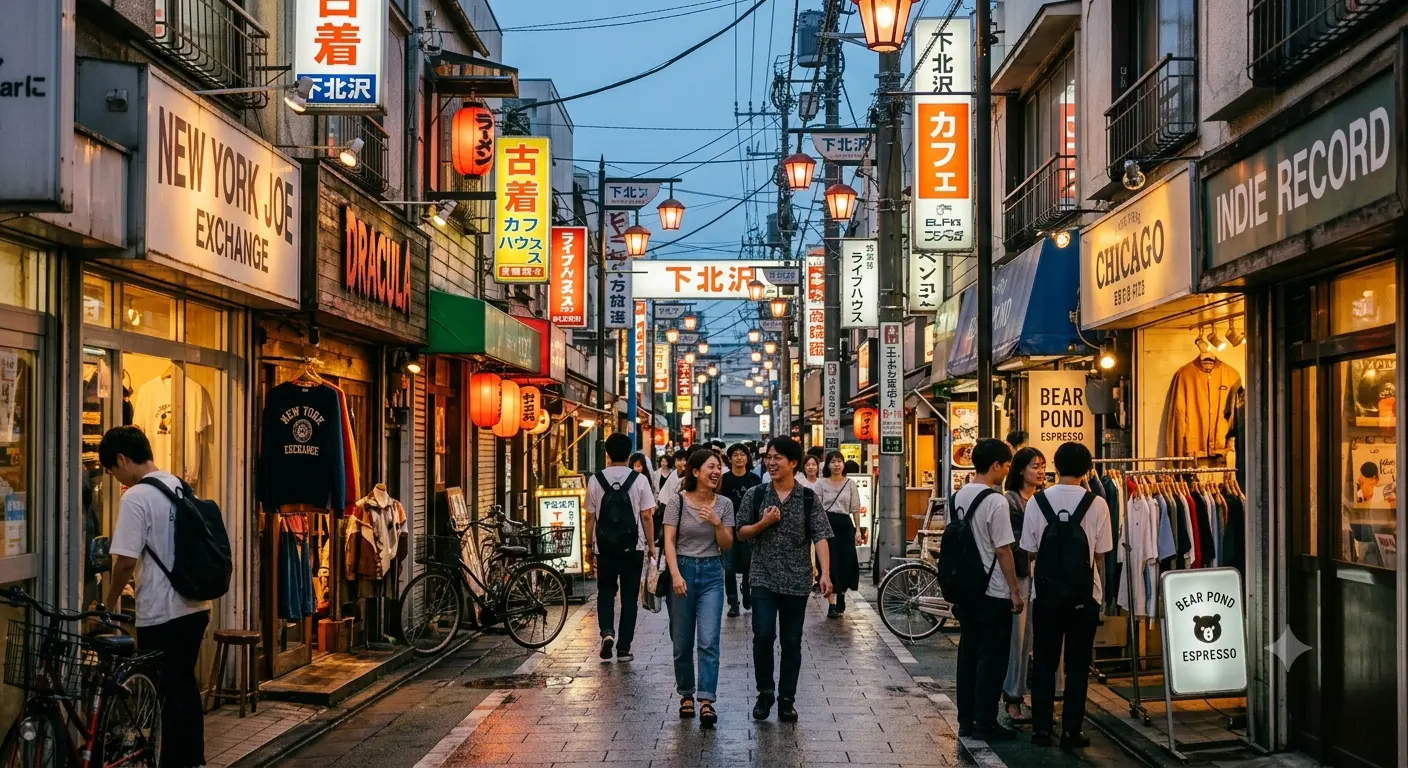
Shimokitazawa: Tokyo's Neighborhood for Wandering
Most first-time visitors to Tokyo bounce between Shibuya, Shinjuku, and Asakusa — all worth it, all a little overwhelming. Shimokitazawa ("Shimokita" to locals) is the antidote: a compact tangle of narrow streets a few minutes by train from Shibuya, built around vintage clothing, small theaters, and live-music basements rather than department stores and neon.
It's the kind of neighborhood that rewards having no fixed plan. Give yourself an afternoon and let the side streets pull you in whichever direction looks interesting.
Why Shimokitazawa Looks Different from the Rest of Tokyo
Shimokitazawa largely escaped the wave of postwar reconstruction and later redevelopment that reshaped much of central Tokyo, which is part of why its street layout still feels informal and a little maze-like compared to the wide, planned boulevards elsewhere in the city. For decades, the Odakyu railway line ran through the neighborhood at street level, splitting it in two.
That changed with a major project that moved the Odakyu line underground, completed in stages through the 2010s. The land freed up above the old tracks became new mixed-use spaces — most notably Bonus Track, a small cluster of independent shops, a bookstore-bar, and food stalls built specifically to preserve the neighborhood's independent, DIY character rather than hand the space to national chains.
What to Do
Vintage and secondhand shopping is the neighborhood's signature activity. Shimokitazawa has one of Tokyo's densest concentrations of secondhand clothing stores, ranging from curated boutique racks to bargain-bin warehouses. Two of the longest-standing names are Chicago and Flamingo, both multi-floor secondhand chains with a real presence in the neighborhood — good starting points if you want a sense of the range before branching into the smaller independent shops nearby.
Live music and small theaters are the other half of Shimokitazawa's identity. The neighborhood has a genuine density of small live-music venues (known locally as "live houses") and independent theaters, a legacy of its long-running reputation as a base for Tokyo's underground and alternative arts scene. Evening is when this side of the neighborhood comes alive.
Just wandering is honestly the best activity here. The streets aren't laid out in a grid, so a loop with no destination tends to turn up more than a planned itinerary would.
Food and Drink
Shimokitazawa has a strong casual-dining scene — curry shops, ramen counters, and small izakayas tucked into side streets, priced for the students and young creatives who make up a lot of the neighborhood's daytime population. It's a good area for grazing rather than a single sit-down meal: pick a direction, and stop wherever looks busy with locals rather than tourists.
Practical Information
Getting There: Shimokitazawa Station is served by the Odakyu Odawara Line and the Keio Inokashira Line, both of which connect directly to Shibuya in under 10 minutes — making it an easy half-day add-on to a Shibuya visit.
Best Time to Visit: Afternoon for shopping, when most vintage stores are open and the streets are easiest to browse. Evening if live music or the bar scene is the draw — many venues don't get going until after dark.
How Much Time to Set Aside: Two to three hours covers a solid wander and some shopping; a full evening if you want to add a live-music venue or a proper sit-down dinner.
FAQ
What is Shimokitazawa known for?
Vintage and secondhand clothing shopping, live-music venues, independent theaters, and a dense, informal street layout that feels distinctly different from central Tokyo's planned districts.
How do I get to Shimokitazawa?
Take the Odakyu Odawara Line or the Keio Inokashira Line to Shimokitazawa Station — both connect directly to Shibuya in under 10 minutes.
Is Shimokitazawa good for vintage shopping?
Yes — it's one of Tokyo's densest neighborhoods for secondhand clothing, with everything from curated boutiques to bargain warehouses. Chicago and Flamingo are two of the longest-standing multi-floor secondhand shops in the area.
How much time should I spend in Shimokitazawa?
Two to three hours for a solid visit; a full evening if you want to catch live music or a sit-down dinner.
Is Shimokitazawa worth visiting if I only have a few days in Tokyo?
If you like vintage shopping, independent music, or just prefer wandering over checklist sightseeing, yes — it's a manageable half-day trip from Shibuya that feels genuinely different from the rest of central Tokyo.
Shimokitazawa isn't a neighborhood with a single must-see landmark — it's a neighborhood you experience by walking through it slowly. Leave the map in your pocket for a while.