
Exploring Tokyo Dome City Tickets and Attractions in Tokyo
Over my 15 years of traveling through Japan, I have watched Tokyo evolve from a city of strict tradition to a neon-soaked playground of the future. One place that perfectly encapsulates this energy is Tokyo Dome City. Located in the Bunkyo ward, this isn't just a baseball stadium; it is a sprawling entertainment metropolis that I recommend every traveler visit at least once.
Many visitors arrive confused about the "Tokyo Dome City Tickets" system because the complex is technically an open city. You can walk through it without paying a yen. However, to truly experience the adrenaline of the coasters or the relaxation of the spas, you need to understand how to navigate their ticketing options. In this guide, I will share my insider tips on how to spend a perfect day here, contrasting the old-school charm with modern thrills.
Understanding the Ticket System
Unlike Disneyland or Universal Studios, Tokyo Dome City does not have a single "entry gate." The area is integrated into the city streets. This is fantastic because it means you can stroll through just to soak up the atmosphere.
However, for the attractions, you have choices.
- One-Day Passport: I recommend this if you plan to spend the whole day and love rides. It allows unlimited access to most attractions.
- Ride 5 Ticket: If you only want to hit the highlights (like the roller coaster and the Ferris wheel), this is a great value option.
- Individual Tickets: You can pay per ride. I suggest this only if you are just passing through and want to ride one specific thing.
The Thrills: Thunder Dolphin and The Big O
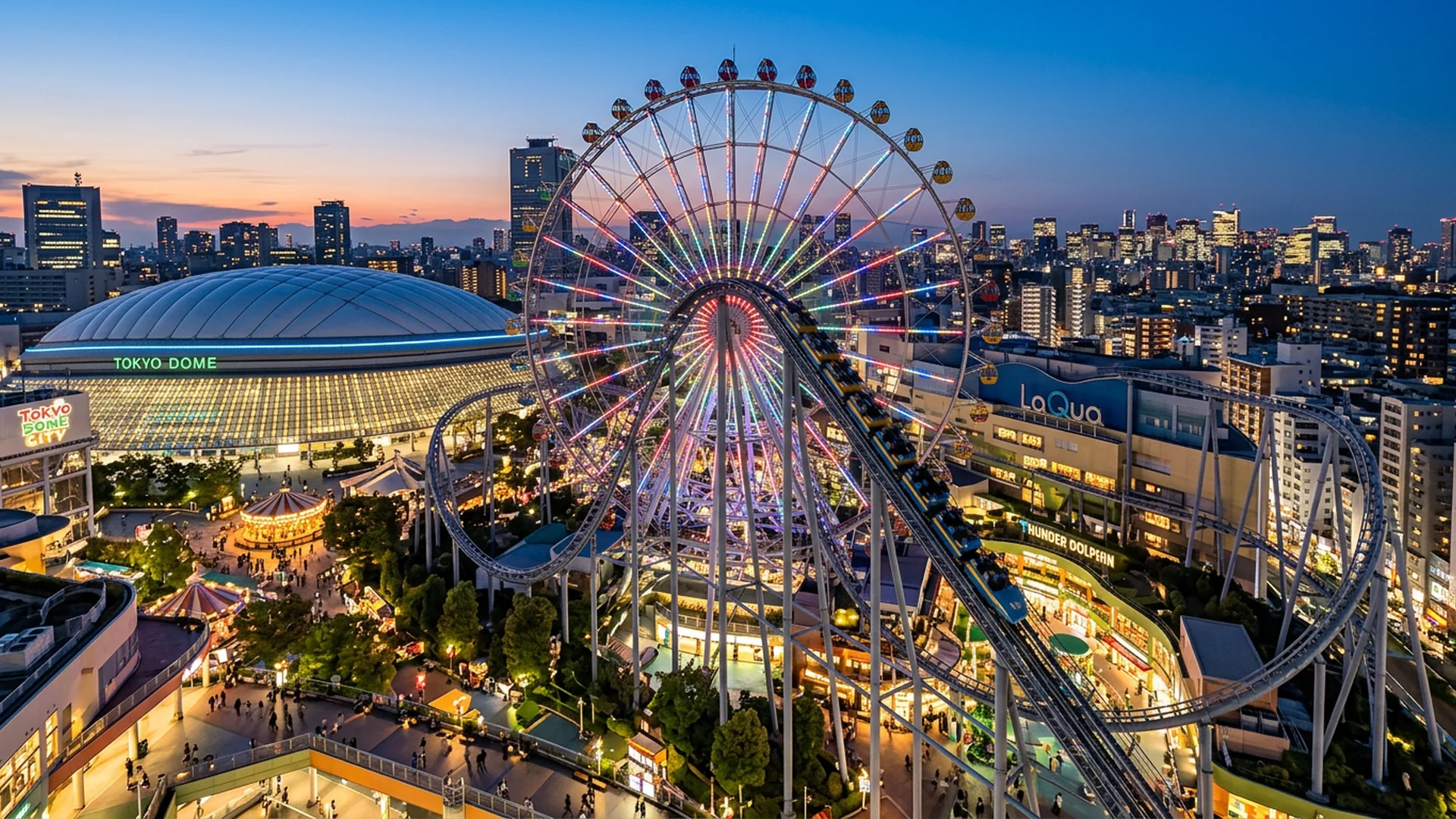
If you are a thrill-seeker, your first stop must be the Thunder Dolphin. Years ago, this coaster was famous for its height; today, it is iconic for its engineering. The track actually weaves through the LaQua building and through the center of the Ferris wheel.
The Experience: The drop is steep, and the views of the Tokyo skyline are unparalleled. Insider Tip: Try to ride this at sunset. Watching the city lights flicker on while plunging at 130 km/h is a memory you won't forget.
Next is The Big O, the world's first center-less Ferris wheel. But here is the twist that makes it uniquely Japanese: it has karaoke gondolas. I highly recommend grabbing a microphone and belting out a song while overlooking the city. It is a hilarious, distinctively Tokyo experience that you cannot find elsewhere.
Relaxation at Spa LaQua
After the adrenaline, I recommend slowing down. In the past, finding a natural hot spring (onsen) in central Tokyo was difficult. Spa LaQua, located right within the complex, changed that. It uses natural sodium chloride strong salt hot spring water drawn from 1,700 meters underground.
What to Expect: This is not just a bathhouse; it is a resort. There are open-air baths, saunas, and relaxation lounges. Thing to Keep in Mind: Like many traditional onsens in Japan, there are strict rules regarding tattoos. Generally, they are not allowed, though policies can shift, so always check the latest guidance on their website before entering. If you are clear to enter, it is the perfect place to wash off the fatigue of travel.
Immersion for Families: ASOBono and Baseball
If you are traveling with children, ASOBono is a lifesaver. It is one of the largest indoor play areas in Tokyo. Unlike the small play corners of the past, this is a massive facility dedicated to imaginative play, from a ball pool ocean to a mock market.
For sports history buffs, the The Baseball Hall of Fame and Museum is tucked away near the stadium. Even if you don't follow Japanese baseball, seeing the evolution of the sport here compared to the US leagues is fascinating. It is a quiet, air-conditioned break from the outdoor heat.
Dining and Culinary Experiences
You will get hungry. Tokyo Dome City used to be filled with generic fast food, but the culinary landscape has improved dramatically.
Bubba Gump Shrimp Co.
While it is an American chain, the view from this location is spectacular. It overlooks the fountain show and the park. It is a great spot for a lively dinner.
Moomin Bakery & Café
For something more "Kawaii" (cute), I recommend the Moomin Bakery & Café. It is themed around the Finnish characters which are incredibly popular in Japan. The bread is freshly baked, and you might even have a giant plush Moomin sit at your table as a dining companion.
Nana’s Green Tea
For dessert, look for Nana’s Green Tea. Their matcha parfaits are legendary. It is a modern take on a traditional Japanese tea house. The bitterness of the matcha jelly balanced with the sweet soft serve is perfection.
A Step Back in Time: Koishikawa Korakuen
Just a five-minute walk from the high-tech coasters lies Koishikawa Korakuen. I always tell travelers to visit this garden immediately after the Dome to feel the contrast.
Built in the Edo period (early 17th century), it is one of Tokyo's oldest and best-preserved gardens. The juxtaposition of the traditional teahouse against the backdrop of the white domed stadium is a photographer's dream. It reminds you that Tokyo is a city of layers.
Seasonal Consideration: If you visit in late November, the maple leaves here are breathtaking. In February, the plum blossoms signal the start of spring.
Seasonal Spectacles: Winter Illuminations
If your trip falls between November and February, you are in for a treat. The Tokyo Dome City Winter Illumination is massive. Unlike some other illuminations that charge entry, walking through these light displays is free. The themes change annually—sometimes it is "Sweets," other times "Japanese Culture." It is romantic, beautiful, and a perfect way to end the evening.
Practical Information and Tips
Opening Hours
- Attractions: Generally open from 10:00 AM to 9:00 PM.
- Spa LaQua: Open from 11:00 AM until the next morning (usually 9:00 AM), making it a great spot if you miss your last train.
- Restaurants: Vary, but most serve lunch from 11:00 AM and dinner until 10:00 PM or 11:00 PM.
Things to Keep in Mind (Dos and Don'ts)
- Do check the event schedule. If there is a concert or a Giants baseball game at the Dome, the restaurants and trains will be incredibly crowded.
- Do wear comfortable shoes. The complex is surprisingly large and involves a lot of walking.
- Don't assume the "skip the line" passes are always available. On weekends, they sell out fast. Arrive early (around 10:00 AM) to maximize your ride time.
- Don't eat while walking in the retail stores. It is polite to eat at the designated benches or inside the cafes.
Getting There
Access is incredibly easy. You can use:
- JR Chuo-Sobu Line to Suidobashi Station.
- Toei Mita Line to Suidobashi Station.
- Tokyo Metro Marunouchi Line to Korakuen Station.
FAQ
What are Tokyo Dome City's attractions?
Highlights include the Thunder Dolphin roller coaster (which weaves through the LaQua building and the center of the Ferris wheel), The Big O center-less Ferris wheel with karaoke gondolas, Spa LaQua's natural hot spring baths, the ASOBono indoor play area for kids, and the Baseball Hall of Fame and Museum.
Do I need a ticket to enter Tokyo Dome City?
No — the complex is an open area integrated into the city streets, so you can walk through and soak up the atmosphere for free. Tickets are only needed for specific attractions: choose a One-Day Passport for unlimited rides, a Ride 5 Ticket for hitting the highlights, or individual per-ride tickets.
What are Tokyo Dome City's opening hours?
Attractions generally run from 10:00 AM to 9:00 PM. Spa LaQua stays open from 11:00 AM until around 9:00 AM the next morning, making it a good option if you miss your last train. Restaurant hours vary, but most serve lunch from 11:00 AM and dinner until 10:00 or 11:00 PM.
How do I get to Tokyo Dome City?
Take the JR Chuo-Sobu Line or Toei Mita Line to Suidobashi Station, or the Tokyo Metro Marunouchi Line to Korakuen Station.
Is Tokyo Dome City good for families?
Yes — ASOBono is one of the largest indoor play areas in Tokyo, and the complex also includes the Baseball Hall of Fame and Museum and family-friendly dining like the Moomin Bakery & Café.
Final Thoughts
Tokyo Dome City is more than just a diversion; it is a microcosm of Tokyo itself. It blends the chaotic fun of arcade gaming and roller coasters with the serenity of spas and nearby ancient gardens. Whether you grab a "Ride 5" ticket for a quick thrill or spend the night relaxing at LaQua, I guarantee you will leave with a deeper appreciation for how Tokyoites play.
Safe travels, and enjoy the ride!