
Exploring Sumida Aquarium Tokyo: A Modern Urban Oasis Guide
When you have spent over a decade traveling through Japan, you start to notice that the country does things differently. Aquariums in many parts of the world focus on sheer size—massive tanks with whale sharks or dolphin shows. However, Sumida Aquarium in Tokyo offers something far more intimate and artistic. Located right at the base of the towering Tokyo Skytree, this isn't just a place to look at fish; it is designed to be a living room for the city, a place where art and marine biology intersect seamlessly.
I recommend this spot not just for families, but for solo travelers, couples, and design enthusiasts. It captures a very specific "Tokyo" vibe: modern, efficient, beautiful, and deeply respectful of nature even within a concrete jungle.
The Evolution of the Aquarium Experience
To understand why I love this place, you have to look at how aquariums used to be in Japan. Twenty years ago, many were clinical, tile-lined corridors that felt a bit like walking through a hospital for fish.
Sumida Aquarium represents the new wave. Opened in 2012 along with the Skytree, it completely abandoned the idea of bringing water in from the ocean. It uses 100% artificial seawater. This might sound industrial, but it is actually an environmental triumph, allowing them to maintain pristine water quality without draining local resources. The design is open-concept, dark, and moody, encouraging you to wander rather than follow a strict path.
Getting There and Access
The aquarium is located on the 5th and 6th floors of Tokyo Solamachi, the shopping and entertainment complex at the base of the Skytree.
You can access it easily via Oshiage Station (Skytree) or Tokyo Skytree Station. Since it is entirely indoors, this is one of the best activities I suggest for a rainy season visit (usually June) or to escape the intense heat of August.
What to See and Experience
The Natural Aquascape
As soon as you enter, you aren't greeted by sharks, but by the smell of a forest. This is the "Natural Aquascape" zone. These tanks were designed by the late, legendary Takashi Amano. They function as complete ecosystems where the plants produce oxygen for the fish, and the fish provide nutrients for the plants.
I recommend standing close to the glass. You can see tiny bubbles of oxygen pearling off the leaves of the aquatic plants. It is incredibly meditative.
The Jellyfish Area (Big Schaal)
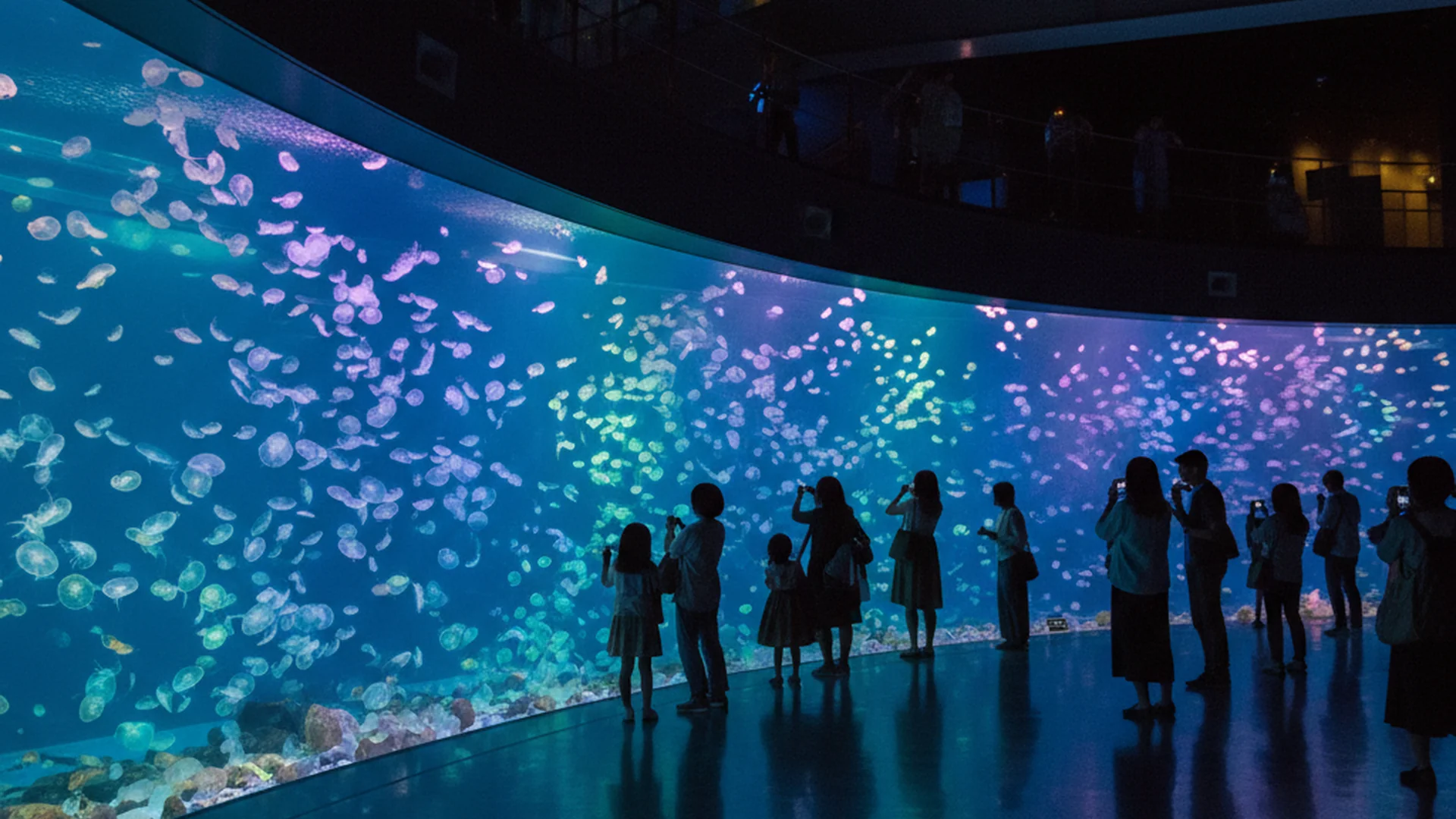
In 2020, the aquarium renovated its jellyfish area, and the result is the "Big Schaal"—an oval basin where about 500 jellyfish float. Instead of looking through glass at eye level, you look down onto the pool (or view it from the side).
The lighting here changes constantly, shifting from deep blues to soft pinks. It feels less like a zoo and more like a modern art installation. The floor is glass in some parts, so you feel like you are walking over the water.
The Penguin Pool
This is the heart of the facility. In the center of the main atrium sits one of Japan's largest indoor open tanks, holding 350 tons of water. There is no glass partition separating the air you breathe from the penguins' space.
Why this matters: You can smell the salt water and hear the penguins calling to each other. It creates a connection that glass barriers often block. The Magellanic penguins here are local celebrities. The staff even maintains a complex "relationship chart" (like a soap opera diagram) showing which penguins are dating, fighting, or breaking up. I highly recommend asking a staff member to explain the current drama!
Edoarium
Japan has a deep cultural history with goldfish (kingyo), dating back to the Edo period. This zone displays goldfish in artistic ways, using traditional lanterns and colors associated with old Tokyo. It is a fantastic photo opportunity and gives you a sense of place—reminding you that you are in the historic Sumida ward.
Practical Tips: Do's and Dont's
Having visited multiple times, here are some things to keep in mind to ensure you fit in with the local etiquette.
- Do visit at night: The aquarium is open late (usually until 8:00 PM or 9:00 PM). After 6:00 PM, the lighting dims to "Blue Night Aquarium" mode. It is quieter, more romantic, and the penguins are often sleeping standing up, which is adorable.
- Don't use flash photography: This is strictly monitored. The animals are sensitive, and reflections on the glass ruin everyone else's view.
- Do bring a drink: Unlike many museums, there is a cafe inside (The Penguin Cafe), and you are allowed to walk around the exhibits with your drink. I recommend their "chinstrap penguin" cotton candy soda if you want something photogenic.
- Don't tap on the glass: This scares the marine life. Japanese visitors are generally very quiet and respectful; try to match that volume.
- Do check the feeding times: Watching the fur seals or penguins being fed is chaotic fun. The schedule is usually posted at the entrance.
Opening and Closing Hours
- Weekdays: Opens at 10:00 AM.
- Weekends and Holidays: Opens earlier, at 9:00 AM.
- Closing: Generally 8:00 PM to 9:00 PM depending on the date, with admission and ticket purchases ending 1 hour before closing.
- Note: Exact hours vary by date, so always check the official site before heading out.
Admission Prices
Following a price change effective February 2026, current admission is:
- Adults (including university students): ¥2,700
- High school students: ¥2,000
- Elementary and middle school students: ¥1,400
- Infants (age 3 and up): ¥900
Dining and Experiences Nearby
Since the aquarium is inside Tokyo Solamachi, you are surrounded by over 300 shops and restaurants. You don't need to travel far to find excellent food.
For a Themed Experience: Kirby Café
If you are a gamer, the Kirby Café is located on the 4th floor of the East Yard. It is incredibly popular, so you must book reservations online weeks in advance. The food is shaped like the pink character and is surprisingly tasty.
For Authentic Japanese: Toriton Sushi
For arguably the best conveyor belt sushi (kaiten-sushi) in Tokyo, head to Toriton on the 6th floor dining level. Be warned: there is always a queue. I suggest grabbing a ticket, wandering the shops for 30 minutes, and coming back. The scallops from Hokkaido are a must-try.
For Dessert and Views: Tenku Lounge Top of Tree
If you want to see the Skytree while you eat, go to the 31st floor of Solamachi. Tenku Lounge offers tiered appetizer stands that look like the tower itself. It is a bit more upscale but offers a stunning view of the city skyline without paying for the observatory ticket.
For a Quick Snack: Nana’s Green Tea
Located near the aquarium entrance, this is a great spot for a matcha latte or a matcha parfait. It is reliable, quick, and delicious.
Frequently Asked Questions
How much does Sumida Aquarium cost?
Following a February 2026 price change, adult admission (including university students) is ¥2,700, high school students ¥2,000, elementary/middle school students ¥1,400, and infants age 3 and up ¥900.
What time does Sumida Aquarium open?
10:00 AM on weekdays and 9:00 AM on weekends and holidays. Closing time varies by date (generally 8:00 PM to 9:00 PM), with admission ending an hour before closing.
Why doesn't Sumida Aquarium use real ocean water?
It uses 100% artificial seawater, a deliberate choice made when it opened in 2012 alongside the Skytree. It lets the aquarium maintain pristine water quality without drawing on or depleting local ocean resources.
What is the "Big Schaal" jellyfish tank?
It's the aquarium's oval jellyfish basin, renovated in 2020, home to around 500 jellyfish. Unlike a typical eye-level tank, you view it from above or the side, with glass flooring in some areas and constantly shifting lighting.
Is the penguin pool really open-air indoors?
Yes. It holds 350 tons of water with no glass partition between visitors and the penguins, so you can smell the salt water and hear them directly — one of Japan's largest indoor open tanks of its kind.
Final Thoughts
The Sumida Aquarium is not the largest in Japan, but it is arguably the most stylish. It respects your time; you can see everything in about 90 minutes to two hours, leaving you plenty of time to explore the rest of Skytree Town or the historic Asakusa district across the river.
It is a place where you can sit on a bench in front of a glowing tank of jellyfish and forget that you are in one of the busiest cities on earth. For any traveler looking to slow down and appreciate the art of nature, I cannot recommend it enough.
Enjoy your underwater journey in the sky!