
Experience Culture and Views at Roppongi Hills Tokyo
When I first started visiting Tokyo over fifteen years ago, the name "Roppongi" conjured up images of rowdy nightlife and neon-lit clubs catering primarily to expatriates. It was the place you went to party until the first train ran. However, the completion of the Roppongi Hills complex fundamentally shifted the center of gravity in this district. Today, I recommend this area not for its clubs, but as one of the most sophisticated "cities within a city" you will encounter in Japan.
Roppongi Hills is a massive urban development project that took nearly 17 years to complete. It was designed with a vision of a vertical garden city, where work, life, culture, and leisure coexist. For the modern traveler, it offers a seamless blend of high-end art, stunning architecture, and lush greenery. Here is my guide on how to spend a perfect day exploring this architectural marvel.
The Mori Tower: Art and Perspectives
The centerpiece of the complex is the Mori Tower. This is where you will likely spend the bulk of your afternoon.
Tokyo City View
I always tell first-time visitors that while the Tokyo Skytree and Tokyo Tower are iconic, the best view of the Tokyo Tower is actually from here. Located on the 52nd floor, Tokyo City View offers a 360-degree panoramic view of the metropolis. The floor-to-ceiling glass windows provide an unobstructed look at the urban sprawl.
I recommend visiting about an hour before sunset. Watching the city transition from the golden hour to the sparkling "night view" (yakei) is a magical experience. Unlike other observation decks that can feel sterile, the lighting here is kept dim to enhance the view outside.
- Opening Hours: Generally 10:00 AM – 10:00 PM (Last admission 9:30 PM).
Mori Art Museum
Located on the 53rd floor, just above the observation deck, is the Mori Art Museum. What makes this museum unique is that it does not have a permanent collection. Instead, it hosts rotating contemporary art exhibitions that are often provocative, large-scale, and internationally focused.
I have seen everything from architecture retrospectives to immersive digital art installations here. Because it is open late, it is a fantastic cultural activity to do after dinner, which is rare for museums in Japan.
- Opening Hours: 10:00 AM – 10:00 PM (Tuesdays until 5:00 PM).
Maman: The Meeting Spot
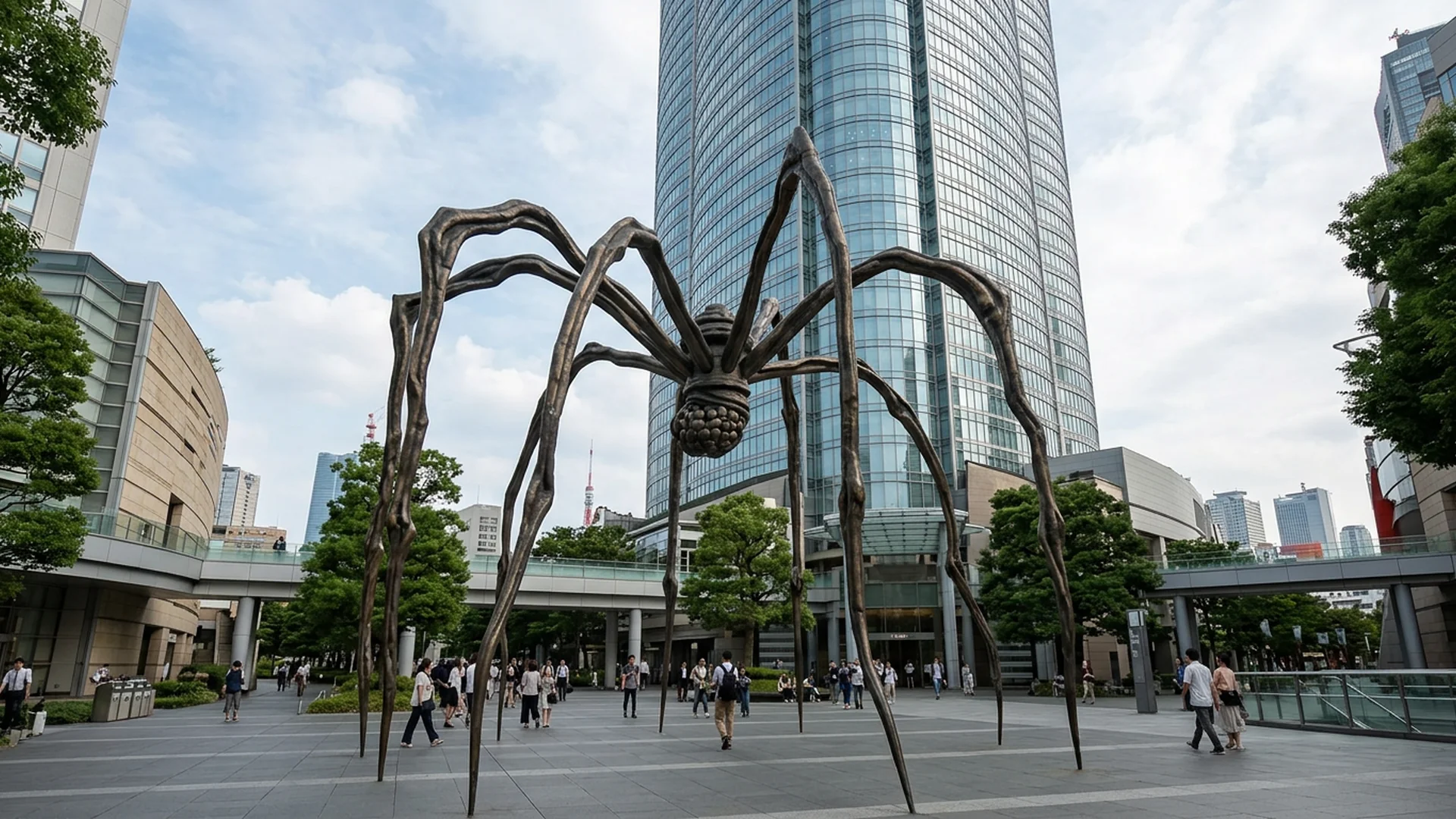
At the base of the Mori Tower, within the 66 Plaza, you cannot miss Maman. It is a gigantic bronze spider sculpture created by the artist Louise Bourgeois. Standing over 30 feet tall, it carries a sac of marble eggs under its abdomen.
While it might look intimidating, it is actually a tribute to the artist's mother, symbolizing protection and strength. It has become the standard meeting spot for locals. I suggest taking a photo here; the contrast between the organic curves of the spider and the sharp steel of the skyscraper is striking.
Mohri Garden: A Samurai Legacy
Tucked away between the gleaming skyscrapers and the TV Asahi headquarters is Mohri Garden. This is a small but exquisite traditional Japanese garden that offers a stark contrast to the modernity surrounding it.
Historically, this land was the residence of the Mohri clan, a samurai family, during the Edo period. The garden has been reconstructed to reflect that heritage. You will find a pond with killifish (descendants of fish that lived here centuries ago), cherry trees, and seasonal flowers.
I recommend grabbing a coffee and sitting on one of the benches here for a quiet respite. It is particularly beautiful in spring for cherry blossoms and in late autumn when the leaves turn red. It is a reminder of how Tokyo excels at preserving pockets of tranquility amidst the chaos.
Shopping and Strolling: Keyakizaka Dori
Behind the main complex lies Roppongi Keyakizaka Dori. This is a tree-lined street that feels more like a European boulevard than a Tokyo road. It is lined with luxury boutiques and high-end brands. Even if you are not in the mood for shopping, the architecture here is fascinating, with colorful street furniture designed by famous artists scattered along the sidewalk.
Seasonal Highlight: Winter Illumination
If you are visiting between November and December, this street transforms. The "Keyakizaka Illumination" is arguably the most elegant light display in Tokyo. The trees are wrapped in "Snow and Blue" LEDs, creating a cool, sophisticated tunnel of light. The view of the warm-glowing Tokyo Tower at the end of this blue street is one of the most photographed winter scenes in the city.
Dining and Culinary Experiences
Roppongi Hills is a culinary maze. You can find everything from quick bites to Michelin-starred establishments. Here are some spots I frequent that offer great atmosphere without feeling too touristy.
Tsutaya Tokyo Roppongi (Starbucks)
Located on Keyakizaka Dori, this is not your average coffee shop. It is a collaboration between Tsutaya Books and Starbucks. This was one of the first "book and café" concepts in Tokyo. You can browse magazines and books while sipping your latte. The vibe is intellectual and cozy. It is a great place to people-watch or rest your feet.
Rigoletto Bar and Grill
For a lively dinner, I recommend Rigoletto Bar and Grill, located inside the West Walk of Roppongi Hills. It is a huge, open-concept restaurant that serves Spanish-Italian fusion. The energy here is infectious. It is popular with both locals and the international crowd. They have an open kitchen and a wine cellar you can walk through. It gets busy, so going early or late is a good strategy if you don't have a reservation.
HARBS
For dessert, you must visit HARBS located in the Hillside area. They are famous for their "Mille Crepes"—a cake made of layers of thin crepes and fresh fruit cream. The slices are generous, and the sweetness is subtle, perfect for the Japanese palate.
Nearby Experiences
Roppongi Hills does not exist in a vacuum. A short walk takes you to other notable locations.
The National Art Center, Tokyo
About a 10-minute walk away is The National Art Center. Even if you don't enter the exhibitions, the building itself is a masterpiece designed by Kisho Kurokawa. The undulating glass façade is spectacular. Inside, there are cafes located on top of giant inverted concrete cones. It is free to enter the lobby and appreciate the architecture.
Traditional Flavor: Tempura Mikawa Zezankyo
If you want to step away from the modern "Hills" vibe and eat something deeply traditional, a short taxi ride or 15-minute walk will take you to Tempura Mikawa Zezankyo. It is a legendary tempura restaurant located in a quiet residential residential area nearby (Monzen-Nakacho is the main one, but the Roppongi area has high-end traditional spots too—sticking to the immediate vicinity, I recommend Tempura Yamanoue inside Tokyo Midtown nearby if you want accessibility). However, within Roppongi Hills itself, there are excellent tonkatsu and sushi options in the "Metro Hat" basement area which are very accessible.
Practical Information and Tips
Access
The easiest way to get here is via the Tokyo Metro Hibiya Line or the Toei Oedo Line. Stop at Roppongi Station. The station is directly connected to the Hills complex via underground concourses, which is very convenient on rainy days.
Things to Keep in Mind (Dos and Don'ts)
- Do wear comfortable shoes. The complex is vast and involves a lot of walking, stairs, and escalators.
- Do check the sunset time before buying your ticket for the observation deck.
- Don't get lost in the "Metro Hat." The complex layout can be confusing. Follow the signs for "Mori Art Museum" or "66 Plaza" to orient yourself.
- Don't be loud in the museum or the garden. Despite the modern setting, the Japanese appreciation for quiet contemplation remains.
Best Time to Visit
Weekdays are naturally less crowded than weekends. However, Roppongi Hills is also an office complex, so lunch hours (12:00 PM – 1:00 PM) can see restaurants packed with business people. I suggest an early lunch around 11:30 AM or a late one after 1:30 PM.
Frequently Asked Questions
What are the opening hours for Roppongi Hills' main attractions?
Tokyo City View (52nd floor) and the Mori Art Museum (53rd floor) are both generally open 10:00 AM – 10:00 PM, with last admission at 9:30 PM. The Mori Art Museum closes earlier on Tuesdays, at 5:00 PM.
What are the best things to do at Roppongi Hills?
The highlights are Tokyo City View for panoramic sunset and night views of the Tokyo skyline, the Mori Art Museum's rotating contemporary exhibitions, the giant Maman spider sculpture at 66 Plaza, the traditional Mohri Garden, and shopping or strolling along Keyakizaka Dori.
What is Maman and why is it at 66 Plaza?
Maman is a giant bronze spider sculpture by artist Louise Bourgeois, standing over 30 feet tall with a sac of marble eggs under its abdomen. Despite its imposing look, it's a tribute to the artist's mother symbolizing protection and strength, and it has become the standard meeting spot for locals at 66 Plaza.
How do you get to Roppongi Hills?
The easiest way is via the Tokyo Metro Hibiya Line or the Toei Oedo Line to Roppongi Station, which connects directly to the complex through underground concourses — convenient on rainy days.
When is the best time to visit to avoid crowds?
Weekdays are quieter than weekends, though Roppongi Hills is also an office complex, so lunch hours (12:00 PM – 1:00 PM) get busy with restaurants full of office workers. An early lunch around 11:30 AM or a later one after 1:30 PM avoids the rush.
Final Thoughts
Roppongi Hills is a testament to Tokyo's ability to reinvent itself. It successfully shed its past reputation to become a beacon of culture and art. Whether you are gazing out at the Tokyo skyline from the 52nd floor, admiring contemporary art, or simply drinking coffee while surrounded by books, the experience is polished and inspiring. It is a place where you can feel the pulse of modern Tokyo, and I am certain it will be a highlight of your trip.