
The Essential Traveler's Guide to Booking Your MonkeyKart Tokyo Tickets
If you've seen photos of people dressed as superheroes or anime characters driving miniature go-karts on the actual streets of Tokyo next to regular traffic, you've seen one of the city's most unique and sought-after experiences. Often referred to generally as "street karting," several operators offer this tour, and one popular choice is MonkeyKart.
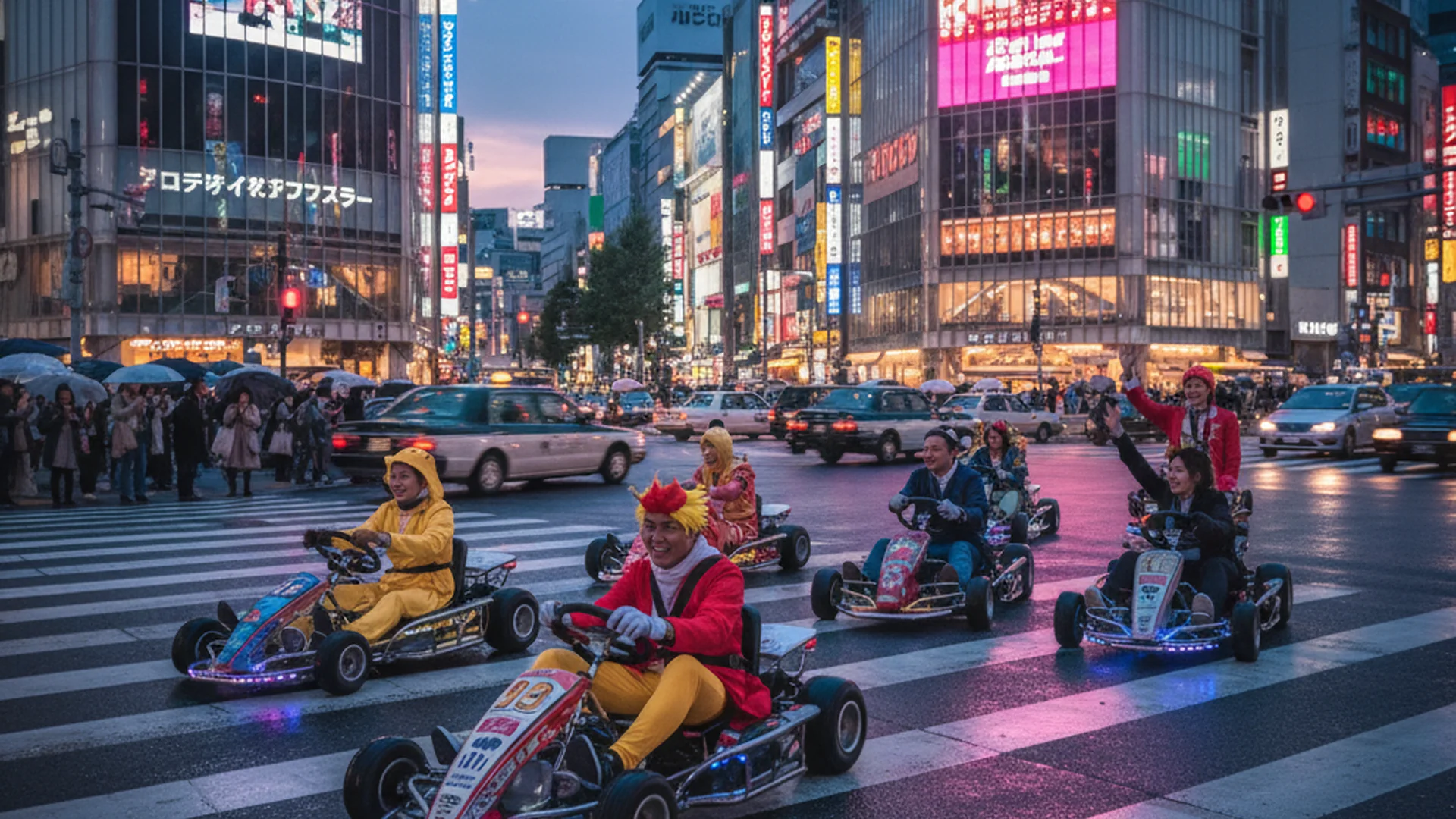
It looks surreal, incredibly fun, and a little chaotic. Having experienced it, I can confirm it's all three. Seeing the sprawling metropolis from just a few inches off the asphalt gives you a perspective you can't get from a bus or train window. You aren't just watching the city pass by; you are part of the energy.
However, this is not as simple as walking up and buying a ticket. It requires specific preparation and understanding of Japanese regulations. Here is my detailed guide to navigating the ticket booking process and preparing for your MonkeyKart Tokyo adventure.
What Makes MonkeyKart Different
Several operators run street-kart tours in Tokyo, and MonkeyKart distinguishes itself in three concrete ways:
- Three Tokyo locations: MonkeyKart runs out of shops in Asakusa, Shibuya, and Shinagawa — more starting points than most competitors, so you can pick whichever neighborhood fits your itinerary best.
- Route variety: Beyond the classic Shibuya Crossing route, MonkeyKart offers an Asakusa-based course that passes through Akihabara on the way to Sensoji Temple, plus a separate route weaving through Shinjuku, Harajuku, and the Shibuya Crossing in a single drive.
- Registered under Shibuya's new kart ordinance: Shibuya Ward introduced a street-kart ordinance in July 2025 requiring operators to file a 30-day pre-operation notice covering routes, group sizes, operating hours, and instructor training. MonkeyKart is listed as a registered operator under this ordinance as of May 2026, which is worth knowing if you're choosing between operators on regulatory footing alone.
The Vital Prerequisite: The International Driving Permit (IDP)
The IDP requirement is universal across every Tokyo street-kart operator, so here's the short version — for the full breakdown (which countries need a translation instead, why the convention year matters, and what documents to bring), see our complete guide to Tokyo street go-karting.
You need a physical International Driving Permit based on the 1949 Geneva Convention — the 1968 Vienna Convention version is not accepted. If your license is from Switzerland, Germany, France, Taiwan, Belgium, or Monaco, you need an official Japanese translation instead, obtained from JAF or your embassy before you travel.
I have seen disappointed travelers get turned away at the shop because they didn't have the correct paperwork. Your regular driver's license from back home is not enough on its own, and there are no exceptions made on the day.
Securing Your MonkeyKart Tokyo Tickets
Once you are confident you have the correct driving documents, it's time to book your spot. This is an incredibly popular activity, and showing up without a reservation is almost never successful, especially during peak travel seasons.
How Far in Advance to Book
I highly recommend booking your tickets at least one month in advance. If you are visiting during major tourist seasons like the spring cherry blossoms (late March to early April) or autumn leaves (November), you should book even earlier.
If you have a specific date and time in mind—particularly a Friday or Saturday night slot, which are the most popular—book as soon as your travel dates are confirmed to avoid disappointment.
Choosing Your Time Slot: Day vs. Night
When booking your ticket, you will need to choose a time. Both offer very different vibes.
- Daytime Drives: These are great for visibility and feeling a bit more confident on the road. You get a clearer view of the architecture, neighborhoods, and landmarks you are passing through. It's also easier to navigate traffic when it's bright out.
- Nighttime Drives: This is my personal recommendation for the ultimate Tokyo atmosphere. Driving when the sun goes down means the city's neon signs are ablaze. Cruising through Akihabara or Shibuya at night feels cinematic, like you are inside a video game.
Operating Hours
While specific hours can change based on the season and route, MonkeyKart tours generally run between 10:00 AM and 10:00 PM. The last tours usually depart around 8:00 PM to ensure they finish before closing.
Choosing Your Route
MonkeyKart typically offers different routes departing from different base locations. The two most common and popular areas are Shibuya and Akihabara.
The Shibuya Route
For many, driving through the world-famous Shibuya Crossing is the main goal.
- What to expect: The energy here is unmatched. You will be driving across the intersection while hundreds of pedestrians wait on the corners. Be prepared for lots of people waving and taking photos of you. It’s a real superstar moment. These routes often pass through the fashionable streets of Harajuku and past the outer gardens of the Meiji Jingu Shrine.
- Location reference for Shibuya area: 📍 View Location
The Asakusa Route
MonkeyKart's Asakusa shop runs a course that heads through Akihabara, the global hub of anime, gaming, and electronics culture, before finishing near Sensoji Temple.
- What to expect: This route is absolutely fantastic at night. The multi-story arcades and electronics shops of Akihabara glow with electric light, creating the cyberpunk atmosphere Tokyo is famous for, before the drive winds down near the historic torii gates and lantern of Sensoji, a striking contrast in the same tour.
- Location reference for Akihabara area: 📍 View Location
The Shinjuku–Harajuku–Shibuya Route
For a route that strings together three neighborhoods in one drive, MonkeyKart also runs a course through Shinjuku, Harajuku, and Shibuya Crossing.
- What to expect: This is the most varied route on offer — Shinjuku's skyscraper energy, Harajuku's fashion-forward streets, and the Shibuya Crossing finale — making it a good pick if you only have time for one drive but want to see multiple distinct sides of the city.
The Day of the Drive: Practical Do's and Don'ts
You have your IDP and your booked ticket. Here is practical advice for the day of your experience.
Arrival and Preparation
Arrive at the shop at least 20 to 30 minutes before your scheduled departure time. You will need this time to show your physical passport and IDP, sign liability waivers, and get changed.
Before you head out, your guide will provide a mandatory safety briefing. They will explain how to operate the kart (automatic transmission: gas on the right, brake on the left). They will also explain essential Japanese road rules, most importantly that you drive on the left side of the road.
The Costume Element
While not strictly mandatory, wearing a costume is a huge part of the fun and experience. The shops provide racks of various freshly laundered onesies—think superheroes, cartoon monsters, cute animals, etc. You put these over your regular clothes. I recommend picking something bright for better visibility on the road.
Seasonal Tip: If you are visiting in summer, Tokyo gets incredibly hot and humid. A thick fleece onesie can be uncomfortable. Look for lighter material options or choose a character cape instead. Conversely, in winter, it gets very cold driving at 50-60km/h, so wear warm thermals underneath your costume and bring gloves.
During the Drive
- DO stay in a single file line behind your guide. They will use hand signals to tell you when to change lanes or turn.
- DON'T use your phone while driving. It is illegal and dangerous. The guides are great at taking photos of you at red lights, and many packages include photo services. You can wear a GoPro if you have a chest or head mount.
- DO remember you are on public roads. You must obey all traffic lights and speed limits. The karts sit very low, making other vehicles feel huge. Just stay focused and follow your guide's lead.
Exploring After the Ride
After an hour or two of adrenaline, you'll likely be hungry or looking to relax. Here are ideas for what to do near popular starting points.
Near Shibuya: After dropping off your kart, head up to Shibuya Sky in the Scramble Square building for a stunning, open-air rooftop view of the crossing you just drove through. For food, explore the subterranean food halls (depachika) of department stores like Tokyu or Seibu for an incredible variety of high-quality food options.
Near Akihabara: You are in geek territory. Try a themed cafe for another uniquely Japanese experience. For something more traditional and peaceful, walk over to Kanda Myojin Shrine, a beautiful historic spot that is surprisingly tranquil just steps away from the electric town.
Frequently Asked Questions
What makes MonkeyKart different from other Tokyo street-kart operators?
MonkeyKart runs from three Tokyo locations — Asakusa, Shibuya, and Shinagawa — more starting points than most competitors, and offers route variety including an Asakusa-to-Sensoji course through Akihabara and a combined Shinjuku–Harajuku–Shibuya route.
Is MonkeyKart a registered operator under Tokyo's street-kart regulations?
Yes. Shibuya Ward introduced a street-kart ordinance in July 2025 requiring operators to file a 30-day pre-operation notice covering routes, group sizes, and instructor training, and MonkeyKart is listed as a registered operator under it as of May 2026.
Do I need a different IDP for MonkeyKart specifically?
No — the International Driving Permit requirement is the same across every Tokyo street-kart operator: a physical IDP based on the 1949 Geneva Convention (or an official Japanese translation of your license if you're from Switzerland, Germany, France, Taiwan, Belgium, or Monaco).
Which MonkeyKart route should I choose?
The Shibuya route is best if the Shibuya Crossing photo moment is your priority. The Asakusa route suits travelers who want to pair Akihabara's neon arcades with Sensoji Temple's historic atmosphere in one drive. The Shinjuku–Harajuku–Shibuya route is the best single choice if you want to sample the widest variety of neighborhoods.
Driving a street kart in Tokyo is a thrilling, once-in-a-lifetime activity. By ensuring you have your 1949 IDP ready and booking your MonkeyKart tickets well in advance, you can ensure a smooth and unforgettable ride through one of the world's most exciting cities.