
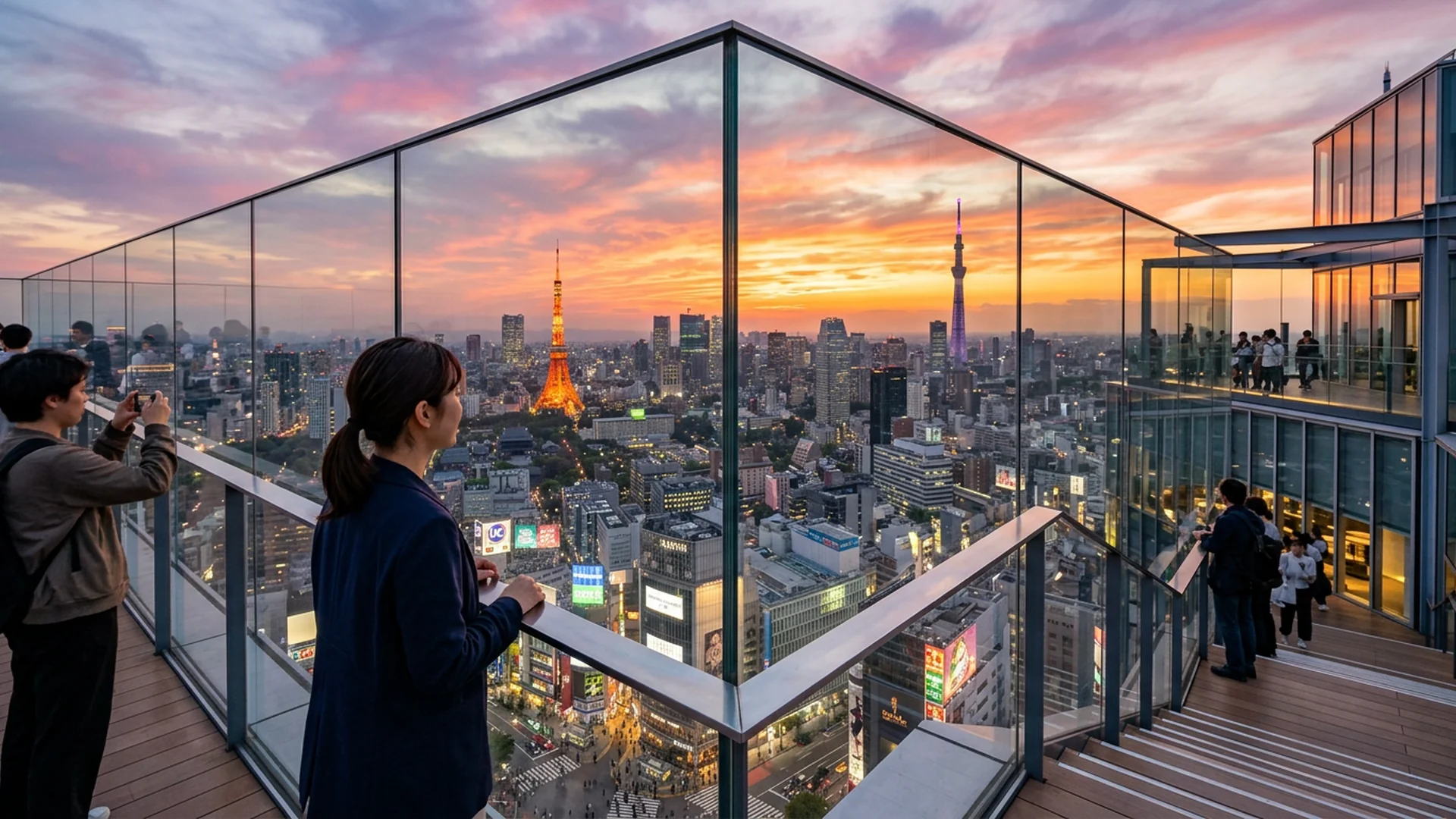
Experience the Shibuya Sky Deck Tokyo for Breathtaking Views
Tokyo is a city that demands to be seen from above. Over my 15 years of exploring this metropolis, I have visited nearly every observation deck, from the government towers in Shinjuku to the historic Tokyo Tower. However, in recent years, the landscape of Tokyo has shifted dramatically, quite literally. The opening of the Shibuya Sky Deck atop the Shibuya Scramble Square building has completely redefined the experience of viewing the city.
It used to be that Shibuya was defined solely by what happened on the ground, specifically, the organized chaos of the famous Scramble Crossing. Travelers would rush to the second-floor window of the Starbucks across the street to get a glimpse. Now, the best view isn't just looking at the crossing, but looking down on it from 230 meters in the air. This guide will walk you through everything you need to know to make the most of this open-air sanctuary.
The Transformation of Shibuya: Then and Now
If you visited Tokyo a decade ago, you might remember the east side of Shibuya Station as a perpetual construction site, a maze of concrete and cranes. It was functional but hardly a destination. Today, that area has been reborn as a futuristic vertical city.
The centerpiece of this redevelopment is Shibuya Scramble Square, a tower that rises 47 stories above the station. The Sky Deck isn't just a roof; it is an expertly curated experience divided into three zones: the "Sky Gate" (the ascent), the "Sky Stage" (the rooftop), and the "Sky Gallery" (the indoor observation corridor). It represents a modern Tokyo that embraces open space and architectural daring, a stark contrast to the enclosed observation decks of the past.
The Ascent: Sky Gate and Arrival
Your journey begins on the 14th floor, where the ticket gates are located. From here, you enter the "Transition Pod," an elevator that whisks you to the 45th floor. I recommend paying attention during this ride; the ceiling features digital art and surround sound that reacts to the velocity and gravity, preparing your senses for the height.
Opening and Closing Hours: The deck is generally open from 10:00 AM to 10:30 PM, with the last admission usually at 9:20 PM.
- Note: These times can shift slightly during New Year's holidays or special events.
Ticket Prices: Pricing depends on your entry time. Booking online, adult tickets run about ¥2,700 for entry before 3:00 PM and ¥3,400 for entry from 3:00 PM onward, when the popular sunset slots fall. Buying at the door costs more: around ¥3,000 before 3:00 PM and ¥3,700 after. Booking online in advance is cheaper and also the only way to guarantee a sunset time slot, which sell out weeks ahead.
The Sky Stage: An Open-Air Marvel
Once you exit the elevators and navigate the locker area (more on that later), you step out onto the Sky Stage. This is the main event. Unlike the Skytree or Tokyo Tower, which are behind glass, this is an open-air deck.
The Sky Edge
The most popular spot is the "Sky Edge," a corner of the building with lower glass walls that makes you feel as though you are floating directly over the city.
- Insider Tip: There is almost always a line for this specific photo spot. If you want that perfect shot without people in the background, head here immediately upon arrival. However, I personally feel the views are spectacular from any part of the deck, so don't stress if the line is too long.
Cloud Hammocks
One of my favorite features is the "Cloud Hammocks." These are netted lying-down areas where you can gaze up at the sky. It offers a rare moment of stillness in a city that never stops moving. It is a great place to spend time on a clear afternoon.
The Geo Compass
At the very top, you will find the Geo Compass, a flat map of the world beneath your feet. It creates an unobstructed 360-degree panorama. On a clear day, you can see Mount Fuji looming in the west, the Tokyo Skytree piercing the sky in the east, and the red glow of Tokyo Tower to the south.
Crucial Things to Keep in Mind: Do's and Don'ts
The Shibuya Sky Deck has stricter rules than any other observatory I have visited in Japan, primarily for safety due to the strong winds at that altitude.
- DO use the lockers: You cannot take bags, hats, scarves, umbrellas, or tripods onto the open-air deck. You must put everything in the coin lockers on the 46th floor (you get your coin back).
- DON'T bring loose items: Even a scarf or a loose cap can be blown away. If you lose something over the edge, it could be dangerous for people below. The staff are very vigilant about this.
- DO bring a camera with a neck strap: You are allowed to bring cameras and phones, but they must have a neck strap or be pocketable. If you have a large DSLR without a strap, they might ask you to store it.
- DO check the weather: The rooftop closes during strong winds or heavy rain. If the roof is closed, you can only visit the indoor gallery.
- DON'T arrive late for your slot: Tickets are sold for specific time slots (e.g., 16:00 - 16:20 entry). If you miss your window, you might be denied entry.
The Best Time to Visit
I recommend booking a slot for sunset. The transition from day to night is magical. You get to see the city in daylight, watch the sun dip behind Mount Fuji (if you are lucky), and then witness the metropolis light up into a sea of neon.
Seasonal Note: In winter, the sunset is early (around 4:30 PM), and it gets incredibly cold and windy up there. Dress warmer than you think you need to. In summer, the breeze is refreshing, making it a perfect escape from the humid streets below.
The Sky Gallery and Indoor Experience
If the wind is too strong, or you just want to cool down, head to the 46th-floor indoor corridor, the Sky Gallery. Here, art installations combine digital data with the view.
Inside, you will find the Paradise Lounge.
- The Vibe: It is a retro-modern music bar with a stunning view.
- What to order: They serve light bites and cocktails. I recommend grabbing a soda or a drink here and sitting by the window. It is much more relaxed than the roof.
Nearby Dining and Experiences
After you descend back to earth, you will be in the heart of Shibuya. The Shibuya Scramble Square building itself is a treasure trove of food.
1. Tsurutontan Udon (Shibuya Scramble Square 13F)
If you want to keep the "views" theme going, I recommend Tsurutontan. They serve massive bowls of Udon noodles.
- Why go: The window seats offer a view of the city, and the noodles are distinctively chewy and delicious. The cream-based udon is a modern twist that is surprisingly good.
2. Mori Yoshida Paris (Shibuya Scramble Square 1F)
For dessert, head to the ground floor. This patisserie is famous for its Mont Blanc.
- The Experience: Watch the pastry chefs pipe the chestnut cream in mesmerizing spirals. It is a high-end treat that is perfect for taking back to your hotel.
3. Miyashita Park
Just a 5-minute walk from the Scramble Square is Miyashita Park.
- What it is: A shopping mall with a public park on the roof.
- Why I recommend it: It contrasts nicely with the high-end Sky Deck. It feels younger, grittier, and more energetic. The ground floor has "Shibuya Yokocho," a collection of small izakaya-style restaurants representing different regions of Japan. It is loud, fun, and very traveler-friendly.
4. Nonbei Yokocho (Drunkard's Alley)
For a look at what Shibuya used to be, cross under the train tracks to Nonbei Yokocho.
- The Vibe: Tiny, lantern-lit bars that seat only 4 or 5 people. It sits right in the shadow of the massive Scramble Square, providing a visual history of Tokyo's growth.
Final Thoughts
The Shibuya Sky Deck is more than just a tourist trap; it is a celebration of Tokyo's scale. Standing on that helipad, feeling the wind, and seeing the infinite sprawl of lights is a humbling experience. It gives you perspective on the sheer size of the city you are exploring.
Make sure to book your tickets online at least two weeks in advance, especially if you want that coveted sunset slot. Whether you are a photographer, a romantic, or just someone who loves a good view, this is a spot you will remember long after you leave Japan.
Enjoy your time in the sky!
FAQ
How much does it cost to visit Shibuya Sky?
Booked online, adult tickets run about ¥2,700 before 3:00 PM and ¥3,400 from 3:00 PM onward (when sunset slots fall). Door prices are higher, around ¥3,000 and ¥3,700 respectively.
Why are bags and hats not allowed on the rooftop?
Strong winds at 230 meters can blow loose items off the deck, which is a real safety hazard for people below. Everything, including bags, hats, scarves, and tripods, must go in the lockers on the 46th floor.
What if it's too windy or rainy to go on the roof?
The rooftop Sky Stage closes during strong winds or heavy rain, and you're limited to the indoor Sky Gallery corridor on the 46th floor instead.
What can I see from the deck on a clear day?
Mount Fuji to the west, Tokyo Skytree to the east, and Tokyo Tower to the south, all visible from the Geo Compass viewpoint at the top.
How far in advance should I book a sunset slot?
At least two weeks ahead. Sunset time slots are the most popular and sell out first.