
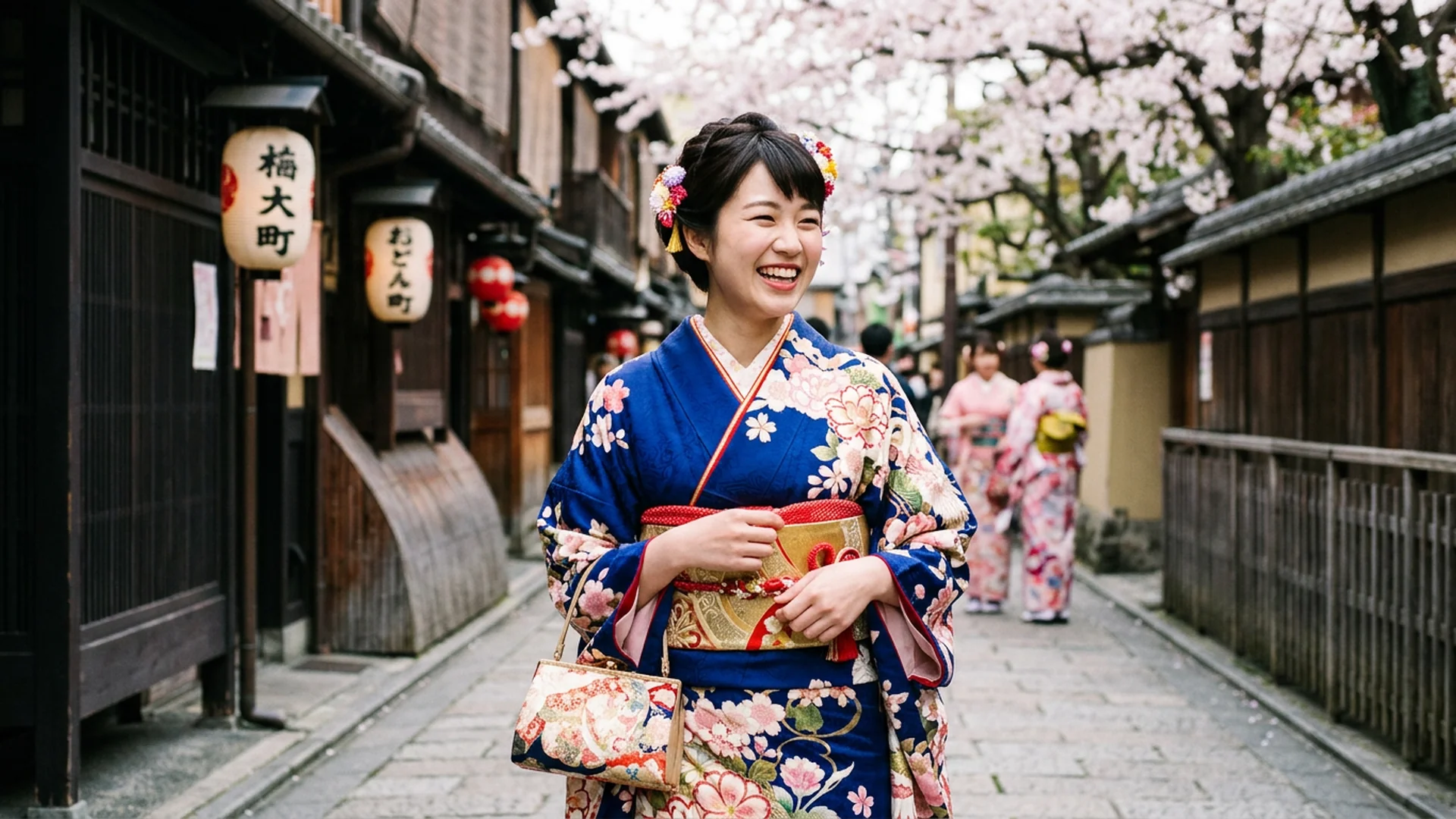
Unforgettable Kimono Experience in Tokyo: A Complete Guide
There is a distinct sound that defines a morning in Asakusa: the soft clip-clop of wooden sandals (geta) echoing against the pavement. For over 15 years, I have walked these streets, and I have watched the Kimono Experience in Tokyo evolve from a niche, somewhat intimidating formal activity into one of the most welcoming and joyful ways for travelers to embrace Japanese culture.
Walking through Tokyo in a kimono is not just about playing dress-up; it is about slowing down. The garment itself changes your posture, shortens your stride, and connects you to a history that stretches back to the Heian period. Whether you are wandering the historic lanes of the shitamachi (old town) or taking photos against the modern skyline, wearing a kimono changes the way you interact with the city, and how the city interacts with you.
In this guide, I will walk you through everything you need to know: from the difference between a summer Yukata and a formal Kimono, to the best districts for a stroll, and the hidden etiquette rules that will make you look like a local.
Kimono vs. Yukata: What’s the Difference?
Before you book your appointment, it is crucial to know what you will actually be wearing. The seasons in Japan dictate the fabric.
- The Kimono: Typically made of silk (or high-quality synthetic blends for rentals), lined, and worn with a white under-collar (nagajuban) and
tabisocks. It is reserved for cooler months (October to May). It feels substantial, heavy, and elegant. - The Yukata: This is the summer version, worn from June to September. Made of light cotton or linen, it is unlined and worn with bare feet on wooden sandals. It is breathable and festive, synonymous with summer fireworks and festivals.
Insider Tip: If you visit during the transition months (late May or late September), ask the shop staff for advice. They often switch inventory based on the daily temperature.
The Ritual: What to Expect at the Rental Shop
Years ago, rental shops were scarce and often required Japanese language skills. Today, the process is streamlined and incredibly foreigner-friendly. However, it is still a ritual.
1. Selection
Upon arrival, you will be presented with rows of fabrics. This can be overwhelming!
- Traditional Look: Go for classic patterns like cranes, cherry blossoms (sakura), or geometric hemp leaves.
- Modern Look: Lace kimonos and bold, graphic prints are currently trending in Harajuku and Shibuya.
- Couples: Many shops offer "couple plans" where the men’s kimono is coordinated to complement the woman’s obi (sash).
2. The Dressing (Kitsuke)
This is the art form. You will be led to a dressing room. Do not try to help the dresser too much; just relax and follow their lead. They will use multiple cords and towels to pad your waist, creating a cylindrical silhouette which is the ideal shape for a kimono.
- Note: It will feel tight around the midsection. This is normal. It helps support your back!
3. Hair and Accessories
Most comprehensive plans include basic hair styling. A professional up-do exposes the nape of the neck, which is considered a focal point of beauty in traditional Japanese aesthetics. You will then choose your Obi (sash), bag, and sandals.
Where to Go: The Best Districts for Your Stroll
Once you are dressed, the city is your backdrop. Here are the top three locations I recommend, each offering a completely different vibe.
1. Asakusa: The Traditional Heart
This is the quintessential location. The atmosphere here matches the clothing perfectly.
- The Vibe: Bustling, historic, and full of red lanterns.
- Key Spots: Walk through the Kaminarimon Gate and down Nakamise Shopping Street.
- Map: 📍 View Location
- Photo Op: Slip into the side streets near Denpoin-dori to escape the crowds for moody, old-world photos.
- Experience: Take a Rickshaw Ride. The pullers (shafu) are incredibly knowledgeable guides and know exactly where to stop for the best photos of you in your kimono.
2. Meiji Jingu & Harajuku: The Contrast
For a mix of serene forest and wild pop culture.
- The Vibe: majestic forest pathways meeting urban chaos.
- Key Spots: The massive Torii gates of Meiji Jingu.
- Map: 📍 View Location
- Comparison: Unlike the bright red of Asakusa, Meiji Jingu is earthy and green. A subtle, classic kimono looks stunning against the deep forest greens here.
- Note: It is a long walk on gravel paths. Ensure your sandals fit well!
3. Hamarikyu Gardens: The Oasis
If you want to avoid crowds entirely and enjoy nature.
- The Vibe: A feudal lord's garden with a saltwater pond, surrounded by Shiodome skyscrapers.
- Key Spots: The tea house in the middle of the lake.
- Map: 📍 View Location
- Experience: Enjoying matcha and a sweet in the tea house while wearing a kimono is a peak Tokyo memory.
Practical Information
Timings
- Opening Hours: Most shops open around 9:00 AM or 9:30 AM. At Waraku Asakusa, for example, the shop is open 9:30 AM to 6:00 PM every day of the year.
- Return Time: You usually must return the kimono by 5:30 PM or 6:00 PM, and shops also set a last dressing time earlier in the afternoon (Waraku Asakusa takes its last dressing at 4:00 PM and its last return at 5:30 PM).
- Late Returns: Some shops offer a "next day return" option (at Waraku Asakusa you hand the kimono back between 9:30 AM and noon the following day). This is great if you want to see the city at night, perhaps for a dinner in Ginza, but remember you will have to undress yourself (which is easy) and fold it (which is hard!).
Costs
Prices are set by each shop and change by season, so treat any figure as a guide and check your shop's own booking page. As one verified example, Waraku Asakusa listed these women's kimono plans on its official website in November 2026, with hair styling included: the Student Plan at ¥2,980 before tax (¥3,278 with tax), the All-Inclusive Plan at ¥3,500 before tax (¥3,850 with tax), and a Couple Plan at ¥5,980 before tax for two. Prices rise for January 1 to 3. Beyond a basic plan, expect three tiers:
- Budget: Standard patterns, synthetic fabric. Great for casual photos.
- Standard: Wider selection of patterns, better accessories, simple hair set.
- Premium: Silk kimonos, "Furisode" (long-sleeved formal kimonos), and elaborate hair styling.
Etiquette: Do's and Don'ts
Wearing a kimono comes with a set of unspoken rules. Mastering these will earn you respect from locals.
- DO take small steps: The fabric limits your movement. Pigeon-toed steps are actually easier and look more feminine in a kimono.
- DON'T rub your obi against chairs: When sitting, sit toward the edge of the chair to avoid crushing the beautiful knot on your back.
- DO mind your sleeves: When reaching for something (like a glass of water), hold the sleeve of your active arm with your other hand. This prevents it from dipping into sauces or knocking things over. It is a very elegant gesture.
- The Bathroom Situation: This is the #1 worry. Do not untie anything! simply lift the layers (kimono, then under-layer) one by one and hold them up. It is easier than it looks, but go before you leave the shop to minimize the need.
- Left over Right: The rental staff will dress you correctly, but if you are adjusting it yourself, always ensure the left side is over the right side. Right over left is exclusively for the deceased.
Nearby Experiences to Combine
To make the most of your day, pair your kimono rental with these culturally aligned activities close to the rental hubs.
In Asakusa:
- Traditional Tea Ceremony: Many tea houses near Senso-ji offer casual ceremonies. Doing this in a kimono makes you feel part of the ritual, not just a spectator.
- Food Walking: Asakusa is famous for street food like Melon Pan and Menchi Katsu. Just remember: in Japan, it is polite to stand near the shop while eating, rather than walking and eating.
In Ginza:
- Kabuki-za Theatre: If you rent a premium kimono, watching a single act of Kabuki is a breathtaking experience. You will fit right in with the local ladies who dress up for the theatre.
What to Keep in Mind
- Weather: In winter, a kimono can be surprisingly warm due to the layers, but your neck will be exposed. Bring a faux-fur shawl or a nice scarf. In summer, a Yukata is breezy, but Tokyo humidity is intense, so stay hydrated.
- Booking: For cherry blossom season (Sakura) in spring or the autumn foliage season, book your slot at least a month in advance.
- Luggage: Most rental shops will store your street clothes and bags for free, but heavy suitcases might incur a fee or be refused. Travel light.
Final Thoughts
The Kimono Experience in Tokyo is more than a photo opportunity; it is a passport to a different era. I have seen travelers transform the moment the obi is tied: their posture straightens, their movements become more deliberate, and their smiles become a little softer. It is a beautiful way to honor the culture you are visiting.
So, go ahead. Choose the pattern that calls to you. Step into the sandals. And take that walk through history.
FAQ
How much does a kimono rental cost in Tokyo?
It depends on the shop and the plan. As one example, Waraku Asakusa lists women's kimono plans with hair styling from ¥2,980 before tax (¥3,278 with tax), with an all-inclusive plan at ¥3,500 before tax. Premium silk kimonos and formal furisode cost more, so check your shop's own booking page.
What is the difference between a kimono and a yukata?
A yukata is a lighter, unlined cotton garment worn in summer, while a kimono is the layered, more formal garment worn in cooler months and on special occasions.
What time do I have to return the kimono?
Usually by 5:30 PM or 6:00 PM, with an earlier last dressing time. Many shops offer a next-day return option, so you can wear it into the evening.
Is hair styling included?
Often yes, in the plans aimed at women, but it varies by shop and plan, so confirm what the plan includes when you book.
Do I need to book in advance?
Not always, but for cherry blossom season and the autumn foliage season you should book your slot at least a month ahead.
Where is the best place to wear a kimono in Tokyo?
Asakusa is the traditional heart of the city and has the most rental shops, while Meiji Jingu and Harajuku offer a contrast, and Hamarikyu Gardens is a quieter option.