
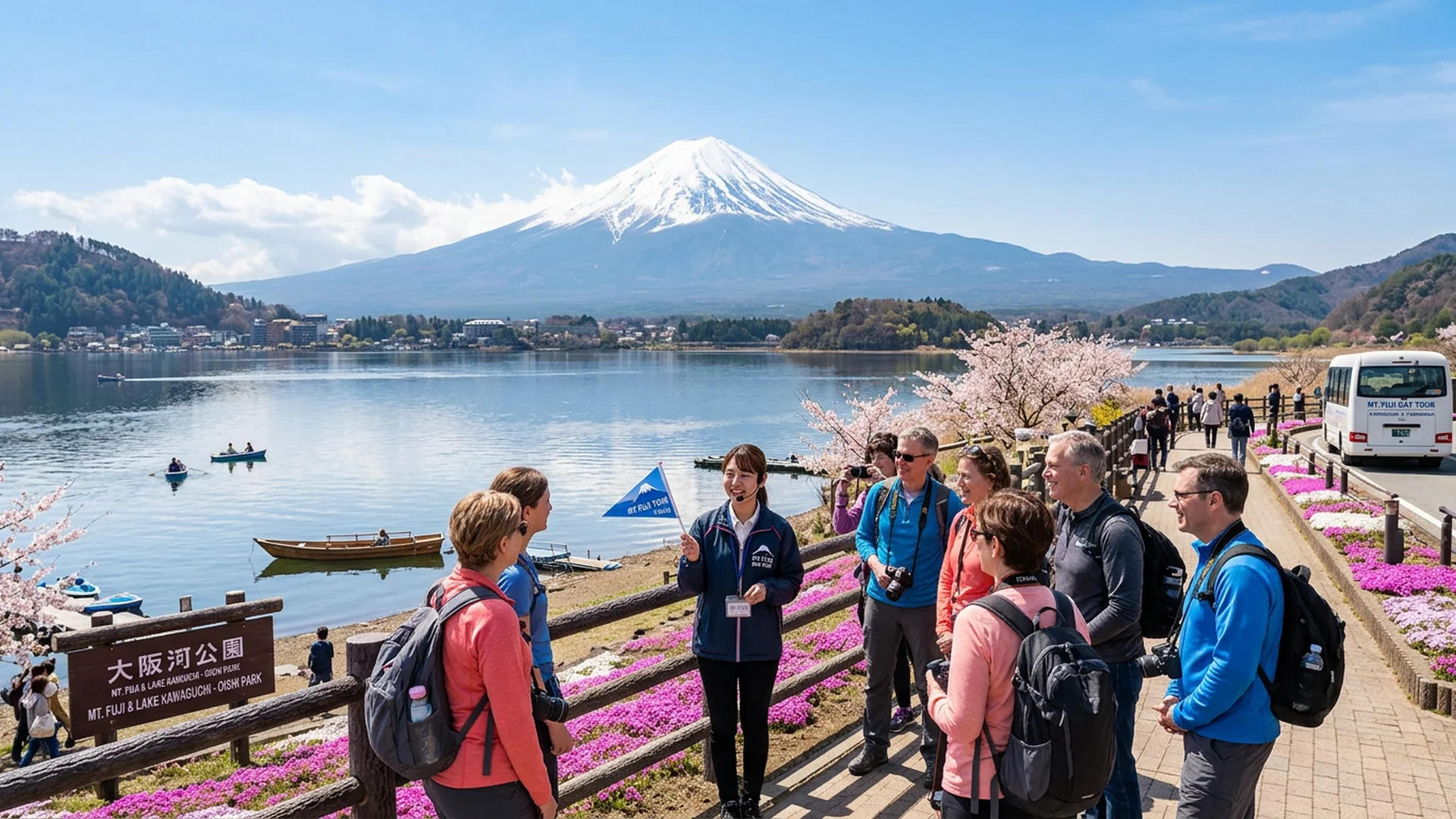
Experience a Mount Fuji Day Trip From Tokyo Guide
There is a saying among travelers in Japan: Mount Fuji is a "shy mountain." You can plan your entire trip around seeing it, only for the peak to be shrouded in clouds for days. However, when the sky clears and that perfect, snow-capped cone reveals itself, it is arguably one of the most moving sights in the world.
Over my 15 years of traveling through Japan, I have visited the Fuji Five Lakes region countless times. It used to be a quiet, somewhat difficult-to-reach area where you needed to navigate slow local trains. Today, it is a bustling hub of culture and nature, accessible by direct express trains and highways. While the crowds have grown, the magic remains if you know where to look. Here is my comprehensive guide to making the most of your Mount Fuji Day Trip.
Getting There: The Journey Begins
For a day trip, efficiency is key. You essentially have two main options for public transport: the bus or the train.
I recommend the Fuji Excursion (Fuji Kaiyu) limited express train from Shinjuku Station. This was a game-changer when introduced recently. Previously, you had to transfer at Otsuki, losing valuable time. Now, you can ride directly to Kawaguchiko Station in under two hours.
- Insider Tip: Book your seats in advance. This train is incredibly popular and sells out days ahead.
Alternatively, the Highway Bus from the Shinjuku Bus Terminal (Busta Shinjuku) is often cheaper and offers great views, but be warned: traffic on the Chuo Expressway can be unpredictable on weekends.
Stop 1: The Iconic Chureito Pagoda
Your first stop should be Shimoyoshida Station (one stop before the terminal station). This is home to the Arakurayama Sengen Park and the famous Chureito Pagoda.
This is the picture you see on every postcard: the five-storied red pagoda with Mount Fuji in the background. Years ago, this was a local secret, a quiet spot for morning exercises. Now, it is a global icon. To beat the crowds, I recommend arriving here as early as possible—ideally before 9:00 AM.
You will need to climb 398 steps to reach the viewing deck. Take your time; the view is worth every step.
Stop 2: Exploring Lake Kawaguchiko
Hop back on the train to Kawaguchiko Station. This is your base for the rest of the day. The lake area is vast, and walking isn't practical for the whole loop. I recommend renting an electric bicycle near the station. It gives you the freedom to stop wherever you want without waiting for the sightseeing buses, which can get crowded.
Oishi Park
Cycle along the northern shore to Oishi Park. This spot offers the classic "inverted Fuji" reflection on the lake if the water is calm. Depending on the season, you will see fields of lavender (June/July) or kochia balls (October).
Lunch: A Taste of Local Tradition
You cannot leave this region without trying Hoto Noodles. It is a hearty local dish consisting of flat udon noodles and vegetables stewed in miso soup.
I recommend Hoto Fudo (Higashi-koji store). You can't miss it—the building looks like a futuristic white cloud or igloo designed by architect Takeshi Hosaka.
- What to expect: It is a large, communal dining hall. The noodles are served in scorching hot iron pots. It is perfect for colder days.
- Timings: Generally open from 11:00 AM to 8:00 PM.
- 📍 View Location
Stop 3: Oshino Hakkai – The Spring Villages
In the afternoon, take a bus to Oshino Hakkai. This is a set of eight ponds fed by snowmelt from Mount Fuji that filters through porous layers of lava for over 80 years. The result is exceptionally clear water.
Then vs. Now: Ten years ago, this was a sleepy village with a few souvenir stands. Today, it is a major attraction with thatched-roof houses and bustling street food stalls. Despite the crowds, peering into the deep, blue "Waku Pond" is mesmerizing.
Street Food Snack: Look for the grilled freshwater fish (ayu) salted on skewers, or the "Kusa Mochi" (mugwort rice cake) filled with sweet red bean paste. They are grilled fresh and are the perfect walking snack.
Coffee and Dessert Breaks
Exploring takes energy. Here are two spots I love to recharge at, away from the main tourist crush.
1. Lake Bake Cafe Located near Oishi Park, this bakery cafe has a terrace with a stunning view of the mountain. Their aged artisanal bread is fantastic.
2. Cisco Coffee If you are near the Kawaguchiko Muse Museum, stop here. It has a San Francisco vibe, excellent third-wave coffee, and a quiet atmosphere.
Important: Do's and Don'ts
To ensure a respectful and smooth trip, keep these points in mind.
- DO check the weather: I cannot stress this enough. If the forecast says rain or heavy clouds, consider rescheduling. The mountain is the main event; without it, the experience is very different.
- DON'T block traffic for photos: Recently, a specific convenience store (Lawson) became famous for having Fuji in the background. Please be mindful. Do not run into the road or block driveways to get the shot. Local authorities have had to install barriers because of this. Respect the local residents.
- DO bring layers: The temperature near the lakes is significantly lower than in Tokyo. Even in summer, evenings can get chilly.
- DON'T expect to climb in winter: The climbing season is strictly July to early September. For a day trip, you are there to view the mountain, not summit it.
Seasonal Considerations
- Spring (Mid-April): Cherry blossoms at Chureito Pagoda. Extremely crowded but beautiful.
- Summer: The mountain loses its snowcap and looks like a dark, rugged volcano. It is often hazy. However, the lavender festivals are lovely.
- Autumn (November): The "Momiji Tunnel" (maple corridor) offers spectacular red leaves framing the mountain. The air is crisp, increasing the chances of visibility.
- Winter: The best visibility. The air is dry, and the snow-capped peak is iconic. It is very cold, so dress warmly.
Insider Tip for the Return Journey
If you have time in the evening and aren't rushing back to Tokyo, consider a quick stop at the Gotemba Premium Outlets. It is on the way back if you are taking the bus. You can shop for international brands with Mount Fuji looming in the background.
For dinner, if you are in the Shizuoka area (near Gotemba), I recommend Sawayaka. It is a local family restaurant chain famous for its charcoal-grilled hamburger steaks. It is a cult favorite among Japanese locals and well worth the wait.
FAQ
Can you visit Mount Fuji as a day trip from Tokyo?
Yes — the Fuji Excursion limited express train from Shinjuku Station reaches Kawaguchiko Station in under two hours, making a full day trip realistic if you plan your stops in advance.
What's the best itinerary for a Mount Fuji day trip?
Start early at Chureito Pagoda (before 9:00 AM to beat the crowds), move to Lake Kawaguchiko for Oishi Park and lunch (Hoto noodles are the local specialty), then finish the afternoon at Oshino Hakkai's spring-fed ponds before heading back to Tokyo.
How do you get from Tokyo to Mount Fuji?
The Fuji Excursion (Fuji Kaiyu) limited express train runs directly from Shinjuku Station to Kawaguchiko Station in under two hours — book seats in advance, since it sells out days ahead. The Highway Bus from Busta Shinjuku is cheaper but subject to unpredictable weekend traffic.
What's the best time of year to see Mount Fuji?
Winter offers the best visibility — dry air and the iconic snow-capped peak — though it's cold. Autumn (November) brings the "Momiji Tunnel" maple corridor and crisper air. Summer often means a hazy, snowless mountain despite good lavender viewing at Oishi Park.
Can you climb Mount Fuji on a day trip?
No — the official climbing season runs strictly from July to early September, and even then it's not a day-trip activity. A day trip is for viewing the mountain, not summiting it.
A Mount Fuji Day Trip is more than just checking a box on a list. It is about breathing in the fresh highland air, tasting the miso-rich noodles, and feeling the spiritual presence of Japan's most sacred peak. Whether you catch a glimpse of the summit or just enjoy the lakeside atmosphere, it is a day well spent.
Safe travels and enjoy the view!