
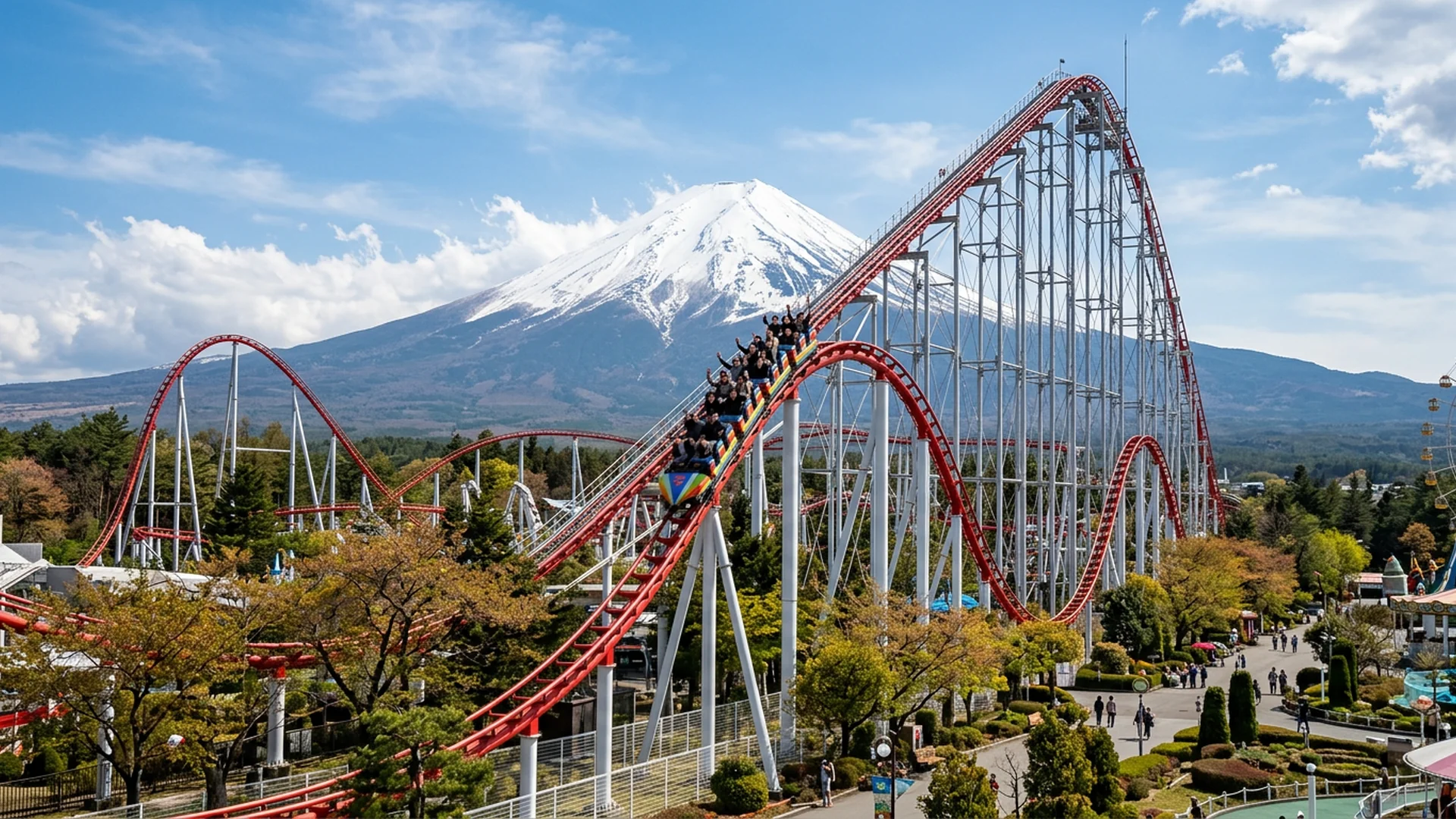
Experience the Thrills at FujiQ Highland Near Mount Fuji
When travelers ask me about theme parks in Japan, the conversation usually drifts toward the magical kingdom in Tokyo or the movie-themed park in Osaka. However, if you are an adrenaline junkie or someone who wants to scream their lungs out while staring at the most iconic mountain in Japan, there is only one answer: FujiQ Highland.
Located in Fujiyoshida, Yamanashi Prefecture, right at the base of Mount Fuji, this park is legendary among coaster enthusiasts. I remember my first visit over a decade ago; it felt like a hidden gem for locals. Today, it has evolved into a world-class destination. While it doesn't have the polished, fairytale atmosphere of its Tokyo counterparts, it makes up for it with raw intensity and record-breaking engineering. Here is my comprehensive guide to surviving and enjoying a day at FujiQ.
Getting There: The Journey to the Mountain
The journey to the park is part of the experience. You have two main options from Tokyo: bus or train.
I highly recommend taking the Highway Bus from Shinjuku Station (Busta Shinjuku). It drops you right at the park entrance. It is convenient, usually takes under two hours, and you don't have to worry about transfers.
Alternatively, the Fuji Excursion train from Shinjuku to Fujikyu-Highland Station is a scenic delight. The train station entrance to the park has been renovated in recent years, making access much smoother than the old days when you had to navigate confusing underpasses.
The Big Four: Roller Coasters You Cannot Miss
FujiQ is defined by its "Big Four" coasters. If you visit, you must try to conquer at least two of them.
1. Fujiyama: The King of Coasters
When it opened in 1996, this was the world’s tallest and fastest coaster.
- The Experience: It is not about loops; it is about height and speed. The initial drop feels like it lasts forever.
- Insider Tip: As you slowly climb the lift hill, look to your right. The view of Mount Fuji is unobstructed and absolutely majestic. It is the best photo you will never take (because no cameras are allowed on board!).
2. Eejanaika: The 4th Dimension
This is arguably the most intense ride in the park. It is a "4th dimension" coaster, meaning the seats rotate 360 degrees independently of the track.
- What to expect: You will not know which way is up. Your feet dangle, and you are flipped forward and backward while racing at high speeds. It is disorienting in the best way possible.
3. Takabisha: The Steepest Drop
For years, this held the world record for the steepest drop at 121 degrees.
- The Sensation: The ride pauses right at the edge of the drop. You hang there, looking inward at the track beneath you, before plummeting. It is a psychological thrill as much as a physical one.
4. Zokkon: The Modern Motorbike
Opened recently, Zokkon is a multi-launch coaster where you ride motorbike-style vehicles. It is smoother than the older rides and features surprising backward sections. It is a great "starter" ride if Eejanaika looks too intimidating.
Beyond the Coasters: The Labyrinth of Fear
If roller coasters aren't your thing, perhaps sheer terror is. The Super Scary Labyrinth of Fear (Jikyu General Hospital) is famous for being one of the longest and scariest haunted houses in the world.
- The Vibe: This is a walkthrough attraction that takes about 50 minutes to complete. Yes, nearly an hour. The setting is a dilapidated hospital. The actors are incredibly committed, and the makeup effects are movie-quality.
- Warning: It is genuinely frightening. Groups are sent in alone, so you don't have the safety of a crowd. If you decide to go, bring your bravest friend.
For Families and Anime Fans
FujiQ isn't just for thrill-seekers. The park has done an excellent job diversifying its attractions.
- Thomas Land: If you are traveling with toddlers, this area is a paradise. It is themed after Thomas the Tank Engine and feels like a separate park entirely. It is gentle, colorful, and very well-maintained.
- Naruto x Boruto Fuji Hidden Leaf Village: For anime fans, walking through this recreation of Konoha is surreal. You can eat at Ichiraku Ramen (yes, it exists!) and play ninja-themed mini-games. The attention to detail here rivals any major theme park.
Practical Tips: Maximizing Your Day
Priority Passes are Essential
I cannot stress this enough: FujiQ has low capacity compared to big western parks. On weekends, wait times for the Big Four can exceed two or three hours.
- My Recommendation: Buy the "Priority Pass" (fast pass) for the rides you absolutely must do. You can buy these at the park or sometimes in advance online. It costs extra, but it saves your day.
The "Free Entry" System and Pricing
A few years ago, FujiQ changed its pricing model. Entry to the park is actually free. You only pay for the rides.
- Single-ride tickets: A flat ¥2,000 per ride for each of the Big Four coasters.
- 1-Day Free Pass (unlimited rides): Roughly ¥6,000-¥7,900 for adults depending on the date, with lower tiers for juniors, elementary-age kids, and seniors/infants. Note the pass excludes a handful of attractions like the Labyrinth of Fear, Fujiyama Walk, and Fujiyama Slider.
- Afternoon Pass: Starts around ¥4,100 for those arriving later in the day.
- Strategy: If you only want to ride one coaster and soak up the atmosphere, you can just pay per ride. However, if you plan to do three or more attractions, the Free Pass is the better value.
Operating Hours
Generally, the park opens around 9:00 AM or 10:00 AM and closes between 5:00 PM and 7:00 PM.
- Note: Hours vary significantly by season. In winter, it closes earlier. Always check the official website calendar before you go.
Safety and Weather
FujiQ is notorious for closing rides due to wind or rain. Because it is located in a valley near a mountain, the weather is unpredictable.
- Do: Check the wind forecast. If it is a very windy day, the big coasters will shut down.
- Don't: Wear earrings, necklaces, or loose shoes on the rides. They have strict safety checks and will make you remove everything.
Dining Options: What to Eat
Theme park food is often forgettable, but FujiQ has some decent local options.
Food Stadium: This is the main food court. I recommend trying the Yoshida Udon. This is a local specialty of the Fujiyoshida region. The noodles are incredibly thick and chewy, usually served with horse meat (a local delicacy) and cabbage. It is hearty and warms you up on cold days.
Highland Resort Hotel & Spa: If you want a break from the noise, walk over to the connected hotel. Their lunch buffet is excellent and offers a view of Mount Fuji that is much more relaxing than the one from the coaster.
Nearby Experiences: Fujiyoshida Sengen Shrine
If you finish at the park early or want to balance the adrenaline with some spirituality, I recommend visiting the Kitaguchi Hongu Fuji Sengen Shrine.
- How to get there: It is a short bus ride or a taxi trip from the park.
- The Experience: This shrine is the historical starting point for pilgrims climbing Mount Fuji. The towering cedar trees and the long, moss-covered stone path create an atmosphere of ancient power. It is quiet, solemn, and a stark contrast to the screams of the amusement park.
Seasonal Considerations
Winter (December - February):
- Pros: The air is crisp, meaning the view of Mount Fuji is usually crystal clear. Crowds are thinner.
- Cons: It is freezing. The wind chill on a coaster moving at 130km/h is painful. Dress in heavy layers.
Summer (July - August):
- Pros: Warm weather, extended opening hours.
- Cons: High humidity, long lines, and Mount Fuji is often hidden behind summer haze or clouds.
Spring and Autumn:
- Verdict: The best times to visit. The weather is mild, and the foliage (either cherry blossoms or autumn leaves) makes the area stunning.
Frequently Asked Questions
How much does it cost to visit FujiQ Highland?
Park entry itself is free. Single rides on the Big Four coasters cost a flat ¥2,000 each, while the 1-Day Free Pass for unlimited rides runs roughly ¥6,000-¥7,900 for adults depending on the date. An Afternoon Pass starts around ¥4,100.
What are the "Big Four" roller coasters?
Fujiyama (opened 1996, built for height and speed), Eejanaika (a 4th-dimension coaster with independently rotating seats), Takabisha (long famous for its steep drop), and Zokkon (a newer motorbike-style multi-launch coaster).
How scary is the Super Scary Labyrinth of Fear?
It's one of the longest and scariest haunted houses in the world, a roughly 50-minute walkthrough set in a decrepit hospital, with groups sent in alone rather than with a crowd.
Are there rides for young children or non-thrill-seekers?
Yes. Thomas Land is themed for toddlers, and the Naruto x Boruto Fuji Hidden Leaf Village recreation offers anime-themed dining and mini-games without the intense coasters.
Do weather conditions affect the rides?
Yes. FujiQ is known for closing rides due to wind or rain since it sits in a valley near Mount Fuji, so check the wind forecast before visiting if riding the big coasters is a priority.
Final Thoughts
FujiQ Highland is an experience of extremes. It offers the highest highs (literally) and the scariest lows (in the haunted hospital). It is not a place for a relaxing stroll; it is a place to test your limits.
When you are strapped into the seat of Eejanaika, staring at the sky, waiting for the mechanism to flip you toward the ground, you might question your life choices. But when you get off, with your heart racing and the magnificent Mount Fuji standing silently in the background, you will understand exactly why travelers make the pilgrimage here.
Make sure to arrive early, secure your Priority Passes, and don't forget to eat the udon. Enjoy the ride!