
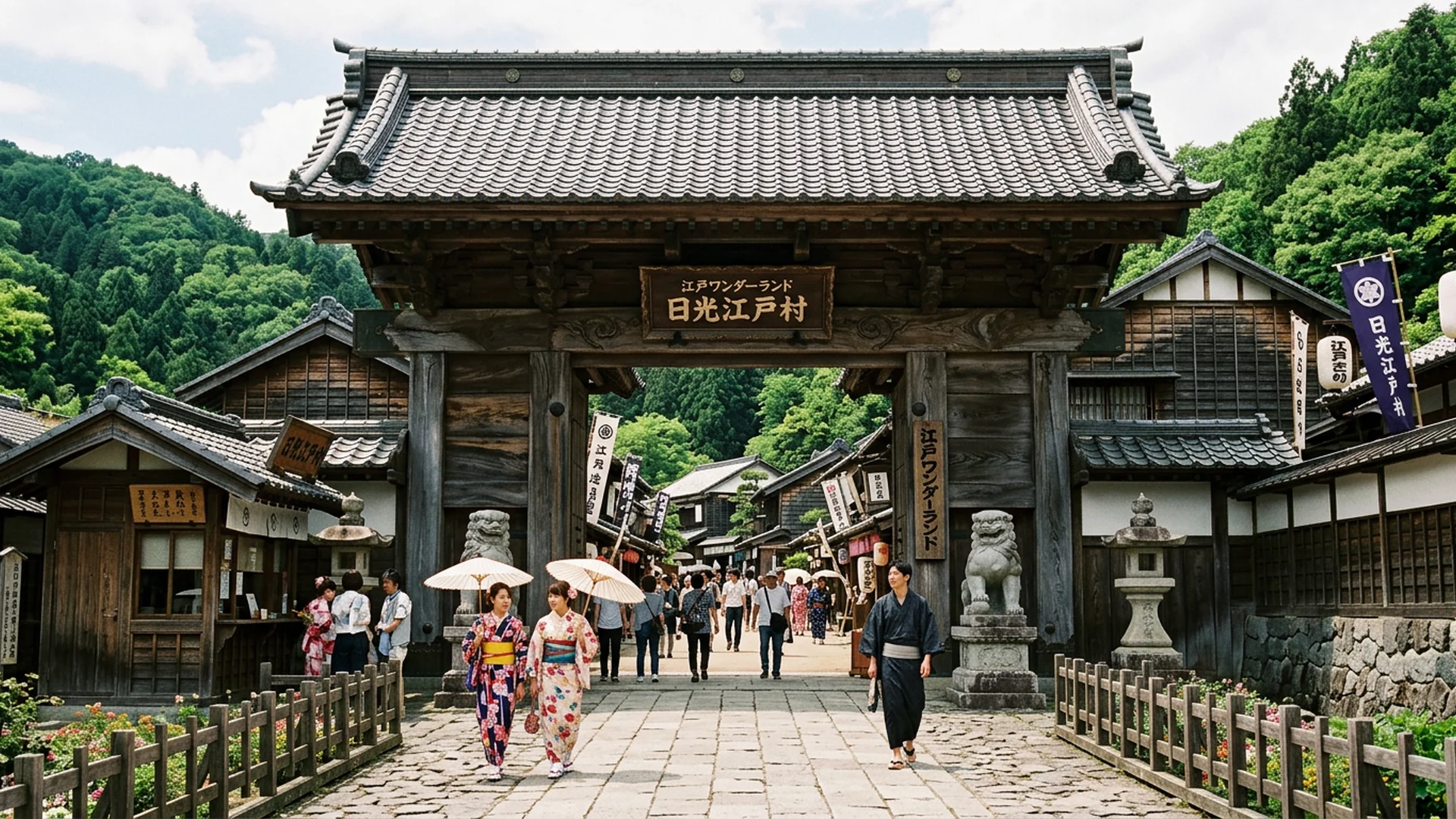
Time Travel Experience at Edo Wonderland Nikko Edomura
If you have ever wondered what it felt like to walk the streets of Japan during the era of the Shoguns, I have found the closest thing to a time machine. Tucked away in the mountains of Tochigi Prefecture, Edo Wonderland (Nikko Edomura) is not merely a theme park; it is a meticulously crafted living museum. As a travel writer who has explored Japan for over a decade and a half, I can confidently say this is one of the most immersive cultural experiences you can find outside of Kyoto.
In this guide, I will walk you through how to navigate this expansive town, what to prioritize, and how to embrace the spirit of the Edo period.
The Transformation: Leaving the Modern World Behind
The experience begins the moment you approach the checkpoint. In the actual Edo period (1603–1867), travel was heavily regulated, and checkpoints were where travelers presented their papers. Here, it serves as the psychological barrier between the modern world and history.
Jiku: Dressing the Part
I recommend starting your day immediately at Jiku, the costume rental shop. While you can walk around in your modern clothes, the true magic happens when you blend in. Unlike other tourist spots where you might just throw on a robe, here they dress you properly. You can choose to be a Samurai, a Merchant, a Shinsengumi member, or even a Lord.
For the ladies, becoming a Town Girl or a Princess changes how you interact with the environment. The staff are incredibly skilled at fitting the kimonos and wigs. Once you step out onto the unpaved, earthen roads, the staff around the park—who are all in character—will address you by your "role." If you dress as a Lord, expect commoners to bow!
The Atmosphere: Architecture and Immersion
As you wander deeper into the park, take note of the architecture. The buildings are built using traditional woodworking techniques—weathered wood, sliding doors, and tiled roofs. There are no power lines visible; no neon signs.
Then and Now
In the historical Edo period, bustling towns were loud, dusty, and crowded. Edo Wonderland recreates the aesthetic beauty but offers a cleaner, more romanticized version. The "Merchant District" gives you a sense of the commercial hustle without the historical sanitation issues. It is a perfect balance for the modern traveler who wants the feeling of history with the comfort of the 21st century.
You will find the Blacksmith and the Repair Shop displaying tools that were used centuries ago. I suggest taking a moment to speak with the craftsmen (many speak some English or use gestures); their dedication to maintaining the illusion is commendable.
The Spectacles: Shows You Cannot Miss
There are several theaters within the village. The schedule changes daily, so grab a pamphlet upon entry, but here are the three absolute must-sees.
The Grand Ninja Theater
This is not a cartoonish display. The performers here are highly trained athletes. The show takes place in a darkened theater and utilizes sound, lighting, and intense physical combat to simulate a ninja conflict. The pacing is fast, and the tension is real. It is arguably the most popular attraction, so I advise lining up at least 20 minutes before showtime.
The Oiran Procession and Show
This is a cultural highlight. In the past, Oiran were high-ranking courtesans who were celebrities of their time, known for their fashion, wit, and artistic skills. The Oiran Dochu (procession) through the streets is a stunning display of elaborate costumes and the unique, slow figure-eight walking style.
Later, inside the theater, the Oiran show is a comedic and interactive performance. Usually, a member of the audience is chosen to play the "wealthy patron." It is lighthearted and transcends language barriers through physical comedy.
Mizugei-za (Water Magic)
This is a rare traditional art form involving water illusions. It is elegant, mysterious, and unlike anything you see in modern magic shows. It offers a quieter, more artistic break from the action of the ninja shows.
Interactive Experiences and Activities
The Ninja Kai Kai House
Prepare for your equilibrium to be challenged. This building creates an optical illusion where the floor and walls are tilted, but the structure looks straight from the outside. Walking through it is a bizarre physical sensation that mimics the traps ninja might have used to confuse intruders. It is fantastic fun, though if you suffer from severe motion sickness, you might want to take it slow.
Archery and Shuriken Throwing
For a small fee, you can try your hand at the Kyudo (archery) range or throw Shuriken (ninja stars). It is harder than it looks! The instructors are patient and will show you the proper form. It is a great tactile way to connect with the martial history of the era.
Dining in Edo
You won't find burgers or pizza inside the checkpoint, and that is a good thing. The food here is curated to fit the theme.
Yabu Soba
I recommend stopping at Yabu Soba for lunch. Soba (buckwheat noodles) was the fast food of the Edo period. The dipping broth here is savory, and the noodles have a lovely texture. The interior mimics an old-world noodle stand, adding to the immersion.
Street Snacks
Do not leave without trying Yaki-dango. These are grilled rice dumplings on a stick, coated in a sweet soy glaze or miso. Eating a skewer while sitting on a red bench watching the townspeople go by is a quintessential Edo experience.
Beyond the Park: Nearby Experiences
Edo Wonderland is located in the Kinugawa Onsen area, famous for its hot springs. After a day of walking on earthen roads, your feet will thank you for a soak.
If you are looking for dinner after the park closes, the immediate area around the park is quiet, but a short taxi ride or drive to the main Kinugawa Onsen station area opens up options.
For those craving something hearty after a day of light Japanese noodles, Pizzeria Di Sapore near the station offers excellent wood-fired pizzas in a cozy setting. It provides a nice contrast—modern Italian comfort food after a day of traditional Japanese austerity.
For dessert or a coffee break before heading back to your hotel, BENTO CAFE KODAMA right at Kinugawa-Onsen Station is a great spot. They have lovely soft-serve ice cream and sandwiches if you need a quick bite for the train ride.
Practical Information and Tips
Opening Hours
- Summer Season (March 20 – November 30): 9:00 AM – 5:00 PM
- Winter Season (December 1 – March 19): 9:30 AM – 4:00 PM
- Note: Last admission is one hour before closing.
- Closed: Wednesdays (usually), and for a few weeks in winter for maintenance. Always check the official calendar before booking.
Seasonal Considerations
- Spring: Cherry blossoms make the village look like a painting.
- Summer: It can get humid. The park provides cool mist areas, but be prepared.
- Autumn: The changing leaves in the surrounding mountains provide a spectacular backdrop.
- Winter: Snow on the traditional roofs is breathtakingly beautiful and results in fewer crowds, though it is chilly.
Things to Keep in Mind (Dos and Don'ts)
- Do interact with the performers. They love it when you play along. If a "policeman" asks if you have seen a thief, point down the road!
- Do wear comfortable shoes. Even if you rent a costume, you will be walking on dirt and gravel.
- Don't use flash photography during the theater shows. It ruins the atmosphere and is often dangerous for the performers (especially the ninjas).
- Don't rush. The charm of this place is in the details. Look at the roof tiles, the carpentry, and the small shrines.
Getting There
The park is accessible via bus from Kinugawa-Onsen Station or by a direct bus from Nikko Station. If you are coming from Tokyo, the Tobu Line from Asakusa is the most scenic and direct route.
Frequently Asked Questions
What is a walk through Edo Wonderland Nikko Edomura like?
After passing the entry checkpoint, you walk along unpaved, earthen roads through a recreated Edo-period town with no visible power lines or modern signage. In-character staff address you based on your rented role, and the route passes districts like the Merchant District, a blacksmith and repair shop, several show theaters, and food stalls, so most visitors spend the day walking the full loop rather than following a fixed path.
What are Edo Wonderland's opening hours?
The park is open 9:00 AM to 5:00 PM during the summer season (March 20 to November 30) and 9:30 AM to 4:00 PM during the winter season (December 1 to March 19). Last admission is one hour before closing, and the park is usually closed on Wednesdays plus a few weeks in winter for maintenance.
How do you get to Edo Wonderland Nikko Edomura from Tokyo?
From Tokyo, the Tobu Line from Asakusa is the most scenic and direct route. Once in the area, the park is accessible by bus from Kinugawa-Onsen Station or by a direct bus from Nikko Station.
What shows should you not miss at Edo Wonderland?
The three must-sees are the Grand Ninja Theater (a fast-paced, physically intense simulated ninja conflict), the Oiran Dochu procession and comedic theater show, and Mizugei-za, a traditional water-illusion performance.
Can you rent traditional costumes at Edo Wonderland?
Yes. Jiku, the park's costume rental shop, dresses visitors as roles like a Samurai, Merchant, Shinsengumi member, Lord, Town Girl, or Princess, and in-character staff will address you according to your chosen role throughout the park.
Final Thoughts
Edo Wonderland Nikko Edomura is more than just a tourist stop; it is a celebration of a bygone era that defined much of Japanese culture today. Whether you are traveling solo, with a partner, or with family, the ability to step out of your daily life and into the sandals of an Edo citizen is a memory you will cherish. It reminds us that while technology changes, the human desire for story, art, and community remains constant.
Safe travels, and enjoy your journey to the past!