
Experience Tsutenkaku Tower Osaka: Retro Views and Culture
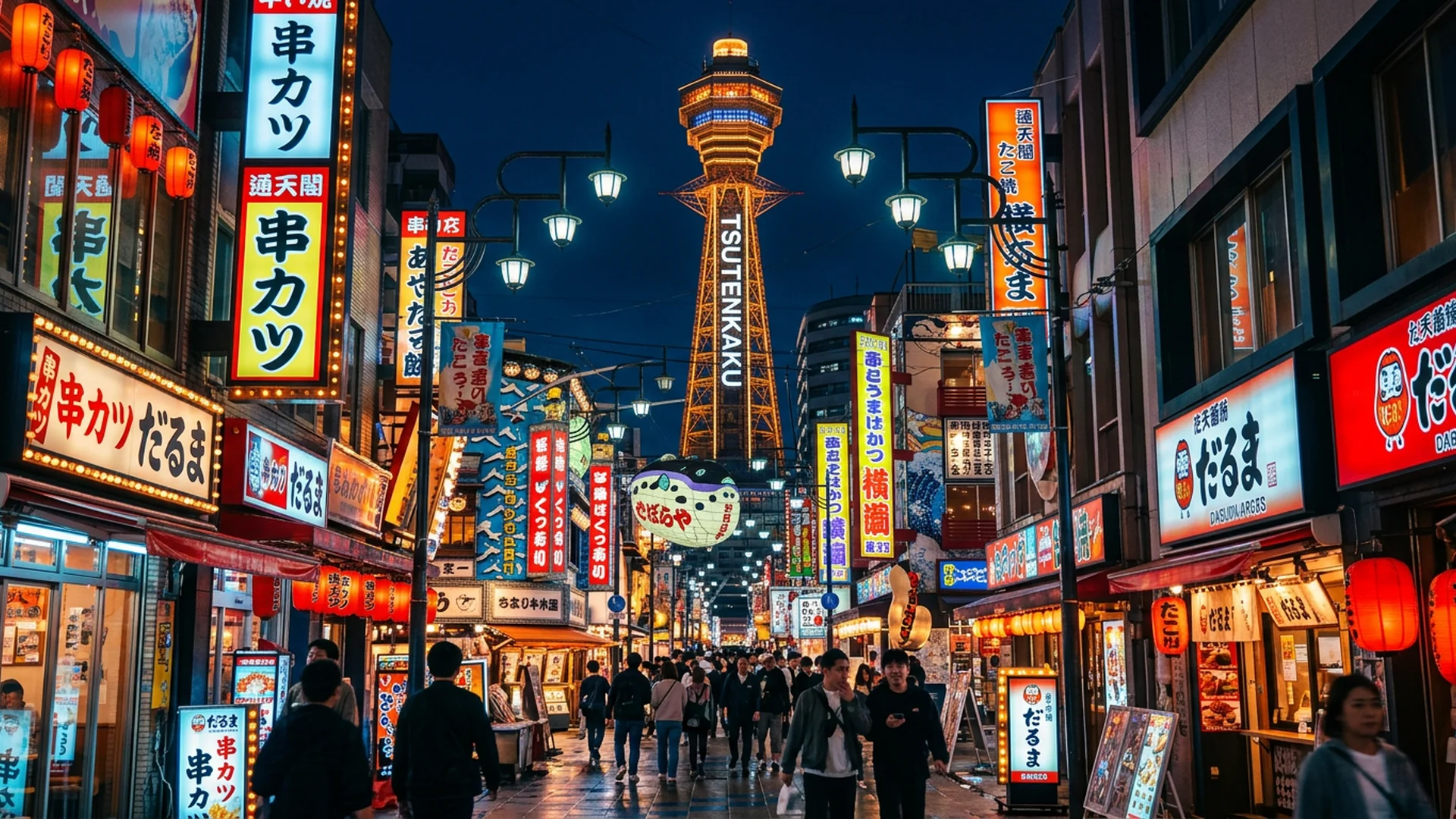
If you ask a local Osakan where the "real" soul of their city lives, they likely won't point you toward the glistening skyscrapers of Umeda or the fashion boutiques of Shinsaibashi. Instead, they will point south, towards a steel tower that rises from a colorful, somewhat chaotic, and deeply nostalgic neighborhood. This is Tsutenkaku Tower, the Eiffel Tower of Naniwa, standing proudly in the heart of Shinsekai.
Over my 15 years of traveling through the Kansai region, I have watched Tsutenkaku transform. It has gone from a slightly gritty symbol of the post-war era to a beloved retro-pop cultural icon. While it may not be the tallest structure in the city anymore, eclipsed by the likes of Abeno Harukas, it remains the sentimental favorite. Visiting Tsutenkaku is not just about the view; it is about stepping into a time machine and experiencing the Showa-era energy that defines Osaka's friendly, unpretentious character.
In this guide, I will take you floor by floor through the tower, slide down its newest attraction, and guide you through the sensory overload of the surrounding streets.
A Tale of Two Towers: Then and Now
To appreciate Tsutenkaku, you have to understand its history. The tower you see today is actually the second generation. The original, built in 1912, was a shock to the system: it combined the base of the Arc de Triomphe with the top of the Eiffel Tower. It was connected by an aerial tramway to an amusement park called Luna Park. It was the height of modernity.
However, after a fire and the metal scarcity of the 1940s, the original was dismantled. The current structure was rebuilt in 1956, driven by the strong will of the local residents.
The Comparison:
- Then: It was the tallest structure in the Orient, a symbol of high-tech progress.
- Now: Standing at 108 meters, it is dwarfed by modern skyscrapers. However, its value has shifted from "height" to "heart." It is now a Registered Tangible Cultural Property. When you visit, look for the ceiling painting at the entrance, a recreation of the original Luna Park fresco, which serves as a beautiful nod to its whimsical past.
Floor by Floor: The Vertical Journey
The experience of Tsutenkaku is unique because it forces you to navigate a bit of a maze, which is part of the charm.
The Basement: Wakuwaku Land
Your journey usually starts here. This area is free to enter and features several "antenna shops" (brand showcase stores) for major Kansai food companies like Glico and Nissin. It is a fantastic place to buy exclusive souvenirs, such as Takoyaki-flavored snacks that you can't find elsewhere.
The Second Floor: The Tram and Kinnikuman
After buying your ticket, you take an elevator to the second floor. Here, the vibe gets very retro. There is a reproduction of the interior of the original Jan-Jan Yokocho tram.
- For Anime Fans: There is a dedicated museum for Kinnikuman (Ultimate Muscle), a famous manga character. The life-sized figures are impressive, and even if you don't know the anime, the sheer energy of the display is infectious.
The Fifth Floor: The Golden Observation Deck
The elevators whisk you up to the top. The entire observation deck is covered in gold leaf. It is gaudy, loud, and quintessentially Osaka. From here, the view is intimate. You aren't looking down from the clouds; you are looking directly at the rooftops of Shinsekai, the Tennoji Zoo, and the Abeno Harukas building looming in the distance. It offers a fantastic perspective on the density of the city.
Meeting Billiken: The God of Things As They Ought To Be
The star of the fifth floor is undoubtedly Billiken. Surprisingly, this deity originated in the United States in 1908 before being adopted by Osaka. He sits with a mischievous smile and the soles of his large feet facing out.
- What to do: It is tradition to make a wish and rub the soles of his feet. You will see that the feet are worn smooth from millions of visitors seeking luck in business or love.
The TOWER SLIDER: A Modern Thrill
In a brilliant move to modernize, the tower recently opened the TOWER SLIDER. This is a 60-meter-long tube slide that spirals down the outside of the tower from the third floor to the basement.
- What to expect: The ride takes about 10 seconds. It is transparent at the top, allowing you to see the sky, before plunging you into swirling LED lights. It is exhilarating and a must-do if you meet the height requirements. It costs extra on top of the general admission, but it saves you the elevator ride down!
Shinsekai: The World Below
You cannot visit Tsutenkaku without exploring Shinsekai (The New World), the neighborhood at its feet. This area was developed in 1912 to emulate Paris and New York. Today, it is a neon-soaked district famous for its food and games.
Kushikatsu: The Flavor of Osaka
The signature dish here is Kushikatsu: skewered meat, vegetables, or seafood, battered and deep-fried.
- Recommendation: Kushikatsu Daruma is the most famous spot. Look for the "Angry Chef" statue outside. The rule here is strict and famous: "No Double Dipping!" (meaning you dip your skewer into the communal sauce pot only once before biting).
- Alternative: If the lines are too long, Yaekatsu in the Jan-Jan Yokocho alley offers a fluffy, delicious batter and is a favorite among locals.
Retro Gaming: Smart Ball
For a truly unique experience, find a "Smart Ball" parlor. It is a pinball-like game that predates modern Pachinko. The atmosphere inside these parlors, with the clacking of glass balls and the haze of nostalgia, is something you won't find anywhere else in Japan.
Dessert and Coffee: The Origin of Mixed Juice
After the savory fried food, you need something sweet. Head to Sennariya Coffee. This traditional coffee shop (Kissaten) claims to be the birthplace of "Mixed Juice," a thick, creamy fruit smoothie that is a staple of Osaka cafe culture. Sitting in the retro interior, sipping this sweet drink, feels like stepping back into the 1960s.
Practical Information
Ticket Prices
Since a price revision took effect on April 1, 2026, the general observation deck and the special outdoor observation deck are now bundled into a single admission ticket rather than sold separately. Adults (age 15+) pay ¥1,500, and children (ages 5-14) pay ¥800. Group rates (10+ people) and discounted rates for visitors with disabilities are also available at the ticket counter. The TOWER SLIDER costs extra on top of this admission.
Opening Hours
- General Observation: Since March 2026, open from 9:00 AM to 10:00 PM (last ticket sales 9:30 PM).
- Tower Slider: Same hours, though it may close for maintenance or bad weather.
- Note: Hours can be extended during holidays or special light-up events.
Best Time to Visit
I recommend arriving around 4:30 PM. Explore the tower for an hour, watch the sunset from the observation deck, and then emerge into Shinsekai just as the neon signs flicker to life. Seeing the tower illuminated at night from the street level is the definitive photo opportunity.
Insider Tips
- The Weather Forecast: At the very top of the tower, there is a neon weather forecast. White means sunny, orange means cloudy, and blue means rain. Locals actually use this!
- Avoid Large Luggage: The elevators and corridors are narrow. There are coin lockers nearby, but it is best to leave large bags at your hotel or a major station like Shin-Imamiya.
Things to Keep in Mind (Do's and Don'ts)
- Do look up. The ceiling of the main arch under the tower has a beautiful painting of flowers and peacocks.
- Do be patient. The elevators are small, and queues can form on weekends.
- Don't use selfie sticks in the narrow corridors or on the slide; it poses a safety hazard.
- Don't be intimidated by the energetic touts outside restaurants. A polite "No, thank you" is all that is needed if you aren't interested.
FAQ
How much does it cost to visit Tsutenkaku Tower?
Since April 2026, admission is a single bundled ticket covering both the general observation deck and the special outdoor observation deck: ¥1,500 for adults (15+) and ¥800 for children (5-14). The TOWER SLIDER is an extra fee on top of admission.
What are Tsutenkaku Tower's opening hours?
The tower is open from 9:00 AM to 10:00 PM daily, with last ticket sales at 9:30 PM, though hours can extend during holidays or special light-up events.
What is the TOWER SLIDER?
A 60-meter tube slide that spirals down the outside of the tower from the third floor to the basement, taking about 10 seconds. It's transparent at the top before dropping you into swirling LED lights, and there's a height requirement to ride.
Who is Billiken?
The deity on the fifth-floor observation deck, originally created in the United States in 1908 before being adopted by Osaka. Tradition holds that rubbing the soles of his feet while making a wish brings luck in business or love.
What's the best time to visit?
Arriving around 4:30 PM lets you explore the tower, watch the sunset from the observation deck, and step out into Shinsekai just as the neon signs turn on for a great night photo of the tower.
Final Thoughts
Tsutenkaku Tower offers something that the shiny, glass-walled observatories cannot: character. It is a place that doesn't take itself too seriously. From the golden Billiken to the spiral slide, it is designed for fun.
When you walk away from the tower, belly full of Kushikatsu and ears ringing with the sounds of the lively streets, you will feel like you have met the real Osaka. It is loud, it is bright, and it welcomes you with open arms.
Safe travels, and may Billiken grant your wishes!