
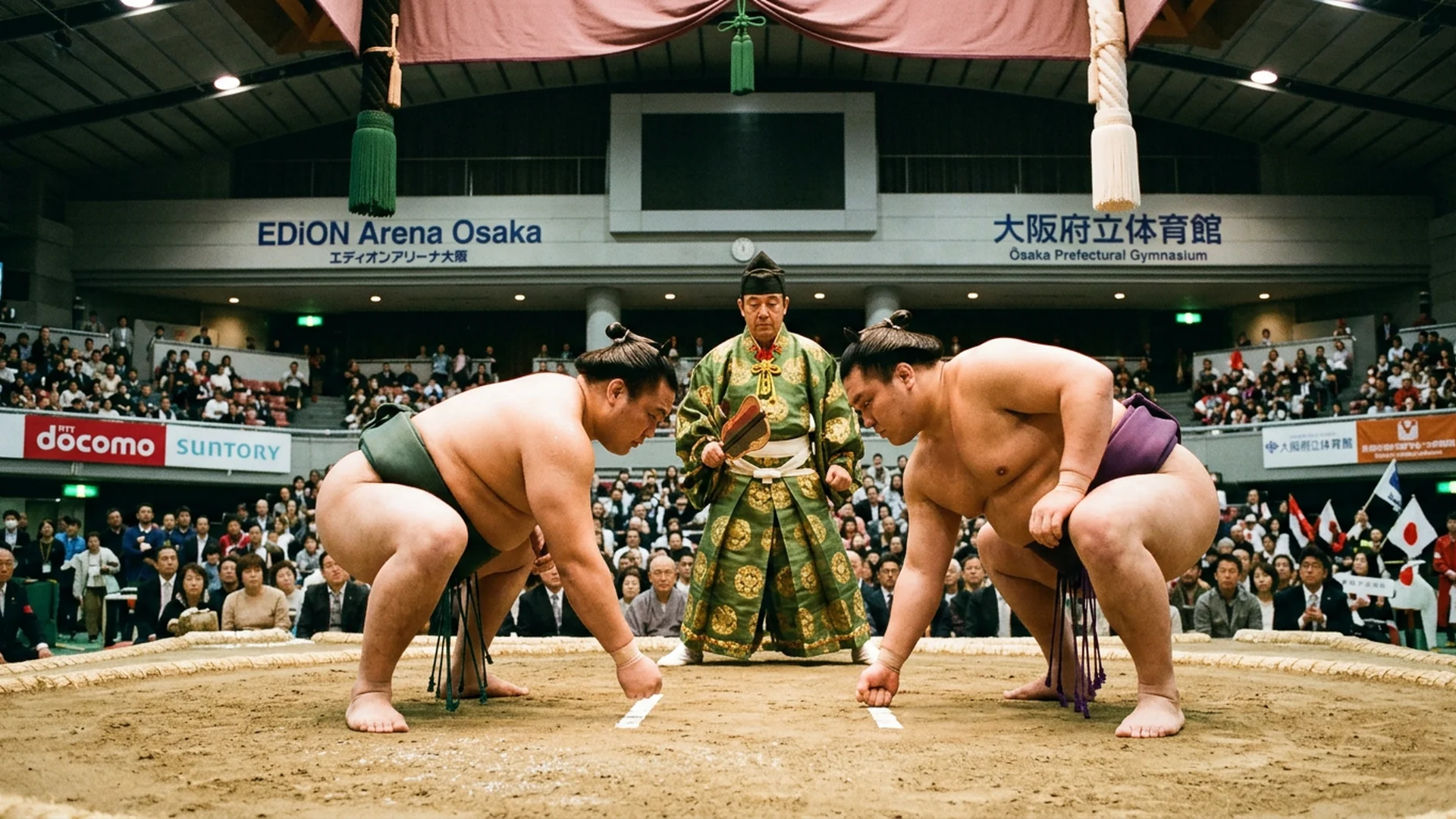
Experience the Grand Sumo Tournament in Osaka

When spring arrives in Japan, the cherry blossoms begin to bud, and the air in Osaka fills with a distinct, electric anticipation. For two weeks in mid-March, the city transforms into the capital of the Sumo world. Having covered cultural events across Japan for over 15 years, I can confidently say that while Tokyo’s Ryogoku Kokugikan is the spiritual home of Sumo, the March Grand Sumo Tournament (Haru Basho) in Osaka offers an atmosphere that is uniquely vibrant, rowdy, and incredibly welcoming.
The Osaka tournament takes place at the EDION Arena Osaka (Osaka Prefectural Gymnasium). Unlike the somewhat reserved nature of Tokyo crowds, Osakans are known for their passion and vocal support. The cheers are louder, the applause is heartier, and the connection between the rikishi (wrestlers) and the fans feels much more intimate here.
In this guide, I will walk you through exactly how to navigate this ancient sporting event, from securing your seat to finding the best Chanko Nabe (sumo stew) after the matches conclude.
The Venue: EDION Arena Osaka
The EDION Arena is located in the Namba district, the beating heart of Osaka’s southern downtown area (Minami). Compared to decades past, the venue has been modernized, yet it retains a classic Showa-era gymnasium feel. It is compact compared to Tokyo’s arena, which is a massive benefit for travelers. Even if you are sitting in the "cheap seats" (general admission) at the very top, the view is surprisingly good, and you feel close to the action.
A Day at the Sumo: What to Expect
Many first-time visitors make the mistake of arriving only for the final bouts. However, a Sumo tournament is an all-day affair, usually starting around 8:30 AM and finishing at 6:00 PM.
Morning: The Future Stars
If you arrive in the morning, the arena is nearly empty. The hush is almost meditative. This is when the Jonokuchi (lowest division) wrestlers compete. These are young apprentices, often skinny and inexperienced. Watching them is fascinating because you are seeing the raw determination of the future stars. You can hear the slap of skin against skin and the gritty sound of feet sliding on the clay dohyo (ring) without any background noise.
Early Afternoon: The Atmosphere Builds
By 2:00 PM, the Juryo division (second highest tier) enters. The wrestlers here wear colorful kesho-mawashi (ceremonial aprons), and the arena begins to fill up. The energy shifts from a practice session to a professional spectator event.
Late Afternoon: The Makuuchi Division
Around 3:45 PM to 4:00 PM, the top division (Makuuchi) ring-entering ceremony takes place. This is a spectacle of color and tradition. The top wrestlers circle the ring, clap their hands, and raise their aprons in unison.
The final bouts occur between 4:00 PM and 6:00 PM. This is when the "Osaka energy" truly shines. When a popular wrestler—or an underdog facing a Yokozuna (Grand Champion)—steps onto the clay, the roar is deafening. Cushions might fly (though this is technically discouraged!), and the excitement is palpable.
Etiquette and "Things to Keep in Mind"
Sumo is a Shinto ritual as much as it is a sport, so there are specific rules of conduct.
- Do stay seated: During a bout, never stand up or walk in the aisles. The matches are short (often less than 10 seconds), so wait for the break between bouts to move.
- Do remove your hat: If you are sitting near the ring, it is polite to remove hats.
- Don't sit with legs outstretched: If you have a "Box Seat" (Japanese style seating on the floor), you sit on a cushion. It is polite to sit cross-legged or with legs folded under you. Avoid pointing the soles of your feet at the ring.
- Don't shout during the "Tachi-ai": The moment before the wrestlers charge is a moment of intense concentration. The crowd goes silent. Respect that silence.
Seasonal Considerations: Spring in Osaka
March in Osaka is a transition period. It can be quite chilly inside the arena, as the doors are often opened for ventilation, and the concrete building holds the cold.
- Recommendation: Dress in layers. You might be cold when you arrive but warm up as the crowd density increases in the afternoon. Also, bring a small tote bag for your shoes, as you may need to carry them depending on your seating section.
Food and Dining Experience
You cannot talk about Sumo without talking about food.
Inside the Arena
The "Sumo Bento" is a classic experience. These bento boxes are colorful and packed with a variety of Japanese favorites like grilled fish, tempura, and simmered vegetables. They sell out quickly, so I recommend buying one before noon. There is also a distinct smell of yakitori (grilled chicken) in the arena—eating chicken is considered good luck in Sumo because chickens stand on two legs (touching the ground with a hand means a loss in Sumo).
Outside the Arena: Namba’s Culinary Delights
Once the bouts end at 6:00 PM, you will spill out into Namba, the "Kitchen of Japan."
1. Chanko Nabe (Sumo Stew) You must try the food that builds the wrestlers' bodies. Chanko Nabe is a protein-rich hot pot with chicken balls, tofu, and mountains of vegetables.
- Recommendation: There are several restaurants near the arena run by retired wrestlers. Look for Kaminari-beya or similar spots in the Namba area. The broth is hearty, and the atmosphere is lively.
2. Namba Parks Just a short walk from the EDION Arena is Namba Parks, a massive shopping and dining complex designed to look like a canyon.
- Why go here: If you want a break from the crowds, the rooftop garden offers a serene escape. There are excellent restaurants on the upper floors ranging from Italian to high-end Sushi.
3. Dessert: Rikuro Ojisan For a post-dinner treat, head toward Namba Station for Rikuro Ojisan no Mise (Uncle Rikuro). They are famous for their jiggly, freshly baked cheesecakes. When a fresh batch comes out of the oven, they ring a bell. It is light, fluffy, and the perfect end to a heavy meal.
How it Used to Be vs. Now
Fifteen years ago, getting tickets for the Osaka tournament was a matter of lining up early in the morning at the box office or navigating a Japanese-only phone system. It was an adventure, but a stressful one.
Now: The popularity of Sumo has surged globally. Tickets sell out almost instantly (often within an hour of going on sale).
- My Advice: If you cannot navigate the official ticket site (which now has English), I highly recommend booking through a reputable third-party tour operator or a concierge service well in advance. The "General Admission" tickets go on sale on the day of the event at the arena, but people start lining up at 6:00 AM. Unless you are a die-hard fan, pre-booking reserved seats is the only way to guarantee a stress-free experience.
Timings and Logistics
- Tournament Dates: Mid-March (Check the official Nihon Sumo Kyokai schedule annually).
- Box Office Opens: Usually around 8:00 AM for day tickets.
- Bouts End: 6:00 PM sharp with the "Bow Twirling Ceremony" (Yumitori-shiki). Do not leave before seeing this! A lower-ranked wrestler twirls a bow with incredible speed to close the day.
Final Thoughts
The Osaka Grand Sumo Tournament is more than a sport; it is a theatrical display of Japanese history. The salt tossed into the air to purify the ring, the colorful banners paraded around the dohyo, and the sheer physical impact of the wrestlers create a sensory experience you cannot find anywhere else.
While Tokyo offers tradition, Osaka offers heart. The cheers are louder, the food is richer, and the memories you make in the EDION Arena will last a lifetime. So, grab a bento, settle onto your cushion, and prepare for the earth to shake.
Safe travels and enjoy the bouts!