
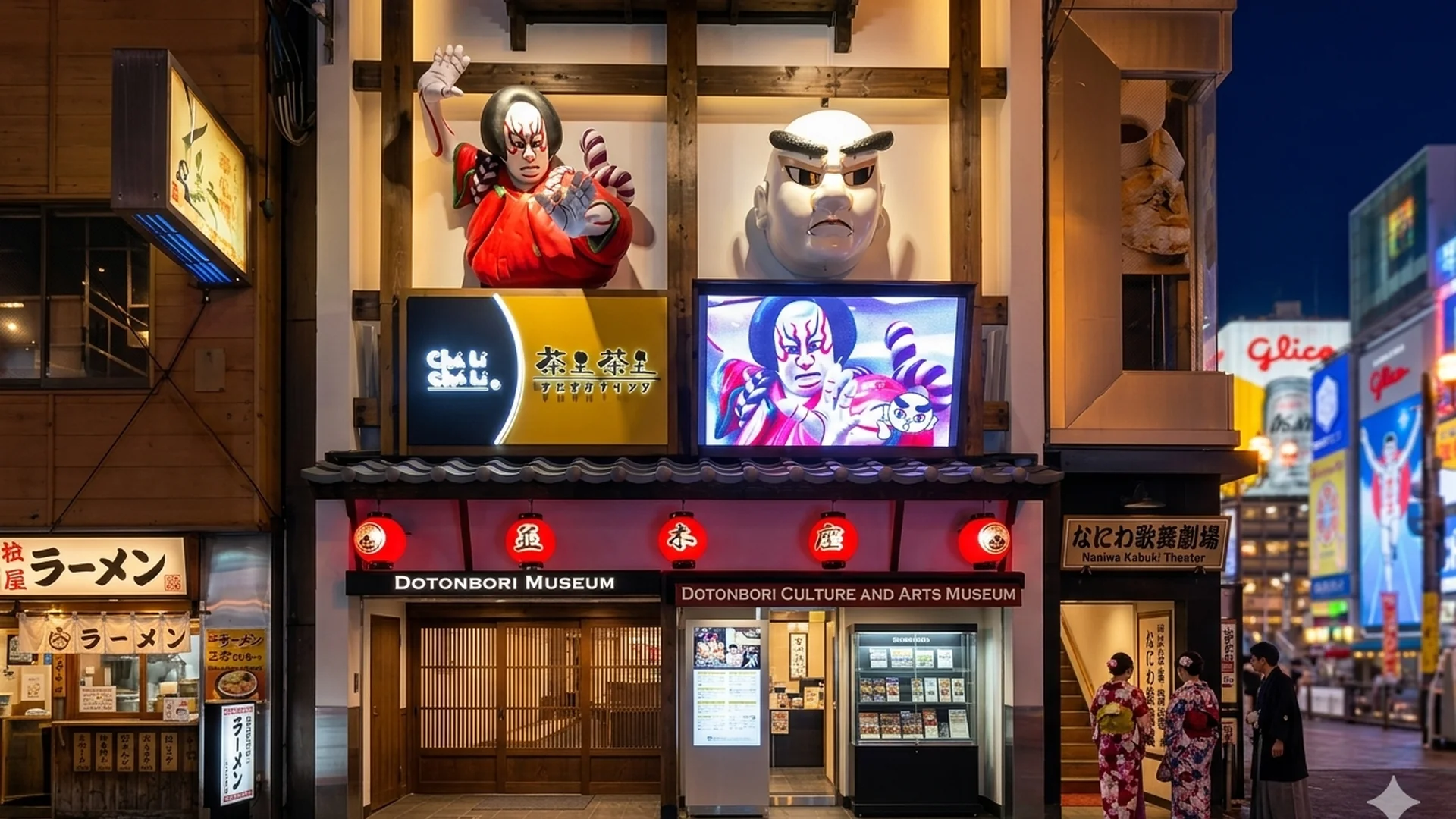
Exploring the Dotonbori Museum Namikiza in Osaka

When most travelers arrive in Dotonbori, their senses are immediately overwhelmed by the sensory overload of the present day. The neon Glico Man looms overhead, the giant mechanical crab waves its claws, and the smell of takoyaki fills the air. However, after exploring Osaka for over 15 years, I have learned that the true soul of this district lies not in its modern neon, but in its history as the "Broadway of Japan."
Tucked away amidst the bustle is a small, culturally significant gem that many tourists walk right past: the Dotonbori Museum Namikiza. If you want to understand why Dotonbori exists in the first place, this is where you need to go. It offers a fascinating glimpse into the Edo period when this canal-side street was lined not with drugstores and duty-free shops, but with grand Kabuki and Bunraku theaters.
In this guide, I will take you through the experience of visiting Namikiza, compare the Dotonbori of the past with the present, and guide you to some authentic local experiences nearby.
The Transformation: From Theater District to Neon Jungle
To appreciate the museum, you have to understand the ground you are standing on. In the Edo period (1603–1867), Dotonbori was designated as the entertainment district of Osaka. It was home to five major theaters, known as the "Naniwa Goza." People would arrive by boat along the canal, dressed in their finest kimonos, ready for a day of drama and storytelling.
Then vs. Now:
- Then: The street was lined with tea houses (shibai-jaya) connected to the theaters. The soundscape was filled with the wooden clappers of Kabuki and the shamisen music of Bunraku.
- Now: Today, only the Shochikuza Theater remains as a grand active theater structure. The rest have transformed into the entertainment and dining complex we know today. The Namikiza museum serves as a bridge, preserving the atmosphere of those lost theaters.
Inside the Museum: Stepping onto the Stage
The museum is located relatively close to the main Dotonbori bridge, but it can be tricky to find as it is often housed within a multi-use building. Look for the traditional signage.
Upon entering, the atmosphere shifts dramatically. You leave the chaotic noise of the 21st century and step into the warm, wooden glow of the 18th century. The museum creates a reproduction of a traditional playhouse.
The Revolving Stage (Mawari-butai)
The centerpiece of the experience is the recreated stage. Japan invented the revolving stage for theater long before it was adopted in the West. At Namikiza, you can see how this mechanism worked to change scenes seamlessly, allowing for complex storytelling. It is fascinating to see the wooden mechanics that operated without electricity.
The Trapdoor (Suppon)
Another highlight is the "Suppon," a small trapdoor on the hanamichi (the walkway extending into the audience). In Kabuki lore, this trapdoor was used specifically for the entrance of supernatural beings like ghosts or ninjas. Seeing it up close gives you an appreciation for the physical demands placed on the actors of the past.
Historical Artifacts
The walls are adorned with Ukiyo-e woodblock prints depicting famous actors of the time. In the Edo period, Kabuki actors were the equivalent of modern Hollywood superstars. You will also find old scripts and posters that show the vibrant design aesthetic of old Osaka.
Practical Information and Timings
Opening Hours
The museum generally operates from 10:00 AM to 6:00 PM.
- Insider Tip: The last entry is usually 30 minutes before closing. I recommend visiting around 11:00 AM or just after lunch to avoid any potential crowds, though it is rarely packed like the main streets.
Things to Keep in Mind (Do's and Don'ts)
- Do take your time to look at the dioramas. They are incredibly detailed and show what the street looked like centuries ago.
- Do ask the staff questions. While English signage might be limited in some temporary exhibits, the staff are passionate about the history and often communicate well through gestures or translation apps.
- Don't touch the fragile woodblock prints or old manuscripts unless explicitly told it is interactive.
- Don't eat or drink inside the exhibit area. Save your appetite for the street food outside!
Nearby Experiences: A Cultural and Culinary Stroll
After soaking in the history, step back out into modern Dotonbori. You will see the street with new eyes, understanding that the concentration of restaurants exists because theatergoers needed to eat!
Hozenji Yokocho: A Quiet Respite
Just a short walk from the museum is Hozenji Yokocho. This narrow, stone-paved alleyway survived the war and feels like a movie set.
- Experience: Visit the Hozenji Temple to see the Mizukake Fudo statue. It is covered in lush green moss because visitors splash water on it for luck. It is a striking contrast to the museum's wooden interior.
- Atmosphere: In the evening, the lanterns are lit, creating a magical, romantic vibe.
Kamigata Ukiyoe Museum
If you enjoyed the woodblock prints at Namikiza, the Kamigata Ukiyoe Museum is practically neighbors. It focuses specifically on prints from the Osaka/Kyoto region (Kamigata), which are more realistic and portrait-focused than their Tokyo (Edo) counterparts.
Where to Eat Nearby
You are in the "Kitchen of Japan," so dining is an essential part of the itinerary.
Mizuno Okonomiyaki
Located very close to the museum area, Mizuno is legendary. They are famous for their "Yamaimo-yaki," which uses yam instead of flour, making the pancake incredibly fluffy.
- Expectation: There is almost always a queue, but it moves relatively fast. It is worth the wait for a taste of authentic Osaka soul food.
Kukuru Takoyaki
For a quick snack, look for the giant octopus sign. Kukuru serves takoyaki (octopus balls) that are creamy on the inside and perfectly cooked. Grab a boat of 8 balls and eat them by the canal, imagining the boats that used to bring theater patrons to the shore.
Rikuro Ojisan no Mise (Uncle Rikuro)
For dessert, you must try the famous jiggly cheesecake. Rikuro Ojisan is located nearby in the Ebisubashi shopping arcade. When a fresh cake comes out of the oven, they ring a bell. It is light, airy, and not too sweet—perfect after a savory meal.
Seasonal Considerations
- Summer (July/August): Osaka gets incredibly humid. The Namikiza museum is air-conditioned, making it a fantastic midday escape from the heat.
- Winter: The street illumination along the Dotonbori canal is beautiful in December. Visiting the museum in the late afternoon and emerging to see the lights is a great itinerary.
Final Thoughts
The Dotonbori Museum Namikiza is small, but it punches above its weight in cultural value. It provides the context that is missing from a standard sightseeing trip. Instead of just seeing Dotonbori as a place to eat and take selfies, you begin to see it as a place of art, drama, and history.
I recommend spending about 45 minutes to an hour here. It allows you to slow down and connect with the heritage of Osaka before diving back into the chaotic, delicious energy of the city streets.
Enjoy your journey into the theatrical past of Osaka!