
Experience History at the Kyoto Railway Museum in Kyoto

If you have ever marveled at the punctuality of the Shinkansen or felt a wave of nostalgia hearing a steam whistle blow, the Kyoto Railway Museum is a pilgrimage you must make. Located just a short distance from the bustling Kyoto Station, this sprawling complex is not merely a collection of old metal; it is a living testament to Japan's modernization.
Having visited railway museums across the globe over the last 15 years, I can confidently say that Kyoto’s iteration strikes a unique balance. It respects the grit and oil of the industrial age while embracing the sleek, digital future of mass transit. It opened in 2016, effectively merging the historic Umekoji Steam Locomotive Museum with the collections of the Modern Transportation Museum in Osaka. The result is a facility that feels both deeply historical and refreshingly modern.
In this guide, I will walk you through the zones you cannot miss, how to navigate the simulator lottery, and where to find a quiet bite to eat after your rail adventure.
Arrival and The Promenade: A Walk Through Time
Your journey begins before you even enter the main building. The Promenade is designed to look like a station platform, and it immediately sets the stage. Here, you are greeted by the C62 Steam Locomotive—the largest steam engine ever built in Japan for passenger trains—standing proudly alongside the very first 0 Series Shinkansen.
Then and Now: Years ago, visiting the predecessor (Umekoji Museum) felt strictly like stepping into the 19th century. It was all smoke and iron. Now, seeing the bullet train next to the steam engine creates a powerful visual timeline. It illustrates just how rapidly Japan transformed from the Meiji era to the high-tech powerhouse of the 1960s.
I recommend taking a moment here to look at the wheels. The sheer size of the steam locomotive's driving wheels compared to the compact efficiency of the Shinkansen wheels is a detail many rush past.
The Main Hall: The Cathedral of Trains
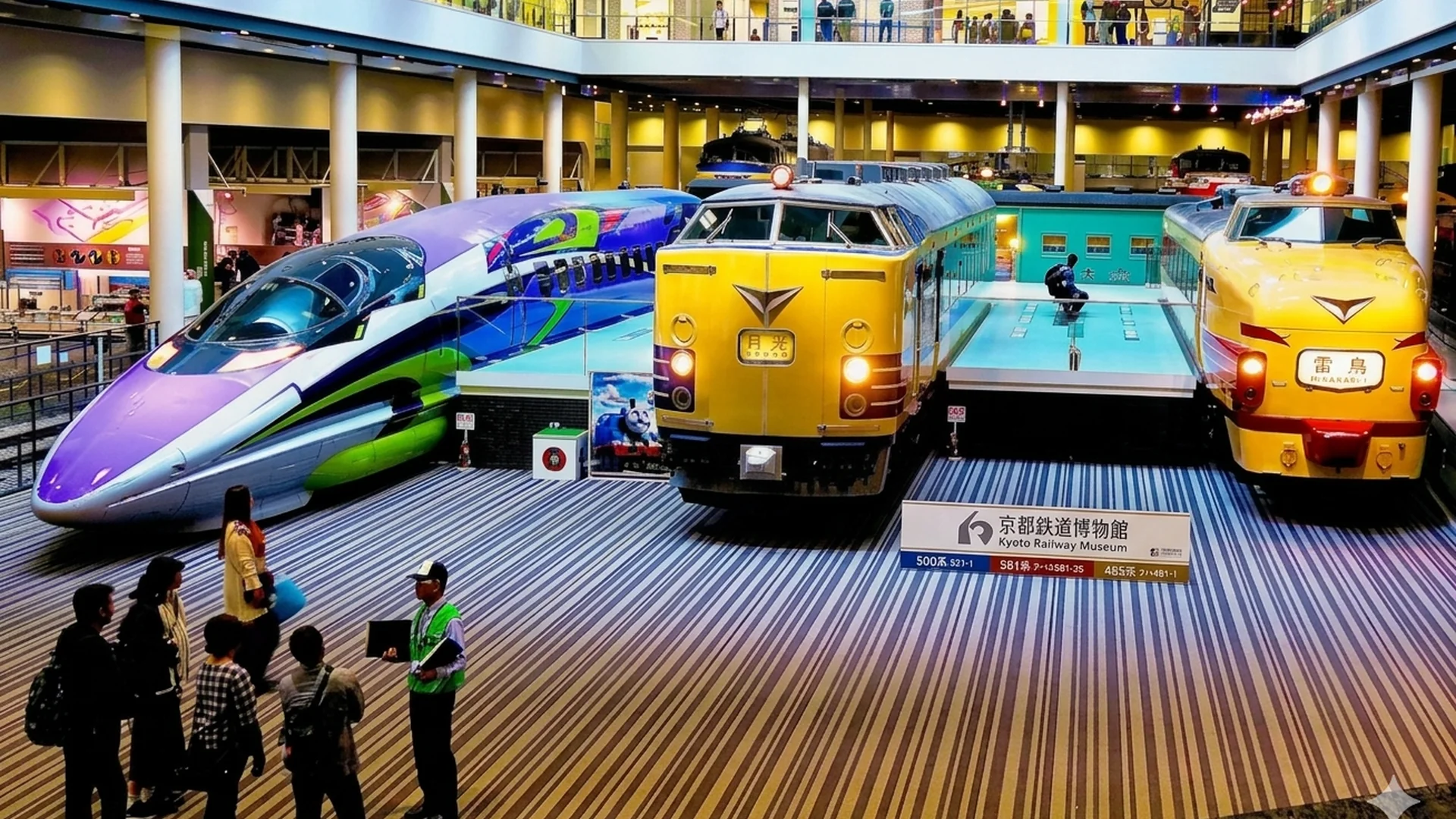
Stepping into the Main Hall is a breathtaking moment. The ceiling is high, allowing natural light to flood in over a massive collection of 53 railway vehicles.
The 500 Series Shinkansen
The star of the show for many is the 500 Series Shinkansen. With its needle-nose design and fighter-jet aesthetic, it remains one of the coolest trains ever designed. You can get right up close to the nose cone. I recommend crouching down to eye level with the front of the train; it gives you a true sense of the aerodynamics involved.
Interactive Exhibits
The museum excels at interactivity. You will find cross-sections of engines, working signals, and ticket gates.
- Insider Tip: Look for the ticket machine exhibit. You can print a souvenir ticket with your name on it and pass it through a transparent ticket gate to see exactly how the machinery sorts and punches the paper in milliseconds. It is mesmerizing.
The Driving Simulator
This is the most sought-after experience in the museum. You can drive a Shinkansen or a local train in a hyper-realistic simulator.
- Important: You cannot just walk up and play. In the past, this was strictly a lottery system upon entry. Recently, they have moved to an advance reservation system via their website or a lottery app depending on the day. Do check the official website before your trip to see the current booking method, or head to the information desk immediately upon arrival to ask about availability.
The Roundhouse: The Heart of Umekoji
While the Main Hall is impressive, the soul of the museum lies outside in the Roundhouse. This is a Designated Important Cultural Property. Built in 1914, this fan-shaped garage houses 20 steam locomotives.
The smell here is distinct—a mix of oil, coal, and old metal. Unlike the polished interior of the main museum, this area feels gritty and authentic. This is where the old Umekoji Steam Locomotive Museum shines through.
SL Steam Experience: You can actually ride a carriage pulled by a real, coal-burning steam locomotive. The ride is short (about 10 minutes or 1km), but the sound of the whistle and the rhythmic chugging is unforgettable.
- Recommendation: Try to sit in an open-air car if the weather permits. The steam drifts back, and you get a much better view of the mechanics in motion.

The Diorama and Sky Terrace
On the second floor, do not miss the Railway Diorama. It is one of the largest in Japan. It is not just a static display; a narrator guides you through a "day in the life" of the railway, from the first morning rush to the night trains. The lighting changes, and the sheer number of model trains moving simultaneously is a logistical ballet.
Finally, head up to the Sky Terrace on the roof. It offers a panoramic view of the actual JR Kyoto Line and the Shinkansen tracks. It is a fantastic spot for photography because you can capture the Toji Temple pagoda and a modern N700 Supreme Shinkansen in the same frame—the ultimate contrast of old and new Kyoto.
Dining Options: Ekiben and Local Flavors
You will likely spend 3 to 4 hours here, so you will get hungry.
Inside the Museum
You have a unique option inside: eating a Bento box inside a retired dining car. There is a kiosk selling "Ekiben" (station lunch boxes) near the promenade. I recommend the Makunouchi Bento for a variety of classic flavors. Eating it inside the vintage train car adds a layer of immersion to your visit. There is also a standard restaurant on the second floor with large windows overlooking the tracks.
Nearby Dining
If you prefer to eat outside, Umekoji Park surrounds the museum.
- Umekoji Park Cafe: Located right in the park, this is great for a light lunch, offering pizza and pancakes with a view of the greenery.
- Kyoto Station Area: If you want something heartier, walk back toward Kyoto Station (about 15-20 minutes). I recommend Kyo-Chabana for Okonomiyaki. It offers a localized twist on the savory pancake, often using tomato or avocado, which is a nice break from tradition.
Practical Information and Tips
Opening Hours
The museum generally opens from 10:00 AM to 5:00 PM (Last entry at 4:30 PM).
- Closed: Wednesdays (and Year-End/New Year holidays). However, if Wednesday falls on a national holiday, it stays open. Always check the calendar.
Best Time to Visit
- Weekdays: Tuesday or Thursday are your best bets to avoid crowds.
- Mornings: Arrive right at 10:00 AM to head straight for the simulator lottery or the SL Steam ride tickets, as these sell out/fill up first.
Do's and Don'ts
- Do wear comfortable shoes. The complex is vast, and you will be walking on concrete and asphalt.
- Do bring a fully charged camera. The lighting in the Main Hall is excellent for photography.
- Don't rush the Roundhouse. Take the time to look at the nameplates on the trains; some have traveled millions of kilometers.
- Don't ignore the "Safety" exhibit. It teaches you what to do in an emergency on a train, which is valuable knowledge for your Japan trip.
Seasonal Considerations
- Spring (Sakura): Umekoji Park is a cherry blossom spot. The view from the SL Steam train as it passes blooming trees is magical.
- Summer: The museum is air-conditioned, making it a perfect escape from Kyoto's humid heat. However, the Roundhouse is outdoors, so bring a hat.
- Winter: The steam from the locomotives in the Roundhouse is much more visible and dramatic in the cold air.
Final Thoughts
The Kyoto Railway Museum is more than a rainy-day backup plan; it is a celebration of engineering and culture. It successfully bridges the gap between the nostalgic past of the steam era and the high-speed efficiency of modern Japan. Whether you are a die-hard "densha-otaku" (train geek) or a family traveler, the interactive nature of the exhibits ensures you leave with a deeper appreciation for the rails that bind this country together.
I recommend allocating at least half a day here. Take your time, ride the steam train, and enjoy the journey.