
Complete Guide to the Kyoto National Museum of Modern Art
When mapping out an itinerary for Japan's ancient capital, most travelers naturally gravitate toward the city's celebrated wooden temples, vibrant vermilion shrines, and serene bamboo groves. However, if you want to truly understand the creative heartbeat of the Kansai region, I highly recommend dedicating a morning or afternoon to the Kyoto National Museum of Modern Art (often affectionately referred to as MoMAK).
Situated in the culturally rich and deeply scenic Okazaki Park district, this institution offers a brilliant contrast to the antiquities found elsewhere in the city. Here, tradition and contemporary vision collide in spectacular fashion. This comprehensive guide will walk you through everything you need to know, from navigating the thoughtfully curated galleries to finding the perfect spot for a post-museum matcha latte.
The Evolution: From a Modest Annex to an Architectural Icon
To appreciate the museum fully, it is helpful to look at how it used to be compared to what it is now. Originally established in the early 1960s, the facility began its life simply as a local annex to the larger National Museum of Modern Art in Tokyo. It functioned mostly as a secondary exhibition space rather than a standalone cultural powerhouse.
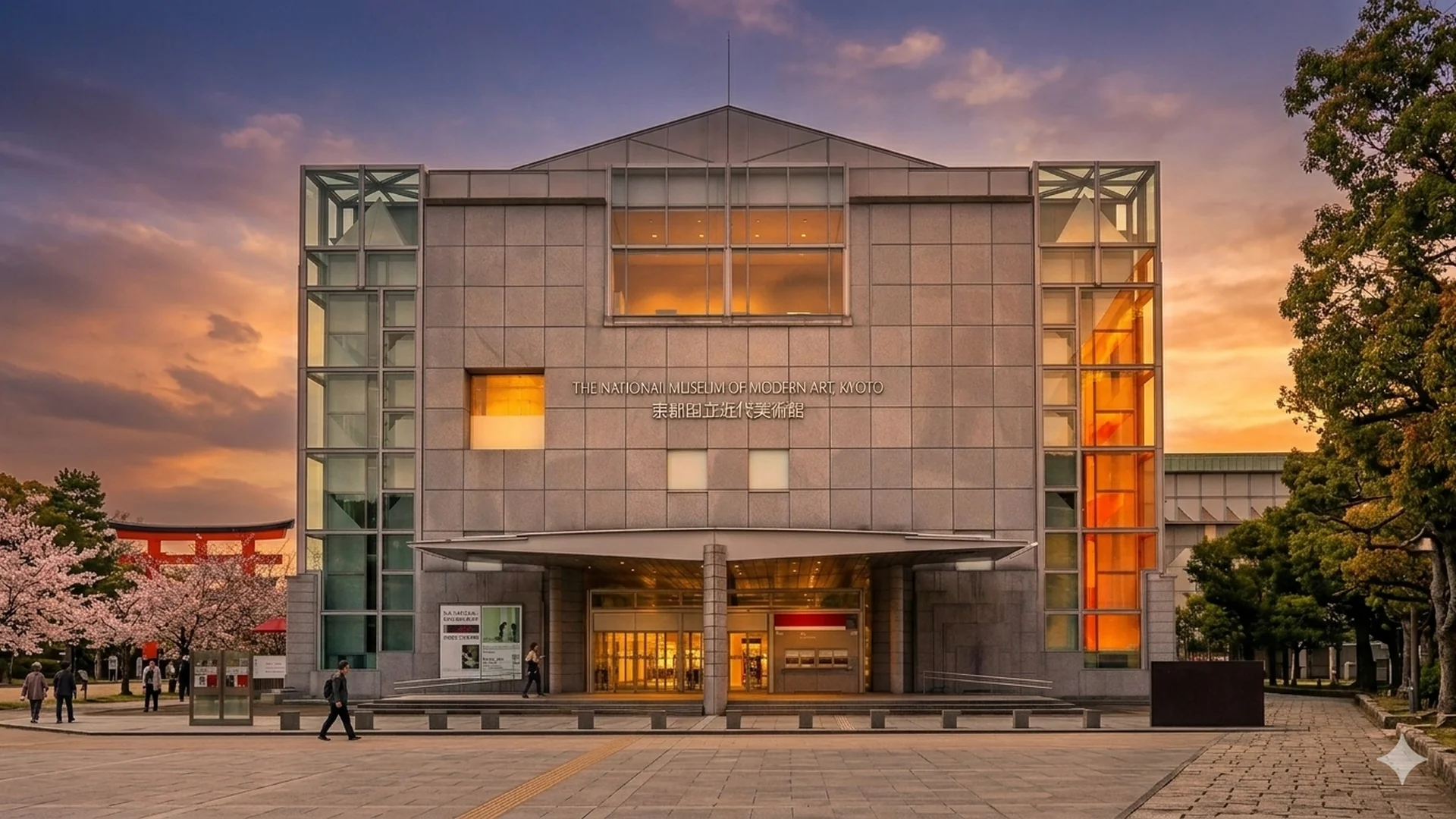
However, as the unique artistic identity of Kyoto and the wider Kansai region demanded a dedicated spotlight, the museum gained its independence. The transformation culminated in 1986 with the unveiling of the current building, designed by the world-renowned Japanese architect Fumihiko Maki. Today, the structure itself is a work of art. Featuring clean, symmetrical lines, expansive glass walls, and a sleek grey facade, the building beautifully mirrors the calm waters of the adjacent Okazaki Canal. Walking through its light-filled corridors today feels like a masterclass in spatial harmony, a far cry from its humble beginnings as a mere branch gallery.
What to Expect Inside the MoMAK Galleries
The layout of the Kyoto National Museum of Modern Art is highly intuitive, making it a joy to navigate. As you transition from the bustling city streets into the quiet, temperature-controlled environment of the galleries, you will discover a vast collection that emphasizes artists from Kyoto and western Japan.
The Masterpieces of Kyoto Nihonga
One of the primary reasons I recommend this place is its breathtaking collection of Nihonga (traditional Japanese-style paintings). While Western art relies heavily on oil paints and canvas, Nihonga utilizes crushed natural minerals, shells, coral, and gold or silver leaf applied to delicate paper or silk. The Kyoto school of Nihonga is particularly famous for its soft, atmospheric realism and profound connection to seasonal changes.
As you observe these pieces, take a moment to look closely at the textures. The way the artists capture the morning mist over the Arashiyama mountains or the delicate feathers of a heron is mesmerizing. These galleries offer a quiet, contemplative space where the deep-rooted aesthetics of the city are vividly brought to life.
The Flourishing World of Kansai Crafts and Ceramics
Kyoto has always been a city of artisans, historically producing the finest goods for the imperial court and aristocratic families. The museum’s craft section beautifully documents how these ancient techniques evolved to meet the modern era.
You will find an extraordinary array of ceramics, transitioning from functional, rustic tea ceremony bowls to avant-garde, abstract sculptural forms created in the mid-to-late 20th century. The textile exhibits are equally impressive, showcasing intricate Kyo-yuzen dyeing techniques that have been reimagined for modern tapestries and fashion. Exploring this section gives you a profound understanding of how local craftspeople continuously push boundaries while respecting their ancestral heritage.
Temporary Exhibitions and Global Perspectives
Beyond its permanent collection, the museum hosts rotating temporary exhibitions that draw art enthusiasts from across the globe. These special showcases often feature impressive international collections, ranging from European modernist photography to contemporary global installations. Because these exhibits change every few months, every visit offers a completely new visual narrative.
Essential Visitor Information for Your Trip
To make the absolute most of your visit, a little advance planning goes a long way.
Opening Hours: The museum generally welcomes visitors from 9:30 AM to 5:00 PM. If you happen to be traveling over the weekend, you are in luck—on Fridays and Saturdays, the museum usually extends its hours until 8:00 PM, allowing for a magical evening art viewing experience. The last admission is always 30 minutes before closing time. Please note that the facility is closed on Mondays (or the following Tuesday if Monday is a national holiday), as well as during the New Year transition period.
Seasonal Considerations: While the art inside is permanent, the view outside is seasonal. The absolute best time to visit is during the spring. The expansive glass windows in the museum's lobby and stairwells look directly out over the Okazaki Canal, which is lined with hundreds of cherry trees. Seeing the modern art inside paired with the pale pink blossoms outside is an unforgettable experience. Autumn also offers gorgeous views of turning foliage.
Cost Expectations: Admission to the permanent collection is ¥730, squarely in the standard, budget-friendly range for national museums in Japan. Special temporary exhibitions require a separate, slightly higher-priced ticket.
Proper Etiquette: Do's and Don'ts in the Galleries
Japanese museums maintain a wonderfully tranquil atmosphere, allowing everyone to enjoy the art without distraction. Here are a few things to keep in mind:
- Do use the lockers: There are coin-return lockers located near the entrance. I highly recommend storing your heavy backpacks, shopping bags, and thick coats here so you can navigate the galleries comfortably.
- Don't take photos everywhere: Photography rules are strict but fair. While the lobby and certain designated permanent collection areas allow photography, temporary exhibitions and specific fragile artworks strictly prohibit it. Always look for the camera icon with a slash through it on the informational placards.
- Do silence your devices: Switch your mobile phone to silent mode before entering the gallery spaces to preserve the contemplative environment.
- Don't bring food or drinks inside: Even bottled water should be kept securely in your bag or left in a locker while you are in the exhibition halls.
Where to Eat and Relax Nearby
Exploring vast art collections will certainly work up an appetite. Fortunately, the Okazaki district is brimming with fantastic culinary options.
If you want to stay within the building, head down to the ground floor to Cafe de 505 (📍 View Location). This charming museum cafe features an outdoor terrace that sits right on the edge of the canal. It is an excellent spot to enjoy a light pasta lunch, a slice of seasonal cake, and a hot coffee while watching the sightseeing boats drift by.
For a more substantial meal with a stylish atmosphere, simply walk a few minutes to Kyoto Modern Terrace (📍 View Location). Located on the second floor of the nearby Rohm Theatre building, this beautifully designed restaurant offers premium dining featuring locally sourced Kyoto ingredients, artisanal mocktails, and decadent desserts.
If you are craving something highly local and comforting, take a ten-minute walk to the legendary Yamamoto Menzou (📍 View Location). Known for serving some of the best udon noodles in the city, the chewy, hand-pulled noodles and crispy burdock root tempura are phenomenal. Be prepared to wait in line, as it is incredibly popular, but the rich, flavorful broth is entirely worth your time.
Expanding Your Day in the Okazaki District
The museum is perfectly situated for a full day of cultural exploration. Right next door, you will find the massive vermilion torii (shrine gate) that marks the entrance to the historic Heian Shrine (📍 View Location). The shrine's expansive strolling garden is breathtaking and provides a beautiful traditional counterpoint to the modern art you just viewed.
Additionally, just steps away is the Kyoto Tsutaya Books (📍 View Location), a highly aesthetic bookstore combining literature, traditional crafts, and a Starbucks. It is a great place to pick up a souvenir or simply rest your feet while flipping through a design magazine.
Frequently Asked Questions
How much does it cost to visit the Kyoto National Museum of Modern Art?
Admission to the permanent collection is ¥730. Special temporary exhibitions require a separate, slightly higher-priced ticket.
Who designed the current MoMAK building?
The current building, unveiled in 1986, was designed by renowned Japanese architect Fumihiko Maki. Its clean lines and expansive glass walls mirror the adjacent Okazaki Canal.
What is Nihonga, and why is it a highlight here?
Nihonga is traditional Japanese-style painting made with crushed natural minerals, shells, coral, and gold or silver leaf on paper or silk, rather than Western oil paints. The museum's Kyoto school collection is known for soft, atmospheric realism tied to seasonal change.
Is the museum open on weekends?
Yes. On Fridays and Saturdays, the museum usually extends its hours until 8:00 PM for evening viewing. It's closed on Mondays (or the following Tuesday if Monday is a holiday) and during the New Year period.
What's nearby if I want to make a full day of it?
The Heian Shrine, with its striking vermilion torii gate and strolling garden, sits right next door, and Kyoto Tsutaya Books is just a few steps away.
Visiting the Kyoto National Museum of Modern Art allows you to see a different, dynamically creative side of the city. By blending world-class architecture, stunning regional crafts, and a prime location in one of the city's most beautiful parks, it provides a travel experience that is both intellectually stimulating and visually profound.