
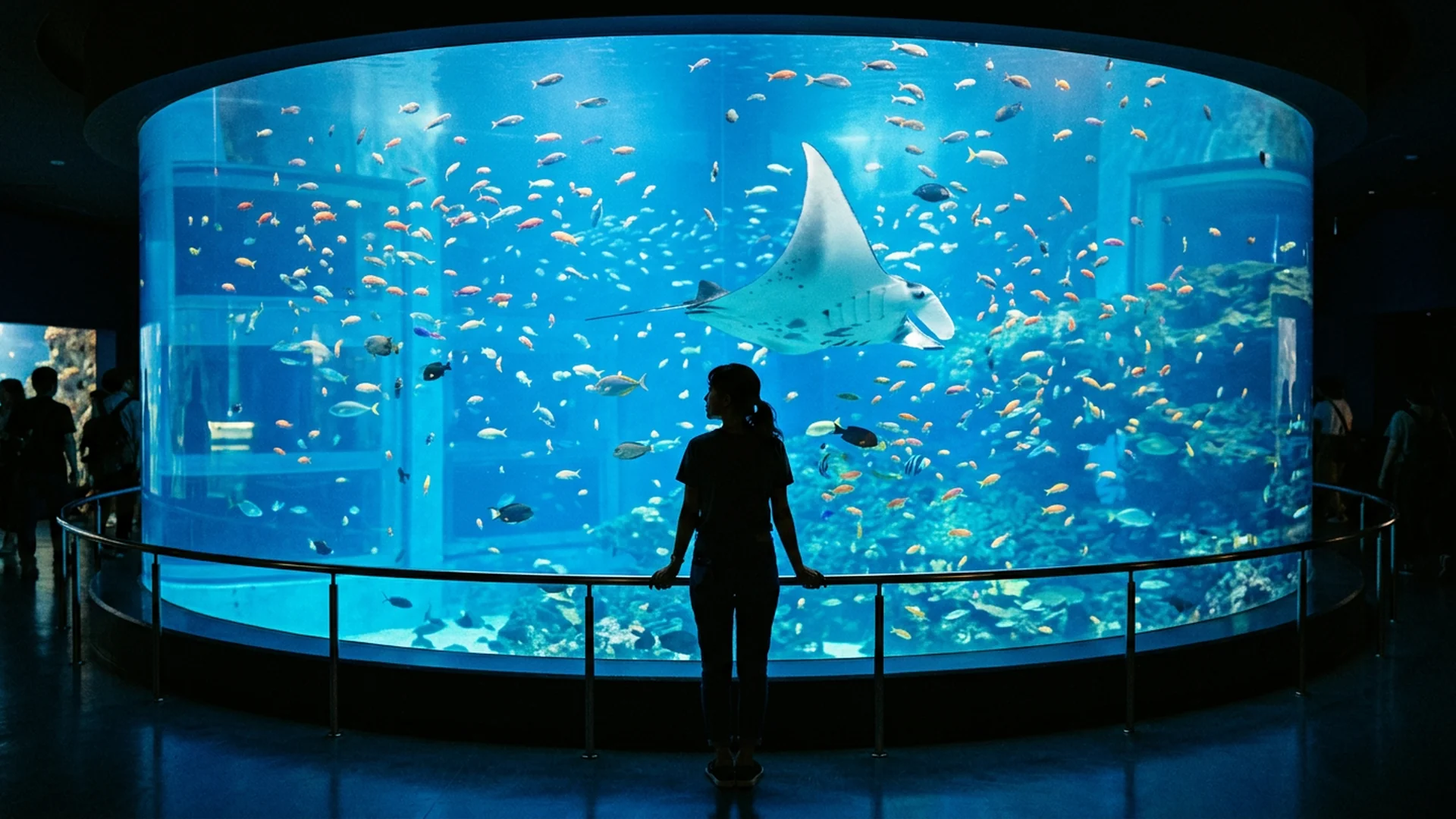
A Complete Guide to Exploring the Kyoto Aquarium in Japan
When you think of Japan's ancient capital, your mind likely wanders to historic shrines, peaceful bamboo groves, and traditional tea houses. However, I highly recommend adding a modern, vibrant twist to your itinerary by visiting the Kyoto Aquarium. Nestled conveniently in the lush, green surroundings of Umekoji Park, this facility offers a refreshing change of pace from traditional sightseeing[1, 3, 6]. Whether you are looking for a relaxing escape from a rainy afternoon or a captivating, interactive experience for your family, this aquatic haven showcases the incredible marine and river ecosystems native to the region, alongside fascinating species from across the globe [2, 6].
The Evolution: What Makes Kyoto Aquarium Unique Today?
If you visited aquariums a decade ago, you might remember them as simple, static hallways lined with rectangular glass boxes. Today, the landscape of marine education has dramatically shifted, and the Kyoto Aquarium stands at the forefront of this evolution. When it first opened, it was already praised for being Japan's first large-scale inland aquarium. However, the space has continually transformed to become highly immersive.
A major milestone in this transformation occurred in 2020 with the unveiling of the "Jellyfish Wonder" exhibit[4, 7, 9]. Before this addition, jellyfish displays were relatively modest. Now, the space has been completely reimagined into a breathtaking, interactive zone designed under the concept of "the closer you get, the more you love them." Furthermore, the facility uses 100% pure groundwater drawn from Kyoto's natural underground wells to recreate authentic, pristine habitats for its animals [2]. This dedication to combining local natural resources with cutting-edge display architecture makes your visit feel both globally impressive and distinctly tied to Kyoto.
Must-See Exhibits and Unforgettable Experiences
As you navigate the thoughtfully laid out pathways, you will encounter several distinct zones. I recommend taking your time in each, as they offer completely different atmospheres.
The River of Kyoto: Meet the Giant Salamanders
Your journey begins with a tribute to the local waterways. The "River of Kyoto" zone replicates the upper, middle, and lower reaches of the nearby Kamogawa and Yuragawa rivers [4, 5]. Here, you can observe the Japanese giant salamander, an extraordinary and protected species that feels almost prehistoric. Watching these slow-moving, spotted creatures blend into their rocky, flowing habitats gives you a profound appreciation for the diverse wildlife existing just outside the city's urban center.
Jellyfish Wonder: A Mesmerizing 360-Degree Panoramic View
The crown jewel of the modern Kyoto Aquarium is undeniably the Jellyfish Wonder. Home to approximately 5,000 jellyfish across nearly 30 different species, this area is the largest of its kind in Western Japan[4, 5, 7]. The highlight is "GURURI," a massive 360-degree panoramic water tank filled with gracefully drifting moon jellyfish. Standing in the center makes you feel as though you are floating in the deep blue ocean alongside them.
Take a moment to read the "Jellyfish Wonders Big Picture Book," an intricately detailed explanatory panel created by the dedicated breeding staff [4]. Their passion for these translucent creatures shines through every written detail.
The Cape Penguin Area and the Famous Correlation Chart
If you want to see personality, the penguin zone is the place to be. The aquarium is home to a lively waddle of Cape Penguins. Rather than just watching them swim, I highly recommend checking out the staff-created "Penguin Correlation Chart." This meticulously updated chart details the dramatic, constantly shifting relationships, friendships, and romances between the penguins. It adds a hilarious, soap-opera-like layer to your observation. During feeding times, you can watch their individual quirks shine as some eagerly wait for fish while others attempt to playfully steal from their neighbors [6].
The Sea of Kyoto and the Dolphin Stadium
Moving deeper into the facility, you will find "The Sea of Kyoto," a massive 500-ton tank bathed in otherworldly blue light that replicates the rich coastal waters of the Kyoto prefecture [6]. Finally, step outside to the Dolphin Stadium. Unlike enclosed arenas, this stadium offers an open-air environment with a backdrop of the surrounding park. The daily dolphin programs showcase the incredible bond between the intelligent mammals and their trainers.
Essential Visitor Information: Timings, Seasons, and Insider Tips
To make the most of your day, planning ahead is essential.
Opening Hours: The aquarium generally operates every day from 10:00 AM to 6:00 PM, with the last admission allowed at 5:00 PM [3, 6]. However, timings can occasionally shift during national holidays or specific vacation seasons, so it is always wise to double-check their official calendar before you head out [6].
Best Time to Visit: If you prefer a quieter, more contemplative experience, I recommend visiting on a weekday morning or in the late afternoon after 4:00 PM [3]. Weekends and Japanese public holidays tend to draw larger crowds.
Seasonal Considerations: Summer visits are particularly special. Until late September, the aquarium often hosts the "Jellyfish and Wind Chimes" event [7]. Over a hundred delicate, handmade glass wind chimes—crafted to mimic different jellyfish species—are hung around the facility, filling the air with a soothing, cooling sound that perfectly complements the visual tranquility.
Cost Range: While I won't list specific numeric prices, you can expect the admission to fall within the standard, accessible range for major Japanese attractions, making it a budget-friendly option for families [6]. They offer tiered pricing for adults, high school students, and younger children [6].
Do's and Don'ts for a Smooth Visit
- Do check the daily schedule: Upon entering, look at the schedule for feeding times and keeper talks. The penguin feeding and the large tank feeding sessions are incredibly engaging [11].
- Do bring a camera, but leave the flash off: The blue-lit tanks are a photographer's dream. However, flash photography is strictly prohibited in many areas to avoid startling the marine life.
- Don't rush the interactive panels: The staff puts an immense amount of love into the hand-drawn signs and correlation charts. Taking the time to read them greatly enriches the experience.
- Do consider a combo visit: Your aquarium ticket stub often provides a slight discount to the nearby Kyoto Railway Museum, making for a perfect full-day itinerary in the park [6].
Where to Eat and Relax Nearby
Exploring marine life will certainly work up an appetite. Fortunately, the area around Umekoji Park offers fantastic dining options that cater to various tastes and budget ranges, blending organically into your day out.
Just a stone's throw away inside the park is the Kyo-Yasai Restaurant Umekoji Park (📍 View Location). This beautiful, glass-walled eatery focuses on dishes made from locally sourced Kyoto vegetables. It is moderately priced, offers lovely views of the garden, and is incredibly family-friendly [12].
If you are craving fresh seafood after your aquatic tour, take a short walk to Sushi Nari (📍 View Location). Located near Toji Temple and just minutes from the aquarium, this comfortable spot serves excellent nigiri and hearty seafood bowls [10].
For those who want multiple choices in one spot, walk roughly ten minutes west to the Hotel Emion Kyoto. The second floor features a dedicated restaurant level offering a fantastic array of local cuisine, including traditional Japanese hot pot, grilled eel, and sushi, providing premium dining experiences without feeling overly formal [15].
Lastly, if you just want a quick pick-me-up, there are charming cafes and dessert shops dotted around Umekoji Park where you can grab a matcha ice cream or a hot coffee to enjoy while strolling the green pathways.
How to Get There
Getting to the Kyoto Aquarium is incredibly straightforward, thanks to the city's excellent public transit.
- By Train: The absolute easiest way to reach the aquarium is by taking the JR San-in Main Line to Umekoji-Kyotonishi Station (📍 View Location). From the station exits, it is a scenic, flat, and easy seven-minute walk through the park [4, 12].
- On Foot from Kyoto Station: If you are already at Kyoto Station, you can enjoy a pleasant 15 to 20-minute walk west [6, 12].
- Kyoto Aquarium Location: 📍 View Location [9]
A visit to the Kyoto Aquarium offers a beautiful blend of education, relaxation, and awe. By combining the natural wonders of the sea with the cultural charm of Kyoto's parklands, it promises an unforgettable experience that will be a highlight of your Japanese adventure.