
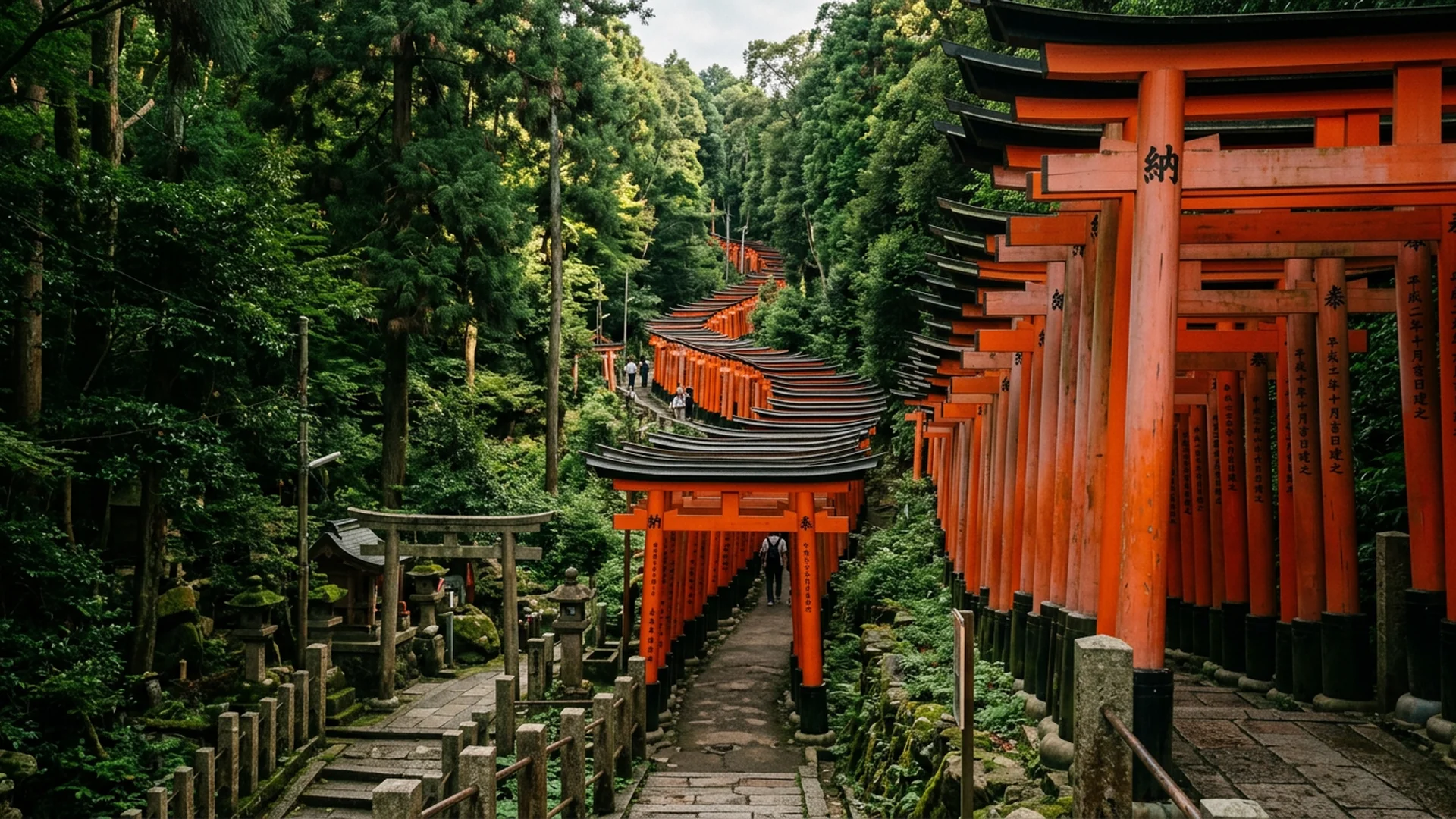
Hiking the Vermilion Gates at Fushimi Inari Shrine Kyoto
If there is one image that defines Kyoto for the modern traveler, it is the endless tunnel of vibrant orange torii gates winding their way up a wooded mountain. This is Fushimi Inari Taisha. Over my 15 years of exploring Japan, I have visited this shrine more times than I can count—in the sweltering heat of August, under a blanket of snow in February, and during the golden light of autumn.
While it is undeniably one of the most famous locations in Japan, many visitors make the mistake of treating it like a photo stop. They arrive at 10:00 AM, crowd into the first hundred meters of gates, snap a selfie, and leave. I am here to tell you that the real magic of Fushimi Inari lies much deeper, and higher up, the mountain.
In this guide, I will walk you through the full experience of Mount Inari, from the bustling base to the serene summit, and share my recommendations on how to escape the crowds to find a moment of spiritual quiet.
The Cultural Significance: More Than Just Gates
Before you start climbing, it helps to understand what you are walking through. Fushimi Inari is the head shrine of approximately 30,000 Inari shrines across Japan. Inari is the Shinto god of rice, which in historical context meant agriculture, but in modern Japan, translates to success in business and commerce.
The Foxes (Kitsune)
You will see stone fox statues everywhere. These are not the gods themselves, but the messengers. You will notice they often hold items in their mouths: a key (for the rice granary), a scroll (wisdom), or a jewel (spirit). Thing to keep in mind: Unlike the cute characters you might see in anime, these statues often have stern, sharp expressions. They are protectors.
The Base and The Senbon Torii
Your journey begins at the massive Romon Gate. I recommend pausing here to cleanse your hands at the temizuya (water pavilion). It is a ritual that centers you before entering the sacred space.
Behind the main hall is what everyone comes for: the Senbon Torii (Thousands of Torii Gates). This section splits into two parallel paths. Insider Tip: This area is the "choke point." It is incredibly dense with people. Do not stop here for your "perfect" photo. The flow of traffic is heavy, and stopping blocks the path. Keep moving. The higher you go, the thinner the crowds become, and the photo opportunities actually get better because the light filters through the trees more naturally.
The Hike: Ascending Mount Inari
The full hike to the summit of Mount Inari (233 meters) takes about 2 to 3 hours round trip, depending on your pace and how often you stop.
The Yotsutsuji Intersection
About halfway up, roughly 30-45 minutes into the hike, you will reach the Yotsutsuji intersection. For many casual hikers, this is the turnaround point. The view here is spectacular, offering a panoramic look over southern Kyoto. You can see how the city grid nestles against the mountains. It is a great spot to catch your breath.
Then vs. Now: Ten years ago, Yotsutsuji was a quiet spot with a few elderly hikers sipping tea. Today, it is a bustling hub. However, the view remains unchanged. If you look west during sunset, the silhouette of the city is breathtaking.
The Summit Loop
From Yotsutsuji, the path creates a circular loop to the top. This is where the atmosphere changes. The noise of the city fades away, replaced by the sound of wind in the cedar trees and the cawing of crows. The gates here are weathered, some with peeling paint, showing the passage of time. There are fewer tourists here. I recommend walking this loop counter-clockwise. You will pass smaller sub-shrines with moss-covered altars that feel ancient and mysterious.
Best Time to Visit: Beating the Crowds
Fushimi Inari is open 24 hours a day, 7 days a week. This is your biggest advantage.
- The Early Bird: I strongly recommend arriving by 6:30 AM or 7:00 AM. The air is crisp, the vendors are just setting up, and you can walk through the Senbon Torii almost alone.
- The Night Owl: Alternatively, visit after 8:00 PM. The main buildings are illuminated, and the mountain trails have dim lanterns. It is a slightly spooky, incredibly atmospheric experience. It feels like a completely different world compared to the daytime chaos. Just be careful of your footing in the dark.
Dining and Refreshments
You will burn calories on this hike, and thankfully, the approach to the shrine is a culinary delight.
Street Food (Sando)
On the street leading from the Keihan Fushimi Inari Station to the shrine, you will find dozens of stalls.
- Must-Try: Inari Sushi. These are pockets of sweet, deep-fried tofu filled with vinegared rice. Since the fox gods are said to love fried tofu, this is the most culturally appropriate snack to eat here.
- Taiyaki: Fish-shaped cakes filled with red bean paste or custard. Perfect for energy.
Kendonya
If you want a sit-down meal, I recommend Kendonya. It is located very close to the Keihan station. They specialize in handmade Udon noodles.
- What to order: Try the Kitsune Udon. It comes with a large piece of sweet fried tofu. The noodles here have a fantastic chewiness (koshi) that you don't find in instant varieties.
Vermillion Cafe
For coffee lovers, there is a hidden gem on the way down from the mountain (on the north side exit) called Vermillion Cafe. It is owned by a local who lived in Melbourne, so the coffee is top-tier espresso style. They have a terrace that overlooks a quiet pond and bamboo grove. It is the perfect place to decompress after the hike.
Nearby Experiences
While Fushimi Inari is the main attraction, the surrounding area has more to offer if you have time.
Tofukuji Temple
Just one station away on the Keihan Line (or a 15-minute walk) is Tofukuji. It is famous for its massive Sanmon gate and the Tsutenkyo Bridge. In autumn, the ravine of maple trees here rivals any view in Japan. It is usually less crowded than the base of Inari.
Do's and Don'ts
- Do wear comfortable walking shoes. The path is paved, but it involves thousands of stone steps. Heels or loose sandals are a bad idea.
- Do bring water, especially in summer. There are vending machines on the mountain, but the prices increase the higher you go!
- Don't walk off the path into the forest. This is considered sacred ground, and also, wild boars do inhabit the mountain (though they rarely come to the main path).
- Don't assume you have to climb to the very top if you are tired. There is no shame in turning back at Yotsutsuji. The view there is actually better than the view at the summit, which is enclosed by trees.
Practical Information
- Opening Hours: Open 24/7.
- Admission: Free.
- Access: The shrine is located directly outside JR Inari Station (on the JR Nara Line, perfect for JR Pass holders) or a short walk from Fushimi Inari Station (Keihan Main Line).
FAQ
What are the Fushimi Inari Shrine opening hours?
It's open 24 hours a day, 7 days a week — there's no gate that closes. Early morning (6:30–7:00 AM) or after 8:00 PM are the best windows to see it without the daytime crowds.
How much is the entrance fee for Fushimi Inari Shrine?
Admission is completely free. There's no ticket to buy at any point on the mountain.
How long does it take to walk Fushimi Inari Shrine?
The full hike to the summit of Mount Inari and back takes about 2 to 3 hours. If you only want to reach the Yotsutsuji intersection (roughly the halfway point, with arguably the best view), it's closer to 30–45 minutes each way, and turning back there is completely reasonable — the view is actually better than at the summit.
How do I get to Fushimi Inari Shrine?
It's directly outside JR Inari Station on the JR Nara Line (convenient if you have a JR Pass), or a short walk from Fushimi Inari Station on the Keihan Main Line.
Is Fushimi Inari Shrine worth doing the full hike, or just the entrance gates?
The famous Senbon Torii photos are all taken in the first few hundred meters, which is also the most crowded part. If you only have time for that, it's still worth it — but the crowds thin out dramatically past Yotsutsuji, and the upper mountain has a genuinely different, quieter atmosphere.
Final Thoughts
Fushimi Inari Shrine acts as a mirror to your own energy. If you rush, it feels chaotic and stressful. If you take your time, breathe the mountain air, and push past the initial crowds, it becomes a pilgrimage. It reminds you that in Kyoto, the most rewarding experiences are often found just a little further up the path.
I recommend dedicating at least a half-day here. Start early, hike high, eat some Inari sushi, and soak in the history of a place that has been worshipped for over 1300 years. Safe travels!