
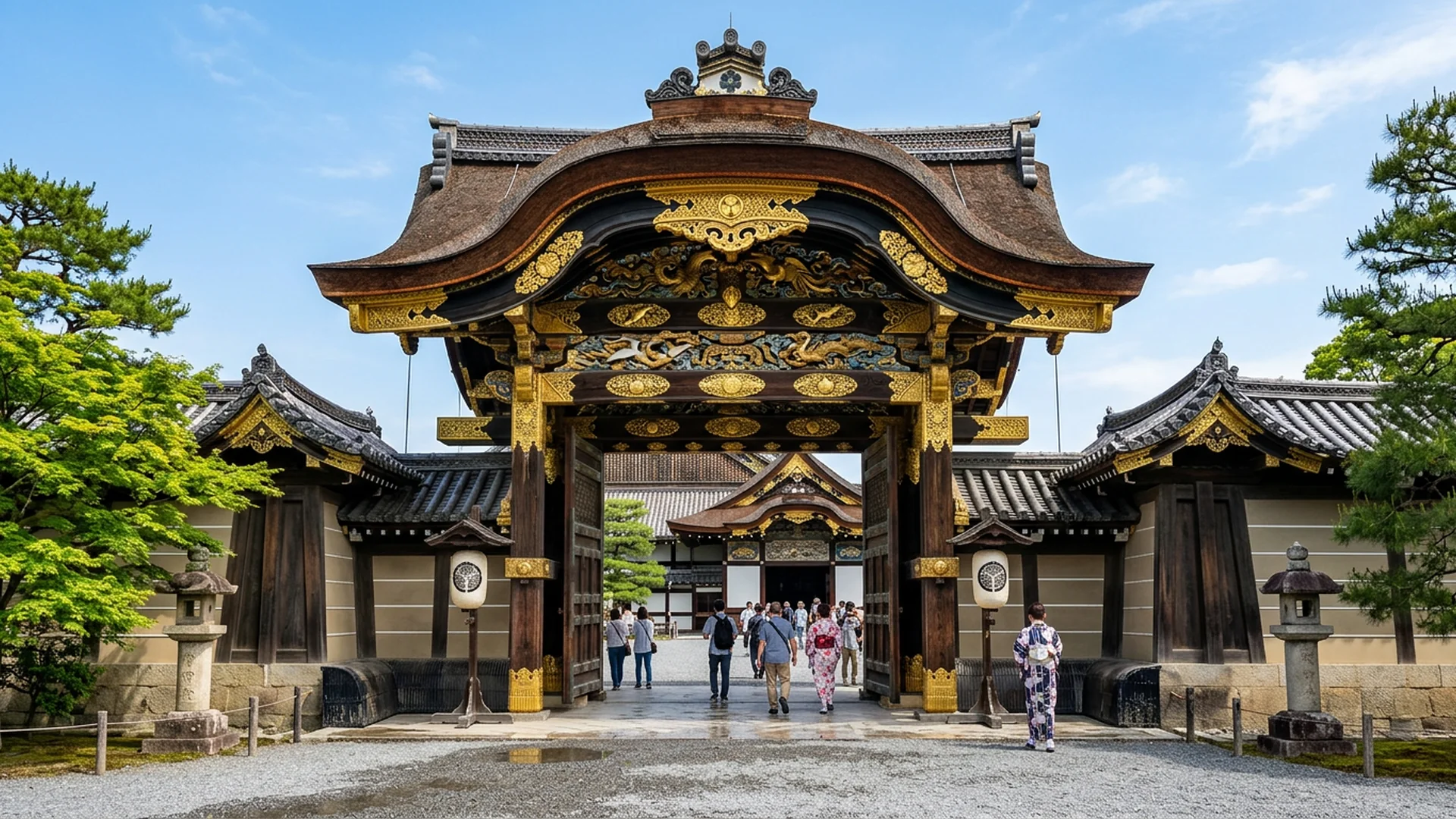
Exploring Nijo Castle Tickets and History in Kyoto
When you step off the train in Kyoto, the sheer volume of temples can be overwhelming. However, if there is one historical site that stands apart from the Zen gardens and Buddhist statues, it is Nijo Castle (Nijo-jo). Having explored the ancient capital for over 15 years, I can confidently say that this is not just another castle; it is a physical manifestation of the power struggle between the Shoguns and the Emperors.
Nijo Castle offers a very different experience compared to the spiritual serenity of places like Kinkaku-ji. Here, the atmosphere is one of political might, samurai authority, and calculated architecture. It is one of the few places in Japan where you can walk through the actual corridors where the Shoguns lived and worked, rather than just viewing a reconstructed concrete tower.
In this guide, I will walk you through how to navigate the Nijo Castle tickets system, what to look for beneath your feet, and where to find a relaxing cup of coffee after your historical deep dive.
Understanding the Ticket Options
Before you even approach the massive Higashi Otemon (East Gate), you need to decide on your ticket. Unlike some attractions with a single entry fee, Nijo Castle usually offers two main options.
Admission Ticket vs. Admission + Ninomaru Palace
I cannot stress this enough: Get the combination ticket. The standard admission ticket grants you access to the castle grounds and the gardens. While the gardens are spectacular, the heart of the experience lies within the Ninomaru Palace. This is where history happened. To visit Nijo Castle and skip the palace interior is like visiting a library and only looking at the book covers.
- Prices (official fee page): Castle admission alone is ¥800 for adults, and the castle plus Ninomaru Palace ticket is ¥1,300. If you buy castle admission only and change your mind, you can add the Ninomaru Palace at the Information Desk inside the castle for ¥500. Castle admission is ¥400 for junior high and high school students and ¥300 for elementary school students, and children under elementary school age are free.
- Honmaru Palace (separate ticket, reservation required): The Honmaru Palace is a separate ¥1,000 ticket on top of castle admission, and it must be reserved in advance as a web ticket, available from 30 days before your visit.
- Advance Booking: According to the official FAQ, no advance reservation is needed to enter the castle or view the Ninomaru Palace, so you can buy those tickets at the ticket office. Only the Honmaru Palace needs a web ticket.
The Ninomaru Palace: Walking on Music
Once you are past the Karamon Gate, a structure so ornate with gold leaf and wood carvings that it was said to intimidate visitors before they even entered, you arrive at the Ninomaru Palace.
The Nightingale Floors (Uguisubari): This is the feature most travelers talk about, and for good reason. As you walk through the corridors in your socks (shoes are strictly forbidden inside), you will hear a chirping sound similar to a bird.
- Then vs. Now: In the Edo period (1603-1867), this was a high-tech security system. The squeaking floors alerted the Shogun's guards to any intruders, ninjas, or assassins moving through the halls. Today, it serves as a delightful, auditory connection to the past. It is fascinating to realize that the sound you hear is the exact same sound a samurai would have heard 400 years ago.
The Art of Intimidation: Pay close attention to the sliding doors (fusuma) painted by the Kano school artists. As you move from the waiting rooms for lower-ranking visitors toward the Shogun's inner chambers, the artwork changes. It starts with tigers and leopards (meant to intimidate) and transitions to peaceful pines and cherry blossoms in the private quarters.
- Note on Photography: Photography is strictly prohibited inside the Ninomaru Palace to preserve the pigments of the ancient paintings. Keep your camera in your bag and let your eyes do the recording.
The Gardens: A Tale of Three Eras
After the dim, historical interiors of the palace, stepping out into the gardens feels like a breath of fresh air. Nijo Castle boasts three distinct gardens, each representing a different era of Japanese landscape design.
- Ninomaru Garden: This is a classic Shoin-zukuri garden with a large pond and carefully placed rocks. It was designed to be viewed from inside the palace.
- Honmaru Garden: Located within the inner moat, this garden has a more Western influence, having been redesigned in the Meiji period.
- Seiryu-en Garden: This is a more modern addition (1965) that blends Western and Japanese styles. It is often used for tea ceremonies and official receptions.
Seasonal Considerations:
- Spring: The castle grounds are home to hundreds of cherry trees, including late-blooming varieties. The "Nijo Castle Sakura Festival" often features projection mapping on the Karamon Gate at night.
- Autumn: The maple leaves in the Ninomaru Garden turn a fiery red, creating a stunning reflection in the pond.
- Summer: It can get incredibly hot with little shade in the main courtyards. I recommend visiting early in the morning.
Nearby Dining and Coffee
After walking the extensive grounds, you will need to refuel. The area around Nijo Castle is quieter than downtown, but it hides some absolute gems.
Clamp Coffee Sarasa
Located about a 10-minute walk from the castle, this is a must-visit for coffee lovers. It is tucked away in a vine-covered alleyway. The interior is rustic, filled with the smell of roasted beans and toast. It feels like a secret hideout.
- Recommendation: Try their hand-drip coffee and thick-sliced toast.
Seike Nijo
If you want a traditional Kyoto lunch, head to Seike Nijo. They specialize in Yuba (tofu skin). Yuba is a quintessential Kyoto delicacy, and this restaurant serves it in multiple ways: sashimi style, in hot pot, and even grilled. It is a healthy, delicate meal that fits the historical vibe of the day perfectly.
Kurasu Kyoto Stand
For those heading back toward Kyoto Station but wanting a quick, high-quality coffee near the castle first, Kurasu is a modern, minimalist coffee stand that roasts excellent beans. It is a great contrast to the ancient history you just witnessed.
Practical Information
Opening Hours
- General: 8:45 AM – 5:00 PM (Last entry at 4:00 PM).
- Ninomaru Palace: 8:45 AM – 4:10 PM (last reception).
- Honmaru Palace: 9:30 AM – 4:00 PM (last reception, reservation required).
- Special days: Hours can be shortened. For example, the official site announced that on Sunday, December 6, 2026, the last admission is 12:00 PM for the grounds and 12:10 PM for the Ninomaru Palace.
- Closed: The castle is closed from December 29 to 31. The Ninomaru Palace is closed every Tuesday in January, July, August and December (if that Tuesday is a public holiday it is open and closes the following day), and also on December 26 to 28 and January 1 to 3. The Honmaru Palace is closed on the third Monday of each month and the following day, and on December 26 to 28 and January 1 to 3. Always check the official website before you go.
Things to Keep in Mind (Do's and Don'ts)
- Do wear socks without holes. You will have to take your shoes off to enter the palace, and you will be walking on wooden floors.
- Do plan your food and drink. The grounds are vast (over 275,000 square meters), but eating and drinking are not allowed in the castle except at designated spots. The main rest area and the Waraku-an Tea House have a cafe menu, and you may eat a lunch you bring yourself in the main rest area.
- Don't carry large luggage. The gravel paths make wheeling a suitcase a nightmare. Use the coin lockers next to the ticket office or in the main rest area.
- Don't touch the paintings or the walls inside the palace. They are centuries old and fragile.
Final Thoughts
Nijo Castle is a place where the floorboards sing and the walls whisper stories of the Shogun. It is a site that requires you to slow down and listen. While the golden pavilion of Kinkaku-ji dazzles the eye, Nijo Castle engages the mind.
My advice is to arrive right when it opens at 8:45 AM. For the first 30 minutes, you can often have the Nightingale Floors almost to yourself, allowing you to hear the squeaking clearly without the chatter of crowds. It is a hauntingly beautiful experience that connects you directly to the samurai era.
Enjoy your journey through history!
FAQ
How much does Nijo Castle cost?
On the official fee page, castle admission is ¥800 for adults and the castle plus Ninomaru Palace ticket is ¥1,300. The Honmaru Palace is a separate ¥1,000 ticket that must be reserved in advance, and the Painting Gallery is ¥100 extra.
Do I need to book Nijo Castle tickets in advance?
Not for the castle or the Ninomaru Palace. Only the Honmaru Palace needs a web ticket, available from 30 days before your visit.
When is Nijo Castle closed?
The castle is closed December 29 to 31. The Ninomaru Palace is closed every Tuesday in January, July, August and December, plus December 26 to 28 and January 1 to 3.
How long should I plan for a visit?
The official FAQ says the Ninomaru Palace and Ninomaru Garden take 1 to 1.5 hours, and adding the Honmaru Garden and Honmaru Palace takes 2.5 to 3 hours.
Are there guided tours?
Yes. Official guides lead tours of about 60 minutes in Japanese (from 9:30 AM and 11:30 AM) and English (from 10:00 AM and 12:00 PM). The fee is ¥1,500 per person for Japanese and ¥2,500 for English, on top of admission.
Can I take photos inside Nijo Castle?
Photography and video are not allowed inside the Ninomaru Palace or the Honmaru Palace. They are allowed in the Painting Gallery without flash, tripods, monopods or extended selfie sticks.