
Exploring Nijo Castle Tickets and History in Kyoto

When you step off the train in Kyoto, the sheer volume of temples can be overwhelming. However, if there is one historical site that stands apart from the Zen gardens and Buddhist statues, it is Nijo Castle (Nijo-jo). Having explored the ancient capital for over 15 years, I can confidently say that this is not just another castle; it is a physical manifestation of the power struggle between the Shoguns and the Emperors.
Nijo Castle offers a very different experience compared to the spiritual serenity of places like Kinkaku-ji. Here, the atmosphere is one of political might, samurai authority, and calculated architecture. It is one of the few places in Japan where you can walk through the actual corridors where the Shoguns lived and worked, rather than just viewing a reconstructed concrete tower.
In this guide, I will walk you through how to navigate the Nijo Castle tickets system, what to look for beneath your feet, and where to find a relaxing cup of coffee after your historical deep dive.
Understanding the Ticket Options
Before you even approach the massive Higashi Otemon (East Gate), you need to decide on your ticket. Unlike some attractions with a single entry fee, Nijo Castle usually offers two main options.
Admission Ticket vs. Admission + Ninomaru Palace
I cannot stress this enough: Get the combination ticket. The standard admission ticket grants you access to the castle grounds and the gardens. While the gardens are spectacular, the heart of the experience lies within the Ninomaru Palace. This is where history happened. To visit Nijo Castle and skip the palace interior is like visiting a library and only looking at the book covers.
- Advance Booking: I recommend purchasing your tickets online in advance. The ticket counters can get quite busy, especially during the cherry blossom season. Having a QR code on your phone allows you to breeze past the initial queue.
The Ninomaru Palace: Walking on Music
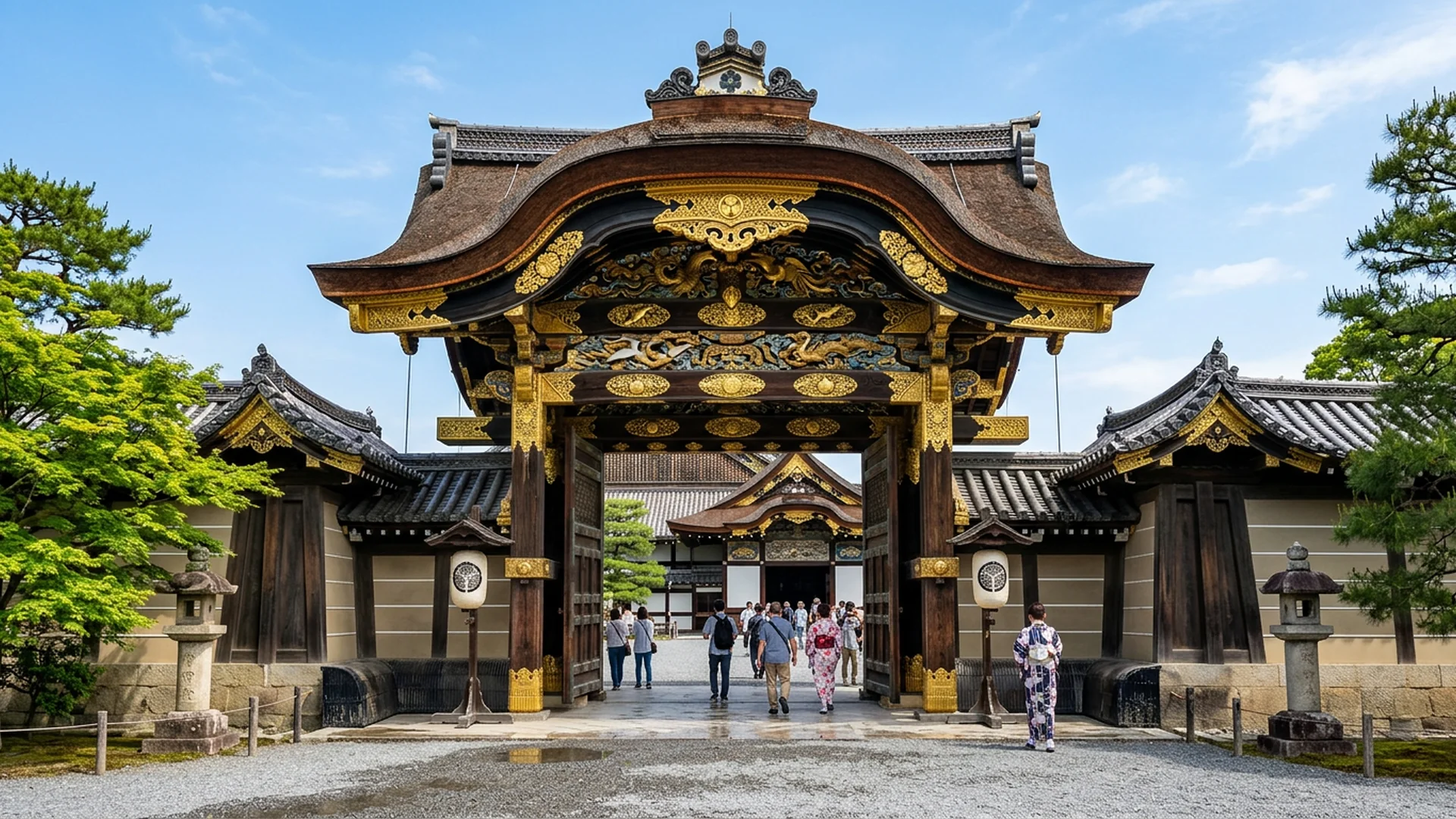
Once you are past the Karamon Gate—a structure so ornate with gold leaf and wood carvings that it was said to intimidate visitors before they even entered—you arrive at the Ninomaru Palace.
The Nightingale Floors (Uguisubari): This is the feature most travelers talk about, and for good reason. As you walk through the corridors in your socks (shoes are strictly forbidden inside), you will hear a chirping sound similar to a bird.
- Then vs. Now: In the Edo period (1603-1867), this was a high-tech security system. The squeaking floors alerted the Shogun's guards to any intruders, ninjas, or assassins moving through the halls. Today, it serves as a delightful, auditory connection to the past. It is fascinating to realize that the sound you hear is the exact same sound a samurai would have heard 400 years ago.
The Art of Intimidation: Pay close attention to the sliding doors (fusuma) painted by the Kano school artists. As you move from the waiting rooms for lower-ranking visitors toward the Shogun's inner chambers, the artwork changes. It starts with tigers and leopards—meant to intimidate—and transitions to peaceful pines and cherry blossoms in the private quarters.
- Note on Photography: Photography is strictly prohibited inside the Ninomaru Palace to preserve the pigments of the ancient paintings. Keep your camera in your bag and let your eyes do the recording.
The Gardens: A Tale of Three Eras
After the dim, historical interiors of the palace, stepping out into the gardens feels like a breath of fresh air. Nijo Castle boasts three distinct gardens, each representing a different era of Japanese landscape design.
- Ninomaru Garden: This is a classic Shoin-zukuri garden with a large pond and carefully placed rocks. It was designed to be viewed from inside the palace.
- Honmaru Garden: Located within the inner moat, this garden has a more Western influence, having been redesigned in the Meiji period.
- Seiryu-en Garden: This is a more modern addition (1965) that blends Western and Japanese styles. It is often used for tea ceremonies and official receptions.
Seasonal Considerations:
- Spring: The castle grounds are home to hundreds of cherry trees, including late-blooming varieties. The "Nijo Castle Sakura Festival" often features projection mapping on the Karamon Gate at night.
- Autumn: The maple leaves in the Ninomaru Garden turn a fiery red, creating a stunning reflection in the pond.
- Summer: It can get incredibly hot with little shade in the main courtyards. I recommend visiting early in the morning.
Nearby Dining and Coffee
After walking the extensive grounds, you will need to refuel. The area around Nijo Castle is quieter than downtown, but it hides some absolute gems.
Clamp Coffee Sarasa
Located about a 10-minute walk from the castle, this is a must-visit for coffee lovers. It is tucked away in a vine-covered alleyway. The interior is rustic, filled with the smell of roasted beans and toast. It feels like a secret hideout.
- Recommendation: Try their hand-drip coffee and thick-sliced toast.
Seike Nijo
If you want a traditional Kyoto lunch, head to Seike Nijo. They specialize in Yuba (tofu skin). Yuba is a quintessential Kyoto delicacy, and this restaurant serves it in multiple ways—sashimi style, in hot pot, and even grilled. It is a healthy, delicate meal that fits the historical vibe of the day perfectly.
Kurasu Kyoto Stand
For those heading back toward Kyoto Station but wanting a quick, high-quality coffee near the castle first, Kurasu is a modern, minimalist coffee stand that roasts excellent beans. It is a great contrast to the ancient history you just witnessed.
Practical Information
Opening Hours
- General: 8:45 AM – 5:00 PM (Last entry at 4:00 PM).
- Ninomaru Palace: 8:45 AM – 4:10 PM.
- Closed: The castle is usually closed from December 29 to 31. Also, the Ninomaru Palace is closed on certain Tuesdays in January, July, August, and December. Always check the official website before you go.
Things to Keep in Mind (Do's and Don'ts)
- Do wear socks without holes. You will have to take your shoes off to enter the palace, and you will be walking on wooden floors.
- Do bring a water bottle. The grounds are vast (over 275,000 square meters), and vending machines are located mostly at the rest areas.
- Don't carry large luggage. The gravel paths make wheeling a suitcase a nightmare. Use the coin lockers at the train station or the entrance.
- Don't touch the paintings or the walls inside the palace. They are centuries old and fragile.
Final Thoughts
Nijo Castle is a place where the floorboards sing and the walls whisper stories of the Shogun. It is a site that requires you to slow down and listen. While the golden pavilion of Kinkaku-ji dazzles the eye, Nijo Castle engages the mind.
My advice is to arrive right when it opens at 8:45 AM. For the first 30 minutes, you can often have the Nightingale Floors almost to yourself, allowing you to hear the squeaking clearly without the chatter of crowds. It is a hauntingly beautiful experience that connects you directly to the samurai era.
Enjoy your journey through history!